

Get the physical examination report, when the arrow of “dyslipidemia” comes into sight, many people’s first reaction is to ask the doctor: “Can this disease be cured? Can you break the root?” Even patients who are taking drugs will repeatedly struggle: “Blood lipids are normal, can we stop the drug?”
Perhaps the answer will break your “cure obsession” : for the vast majority of people, hyperlipidemia can not be completely “root”, but it is not a flood of monsters – through scientific management, it can be controlled in the safe range of blood lipids, so that it no longer threatens health. In a sense, “control” is the most pragmatic “cure” for patients with hyperlipidemia. lipid panel analyzer
1. Why is it difficult to “break the root” of hyperlipidemia? The “nature + nurture” logic of metabolism
We can think of the body’s lipid metabolism as a river: blood lipids are the sediment in the river water, and the liver and intestine are the “river dredgers” responsible for metabolizing excess lipids. Some people are born with “poor clearance” — such as those with familial hypercholesterolemia, who lack low-density lipoprotein (LDL) receptors to effectively remove “bad cholesterol” from their blood. This metabolic defect is built into their genes and is lifelong.
More people are “added” : long-term high-oil and high-sugar diets let “sediment” continue to flow into the river, sedentary, obesity, stay up and other habits let “dredging workers” efficiency decline. With the increase of age, the body’s metabolic ability naturally declines, and the “stasis tendency” of blood lipids will gradually increase. Once this metabolic “susceptibility” is formed, it is difficult to completely reverse – just as the width and velocity of a river channel are difficult to change, we can do is to reduce sediment input and assist in dredging, rather than making the river “new”.
Clinical data show that about 80% of patients with hyperlipidemia have a tendency to metabolic disorders, of which 30% are related to genetics and 70% are related to lifestyle and age. These factors together determine that hyperlipidemia is more like hypertension and diabetes, which is a chronic metabolic disease, rather than an acute disease that can be “cured”.
2, the two pillars of the management of blood lipids: lifestyle is the root, drugs are auxiliary
Although it is impossible to “break the root”, the management path of hyperlipidemia is very clear, and the core is the dual prong of “lifestyle intervention + drug therapy”.
2.1 Lifestyle: the “cornerstone” of lipid management, which can make up half of the country
In patients with mild dyslipidemia, lifestyle modification can even replace medications. The guidelines for the prevention and treatment of Dyslipidemia in Chinese Adults clearly pointed out that a healthy lifestyle can reduce total cholesterol by 20%-30% and triglyceride by 15%-20%. Specifically, we should do the following:
Control your mouth: less “bad fats”, more “scavengers” reduce saturated fats (fat meat, butter, animal offal) and trans fats (milk tea, fried chicken, margarine) intake, cooking oil no more than 25g per day; Increase dietary fiber (whole grains, vegetables, legumes), which can adsorb cholesterol in the gut and promote its excretion; Eat deep sea fish two to three times a week to supplement Omega-3 fatty acids, which help lower triglycerides.
Take the legs: Let the body move to “burn off lipids” adhere to 150 minutes of moderate-intensity aerobic exercise (brisk walking, jogging, swimming, etc.), or 75 minutes of high-intensity exercise, with 2 to 3 times of strength training. Exercise not only directly consumes blood lipids, but also increases insulin sensitivity and improves metabolic efficiency.
Weight control: weight loss of 5% to 10%, blood lipids significantly improve obesity is the “catalyst” for dyslipidemia, especially for abdominal obesity (waist circumference ≥90cm in men and ≥85cm in women). Studies have shown that every 10 pounds of weight loss, “bad cholesterol” can be reduced by 8% to 10%.
In addition, it is also important to quit smoking, limit alcohol, and keep a regular schedule. Smoking can damage the vascular endothelium and accelerate lipid deposition. Chronic alcohol use causes the liver to synthesize more triglycerides.
2.2 Medication: When lifestyle is not enough, let medication “fill in”
If the blood lipids are still not up to the standard after 3 to 6 months of lifestyle modification, or the patients are at high cardiovascular risk (such as coronary heart disease, diabetes), drug therapy should be initiated under the guidance of doctors.
Statins are the most widely used lipid-lowering drugs, which can inhibit the key enzyme of cholesterol synthesis in the liver, significantly reduce the level of “bad cholesterol”, stabilize atherosclerotic plaques, and reduce the risk of myocardial infarction and cerebral infarction. Clinical data show that statins can reduce the risk of cardiovascular events by 30%-40%, which is the “conventional weapon” for patients with hyperlipidemia.
The answer to the question of “drug withdrawal” varies from person to person: if the patient’s blood lipids are stable in the ideal range for a long time and belong to the low-risk population through lif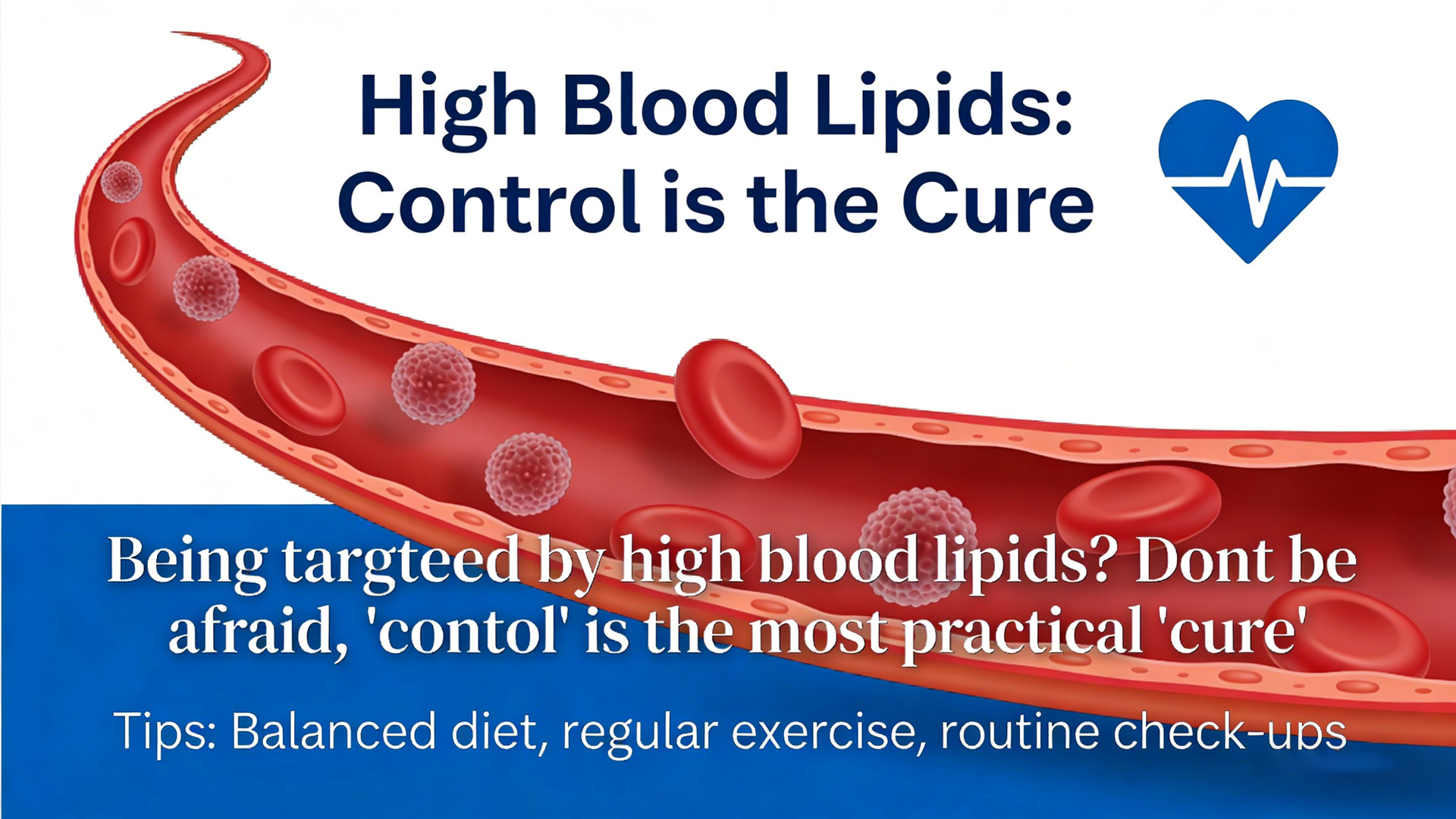 estyle adjustment, the drug can be gradually reduced or even stopped under the guidance of a doctor. However, people with high risk (e.g., myocardial infarction, cerebral infarction), even if they have normal blood lipids, need long-term maintenance medication – because after stopping the drug, the “bad cholesterol” will rise again, the plaque may be unstable, and the cardiovascular risk will rebound. lipid analysis meter
3. Redefine “cure” : to control is to be responsible for health
Many people struggle with “can’t cure”, which is essentially a fear of long-term medication and disease progression. But we need to look at it differently: the goal of medicine has never been to “eliminate disease,” but rather to “keep disease from affecting life.
Just like hypertensive patients take antihypertensive drugs every day, control their blood pressure in the normal range, and they can work and live normally; Patients with hyperlipidemia can also avoid serious events such as myocardial infarction and cerebral infarction by stabilizing blood lipids through lifestyle and drugs. This is not “no cure”, but “health” in another sense – like wearing glasses for myopia, although it does not change the fact of myopia, but does not hinder the view of the world.
More importantly, the process of “controlling” blood lipids is also the process of improving overall metabolism. When you stick to a healthy diet and exercise regularly, not only will your blood lipids be better, your blood pressure and blood sugar will be more stable, and your weight will be more reasonable, all of which are long-term investments in your health.
4. Final note: Don’t let “curing anxiety” delay management
The most terrible thing about hyperlipidemia is not “can’t cure”, but “ignore”. About 40% of patients with hyperlipidemia do not take any intervention measures after diagnosis, which eventually leads to serious complications such as atherosclerosis, coronary heart disease, stroke and so on.
In addition, two misunderstandings should be avoided: first, “stop the drug when blood lipids are normal”, and many people’s blood lipids rebound after stopping the drug, but increase the risk; Second, “only look at the laboratory reference value”, different people have different blood lipid targets – the “bad cholesterol” of patients with coronary heart disease needs to be controlled below 1.8mmol/L, and the average person is below 3.4mmol/L, and doctors need to formulate personalized goals according to your age, underlying disease, and cardiovascular risk stratification.
In conclusion, although hyperlipidemia is difficult to “root”, it can be managed. Instead of struggling with “can’t cure”, it is better to focus on “how to control” – control your mouth, take steps, follow the doctor’s advice, so that blood lipids become a “stable item” on the balance of your health, rather than a “time bomb”. lipid profile meter
Post time: Mar-16-2026