

In recent years, clinicians have observed a worrying trend: a growing number of young patients with no history of congenital urinary tract abnormalities or chronic systemic disease are presenting with severe, treatment-resistant chronic cystitis and debilitating lower urinary tract symptoms (LUTS), including persistent urinary frequency, urgency, pelvic pain, hematuria, and nocturia that severely disrupts sleep and daily function. A deep dive into these cases reveals a striking, often underrecognized link: a history of illicit drug use, particularly of ketamine, synthetic cathinones (“bath salts”), and potent cannabinoid products. For young people, the short-term recreational appeal of these substances masks a devastating long-term risk of permanent urinary tract damage that can lead to lifelong disability. drug test
Ketamine, once perceived as a “safe” party drug for its dissociative effects, is the most well-documented culprit behind drug-induced urinary tract injury. As the body metabolizes ketamine, excreted metabolites accumulate in the bladder, triggering severe inflammation of the bladder wall that erodes the protective urothelial lining. Over time, repeated exposure causes the bladder to shrink, scar, and lose elasticity, reducing its holding capacity to as little as 50 milliliters (a tenth of the normal average). Patients describe symptoms that mirror severe interstitial cystitis: urinating up to 30 times a day, intense pelvic pain that worsens as the bladder fills, and recurrent bleeding from ulcerated bladder tissue. Unlike typical bacterial cystitis, which responds well to antibiotics, ketamine-induced cystitis is notoriously refractory: many patients see no improvement with standard anti-inflammatory treatments, pain management, or even bladder instillation therapies, and some eventually require surgical interventions like bladder augmentation to restore basic function.
Beyond ketamine, other emerging recreational drugs are also associated with severe urinary tract dysfunction. Synthetic cathinones, popular at dance festivals and parties, act as powerful stimulants that disrupt bladder nerve signaling and reduce blood flow to the lower urinary tract, leading to urinary retention, bladder wall overstretching, and secondary inflammation that often persists long after the drug has left the system. High-potency cannabis products, particularly those containing high concentrations of THC, have also been linked to increased risk of overactive bladder and voiding dysfunction in young users, likely due to their effects on the endocannabinoid receptors that regulate bladder muscle control. Many young users underestimate these risks, assuming that occasional recreational use cannot cause permanent damage, but clinical data shows that even short-term heavy use can trigger persistent LUTS that last for years after cessation of drug use. urine drug tests
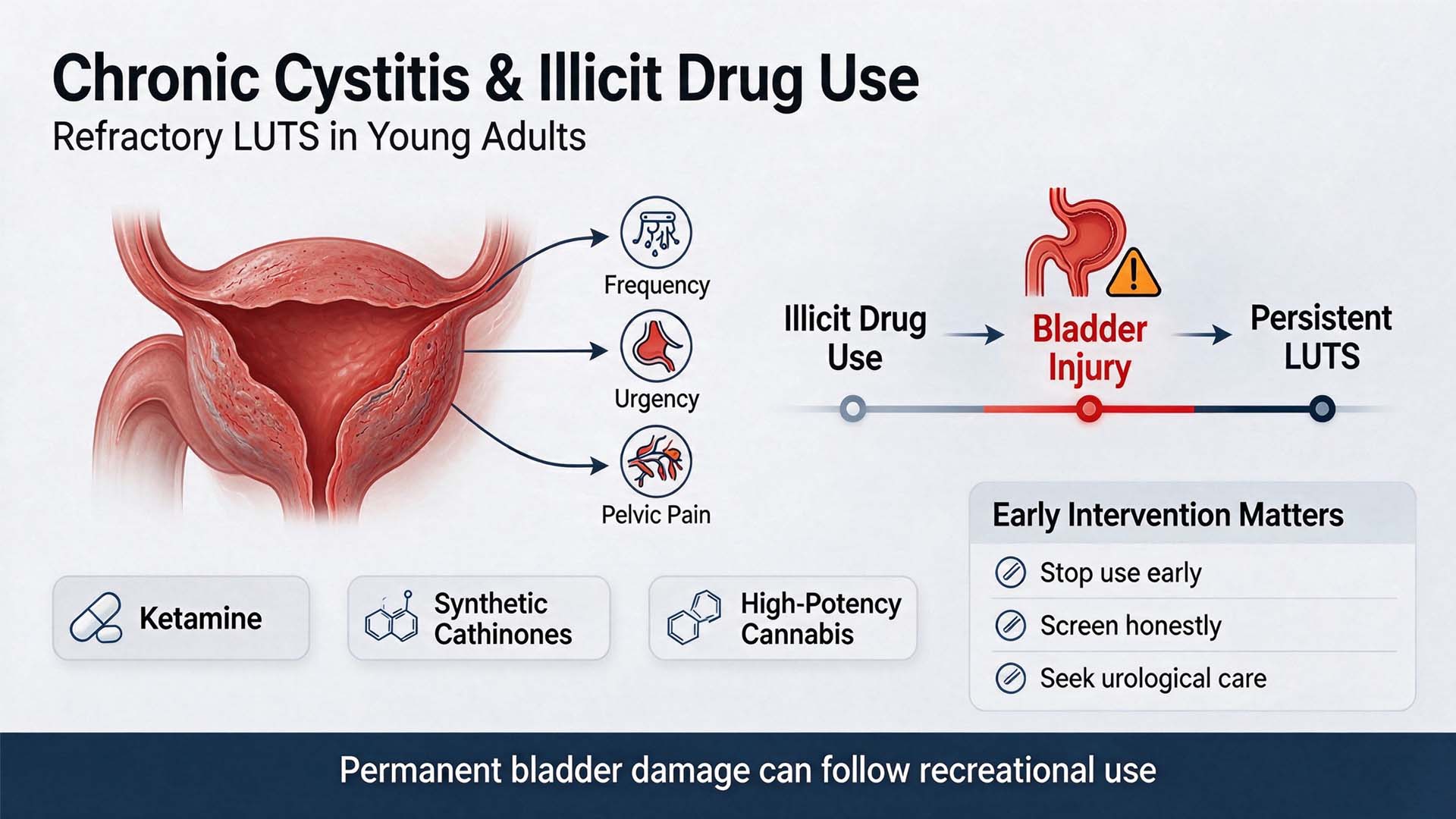
The diagnostic challenge is particularly pronounced for young patients, as clinicians often do not immediately associate chronic urinary symptoms in otherwise healthy young adults with illicit drug use. Many patients also feel uncomfortable disclosing their substance use history due to stigma, leading to delayed or misdiagnosis. In one 2025 study of 120 young patients under 30 presenting with idiopathic refractory cystitis, 68% reported a history of recreational ketamine use, and 22% reported use of other illicit stimulants, yet only 15% had disclosed their substance use during their initial clinical consultation. This delay in identifying the root cause means patients often undergo unnecessary, invasive testing and receive ineffective treatments while their bladder damage progresses. Public awareness of these risks also remains extremely low: a 2024 survey of young adults aged 18–25 found that 72% were unaware that recreational drug use could cause permanent bladder damage, compared to only 18% who were unaware of the link between drug use and cardiovascular harm.
Addressing this growing public health issue requires a multifaceted approach. First, targeted public education campaigns must highlight the urinary tract risks of common recreational drugs, dispelling the myth that these substances are harmless or only cause temporary effects. Second, clinicians should receive training to routinely screen for substance use history in young patients presenting with unexplained refractory LUTS, creating non-judgmental clinical environments that encourage honest disclosure. For affected patients, early intervention is critical: cessation of drug use at the earliest stage of symptoms can often prevent further bladder damage, while multidisciplinary treatment combining urological care, pain management, and addiction support can significantly improve long-term outcomes. test kit drug
For young people considering recreational drug use, the risk of spending decades living with chronic pelvic pain and permanent bladder dysfunction is a consequence that far outweighs any short-term recreational benefit. As the prevalence of these substances continues to rise, recognizing the link between illicit drug use and severe urinary tract injury is critical to preventing a generation of young adults from facing lifelong, preventable disability.
Post time: Nov-28-2026