

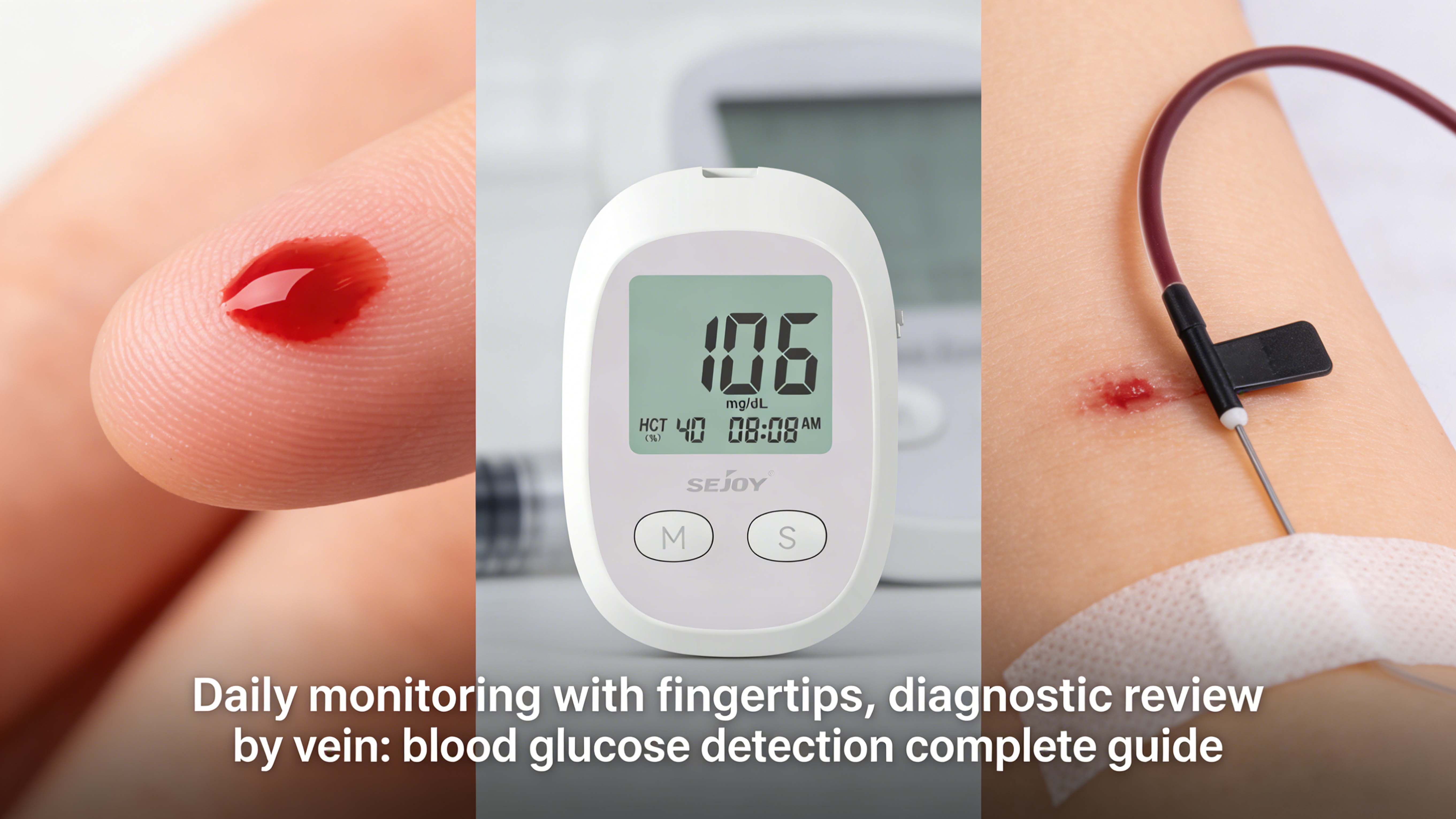
In the field of diabetes management and blood glucose monitoring, the debate between fingertip and intravenous blood glucose has never ceased. Many sugar friends will have such confusion: why the fingertip blood glucose measured at home is not the same as the intravenous blood glucose drawn from the hospital? Which result is more accurate? In fact, these two detection methods are not simply “who is right and who is wrong”, but each has its own application scenarios and clinical value. They play different roles in the blood glucose management system and jointly protect our health. glucose tester
1. Fingertip and venous blood glucose: essential differences
01 Different subjects were tested
Fingertip blood glucose is measured by capillary whole blood, which is a mixture of arterial blood, venous blood, and tissue fluid, which is equivalent to a “full set” sample of blood; The venous blood glucose test is the venous plasma. After the venous blood is taken by the medical staff, the red blood cells and other components are removed by the centrifuge, and only the plasma is retained for testing, which is a “pure sharing version” sample. Because red blood cells consume glucose, the glucose concentration in venous plasma is usually slightly higher than that in capillary whole blood.
02 The detection principle is different
Home blood glucose meters use glucose oxidase or dehydrogenase method, through the test paper reacts with glucose in the blood, the generated electrical signal is converted into blood glucose values; The biochemical instrument in the hospital uses the hexokinase method, which has higher specificity, less interference factors, and more accurate detection results.
03 Different clinical significance
Fingertip blood glucose is mainly used for daily monitoring and self-management, helping patients to grasp the trend of blood glucose change in real time and adjust diet, exercise and medication in time. Venous blood glucose is the gold standard for the diagnosis and efficacy evaluation of diabetes. The results are authoritative and an important basis for doctors to formulate treatment plans.
2. Why are the values different?
Many sugar lovers find that fingertip blood glucose is usually slightly lower than intravenous blood glucose, especially when measured after meals. The main reasons are as follows:
01 Differences in blood components
Fingertip blood is capillary blood, which contains a certain amount of tissue fluid, will dilute the concentration of glucose in the blood; However, venous blood is pure venous blood with a relatively higher glucose concentration. In addition, capillary blood is mixed with a small amount of arterial blood, and the glucose concentration in arterial blood changes continuously with the circulation, whereas the glucose concentration in venous blood is relatively constant. glucose test kit
02 detection time differences
Fingertip blood glucose can be detected immediately, reflecting the blood glucose level at the moment of blood collection. Intravenous blood glucose needs to be sent to the laboratory for testing, and it usually takes 1-2 hours from blood collection to the result, during which time some of the glucose in the blood may be consumed by the red blood cells, resulting in a slight decrease in the value.
Interference of external factors
The results of fingertip blood glucose detection are easily affected by many external factors, such as hand cleanliness, blood sampling method, quality of test paper, calibration of blood glucose meter, ambient temperature and humidity. For example, not washing hands before taking blood or having sugar on your hands can lead to high blood glucose values; Excessive squeezing of fingers during blood collection will extrude tissue fluid, resulting in low values. Expired or damp test strips can also affect the accuracy of test results. However, venous blood glucose is tested in the laboratory, the operation process is standardized, the interference factors are relatively less, and the results are more stable.

3. How to choose?
01 Daily monitoring: fingertip blood glucose is preferred
Fingertip blood glucose is an important tool for daily blood glucose management in patients with established diabetes. It has the advantages of simple operation, quick results, small trauma, easy to carry, and so on. It can help patients to know their blood glucose changes at any time and adjust the treatment plan in time. For example, when postprandial blood glucose is high, staple food intake can be appropriately reduced; When blood glucose is low before going to bed, you can add meals in time to prevent the occurrence of hypoglycemia at night.
When using a fingerstick glucose meter, the following points should be noted:
Wash hands before blood collection: Wash hands with warm water and soap and dry them with a clean towel to avoid sugar or other substances on hands affecting test results.
Choose an appropriate site for blood collection: Usually the lateral aspect of the ring, middle, or little finger is chosen, where there is relatively little nerve distribution and less pain. Blood sampling right in the center of the fingertips should be avoided to avoid pain and infection.
Proper blood collection: When using the blood collection pen, the force should be moderate and avoid excessive squeezing of the finger to avoid extrusion of tissue fluid. After blood collection, the site of blood collection was gently pressed with a clean cotton ball until bleeding stopped.
Calibrate the blood glucose meter regularly: calibrate the blood glucose meter regularly according to the instructions of the blood glucose meter to ensure the accuracy of the test results. At the same time, attention should be paid to the storage conditions of the test strips to avoid expiration or damp. glucose strip
02 Diagnosis and review: intravenous blood glucose must be selected
Intravenous blood glucose is essential if abnormal blood glucose is found for the first time, to screen for diabetes, or if the patient with diabetes needs to regularly review and evaluate the effect of treatment. Venous blood glucose is more accurate, which is an important basis for doctors to diagnose diabetes and adjust treatment plans.
When conducting intravenous blood glucose testing, the following points should be noted:
Fasting testing: Fasting blood glucose testing requires at least 8-10 hours of fasting, and it is generally recommended that blood collection be completed by 8 a.m. Do not exercise, smoke or drink heavily before blood collection, so as not to affect the test results.
2-hour postprandial test: The 2-hour postprandial blood glucose test requires timing from the first bite of the meal and punctual blood sampling 2 hours later. Do not eat or drink before blood collection, so as not to affect the test results.
Cooperate with the doctor: in the process of blood collection, we should cooperate with the operation of the medical staff to relax and avoid tension and anxiety. If there is a case of dizzy or dizzy, to inform the medical staff in advance.
4. the combination of the two, scientific management of blood glucose
Fingertip blood glucose and intravenous blood glucose have their own advantages and limitations. In blood glucose management, we should combine the two to give full play to their role.
01 Trend monitoring with fingertip blood glucose
By regularly monitoring fingertip blood glucose, we can understand the trend of blood glucose change, find the law of blood glucose fluctuations, and adjust diet, exercise, and medication regimens in time. For example, if postprandial blood glucose is found to be frequently high, the intake of staple foods can be appropriately reduced and the intake of dietary fiber can be increased. If you find that your blood glucose is low before going to bed, you can add a meal before going to bed, such as drinking a cup of milk or eating a small biscuit.
02 Calibrated the results with intravenous blood glucose
Because fingertip blood glucose is easily affected by external factors, its detection results may have some errors. Therefore, we can regularly visit the hospital for venous blood glucose testing, compare the results of fingertip blood glucose with those of venous blood glucose, and calibrate the accuracy of the glucose meter. Intravenous blood glucose testing is generally recommended every 3-6 months.
03 Long-term control was assessed in conjunction with glycated hemoglobin
Glycated hemoglobin A1c (HbA1c) is an indicator of the average blood glucose level over the past 2-3 months, which is not affected by single blood glucose fluctuations. It is the gold standard for assessing the long-term glycemic control of diabetic patients. We can combine the results of fingertip blood glucose, venous blood glucose, and glycosylated hemoglobin to have a comprehensive understanding of our own blood glucose control and adjust the treatment plan in time. home blood glucose meter
In conclusion, both fingertip and venous blood glucose play important roles in glycemic management; rather than being in opposition to each other, they complement each other. We should choose a reasonable detection method according to our own needs and actual situation, combine the two methods, scientifically manage blood glucose, and prevent the occurrence of diabetic complications.
Post time: Mar-04-2026