

Gestational hyperglycemia refers to various types of abnormal glucose metabolism that occur concurrently during pregnancy. This not only increases the incidence of adverse pregnancy outcomes such as macrosomia, preterm birth, and preeclampsia, but also raises the rate of cesarean section. Moreover, the incidence of long-term metabolic syndrome in both mothers and infants also increases to varying degrees. Therefore, when pregnancy meets diabetes, how to handle it correctly and in a standardized manner is the key to improving the outcomes of both the mother and the baby and reducing short-term and long-term complications. This article comprehensively sorts out the classification, staging and management points of gestational diabetes for everyone.
Gestational hyperglycemia includes three types: pregestational diabetes mellitus (PGDM), prediabetes, and gestational diabetes mellitus (GDM). The classification of different types of gestational hyperglycemia is as follows
1. PGDM: According to the type of diabetes, it is respectively diagnosed as type 1 diabetes mellitus (T1DM) combined with pregnancy or type 2 diabetes mellitus (T2DM) combined with pregnancy.
2. Prediabetes: It includes impaired fasting glucose (IFG) and impaired glucose tolerance (IGT).
3. GDM: It includes type A1 and type A2. Among them, those who can achieve ideal blood sugar control through nutritional management and exercise guidance are defined as type A1 GDM. Those who need to add hypoglycemic drugs to achieve ideal blood sugar control are defined as type A2 GDM.
Among all pregnant women with hyperglycemia during pregnancy, gestational diabetes mellitus (GDM) is the most common, accounting for approximately 85%, while less than 15% of pregnant women have gestational diabetes mellitus (PGDM). Regardless of the type of hyperglycemia, if blood sugar is not well controlled, it will cause serious harm to the health of both the mother and the baby. Therefore, it requires our high attention. Now, let’s share with you the characteristics, diagnosis, and clinical treatment of two types of hyperglycemia symptoms.
I. Characteristics of Glucose Metabolism during Pregnancy
Pregnancy is a special period in a woman’s entire life cycle. The sugar metabolism in her body is also affected by pregnancy and undergoes corresponding physiological changes, mainly manifested as:
1. During the early and middle stages of pregnancy, a pregnant woman’s blood sugar level decreases as the pregnancy progresses, with fasting blood sugar dropping by approximately 10%.
2. During the middle and late stages of pregnancy, the amount of insulin-like antagonistic substances in the pregnant woman’s body increases, causing the sensitivity of the pregnant woman to insulin to decrease with the increase of gestational weeks. To maintain normal glucose metabolism levels, the body’s insulin demand increases. If the insulin in the body fails to increase accordingly to meet the needs during pregnancy, blood sugar levels will rise, leading to the occurrence of gestational diabetes mellitus (GDM).
3. Due to the specific physiological changes during pregnancy, the existing diabetes condition may worsen, especially for those who need drug treatment. Therefore, at different stages of pregnancy, corresponding treatment plans need to be adjusted in accordance with their distinct physiological characteristics.
Ii. Diagnosis of Hyperglycemia during Pregnancy
1.GDM
Generally, there are no obvious specific clinical manifestations, and it is mainly confirmed through laboratory tests.
Diagnostic criteria: A 75g OGTT was performed at 24 to 28 weeks of pregnancy. The blood glucose thresholds at fasting and 1 hour and 2 hours after glucose intake were 5.1mmol/L, 10.0mmol/L, and 8.5mmol/L, respectively. Any blood glucose level that reaches or exceeds the above standards is diagnosed as GDM. Pregnant women who have their first prenatal checkup after 28 weeks and whose fasting blood glucose is normal also need to undergo OGTT. In areas with scarce medical resources, it is recommended to first check fasting blood glucose (FBG) between 24 and 28 weeks of pregnancy. If FBG is ≥5.1mmol/L, it can be directly diagnosed as gestational diabetes mellitus (GDM) without the need for a 75 G GTT.
2.PGDM
Those with good blood sugar control may have no obvious abnormal clinical manifestations. Some patients with poor blood sugar control may experience symptoms such as polydipsia, polyphagia, and polyuria, and may also have complications such as polyhydramnios, macrosomia, and FGR.
Diagnostic criteria: Those who meet any one of the following two criteria can be diagnosed with PGDM.
(1) Patients who were diagnosed with diabetes before pregnancy;
(2) For pregnant women who have not undergone blood glucose tests before pregnancy, if FBG≥7.0mmol/L, with clinical manifestations of hyperglycemia, and any blood glucose ≥11.1mmol/L and HbA1c≥6.5% are met during the first prenatal examination, they can be diagnosed with PGDM.

Iii. Management of Hyperglycemia during Pregnancy
The treatment methods include diet and exercise control, blood glucose monitoring, drug therapy, as well as the selection of the timing and mode of delivery, etc.
1. Blood glucose control and weight gain targets during pregnancy
Pre-meal and fasting blood glucose levels should be less than 5.3mmol/L, 1 hour after meals less than 7.8mmol/L, 2 hours after meals less than 6.7mmol/L, and nocturnal blood glucose levels should not be lower than 3.3mmol/L. For those without a risk of hypoglycemia, the glycated hemoglobin (HbA1c) during pregnancy should be ≤6.0%. For those with a tendency towards hypoglycemia, the control target for HbA1c can be appropriately relaxed to 7.0%. Patients with PGDM still need to be vigilant about diabetic ketoacidosis caused by poor blood sugar control.
2. Medical nutrition therapy
Medical nutritional therapy, also known as dietary management, is the main approach to blood sugar management.
(1) In the early stage of pregnancy, the energy intake should not be less than 1600kcal/d (1kcal=4.184kJ). In the middle and late stages of pregnancy, 1800 to 2200kcal/d is appropriate. For those who are obese before pregnancy, energy intake can be appropriately reduced, but it should not be lower than 1600 to 1800kcal/d.
(2) Recommended proportion of energy supply from various nutrients: Daily intake of carbohydrates should be no less than 175g (with a staple food intake of more than 4 liang), and the intake should account for 50% to 60% of the total calories. Protein ≥70g; Saturated fatty acids ≤ 7% of total energy intake; Limit the intake of trans fatty acids; Dietary fiber: 25 to 30 grams;
(3) Meal frequency and energy intake ratio: Three main meals and two to three snacks. The energy intake of breakfast, lunch and dinner should account for 10% to 15%, 30% and 30% of the total daily energy intake respectively. The energy intake of each snack can account for 5% to 10%.
(4) Ensure the intake of vitamins and minerals, and appropriately increase the intake of foods rich in iron, folic acid, calcium, vitamin D, iodine, etc., such as lean meat, poultry, fish, shrimp, dairy products, fresh fruits and vegetables, etc.
(5) It is essential to avoid overly restricting energy intake; otherwise, it is easy to develop starvation ketosis, which can have adverse effects on pregnant women and their fetuses.
3. Sports guidance
Exercise can reduce basal insulin resistance during pregnancy, increase the rate of achieving blood sugar targets, and improve adverse outcomes for both mothers and infants.
Pregnant women without contraindications to exercise should engage in at least 30 minutes of moderate-intensity exercise every day for at least 5 days a week.
(2) Forms of exercise during pregnancy include aerobic exercise, resistance exercise or a combination of both, etc. Common forms of exercise include walking, brisk walking, swimming, stationary cycling, yoga, jogging and strength training, etc.
(3) Pregnant women who are treated with insulin should pay attention to monitoring their blood sugar during exercise and be vigilant against hypoglycemia.
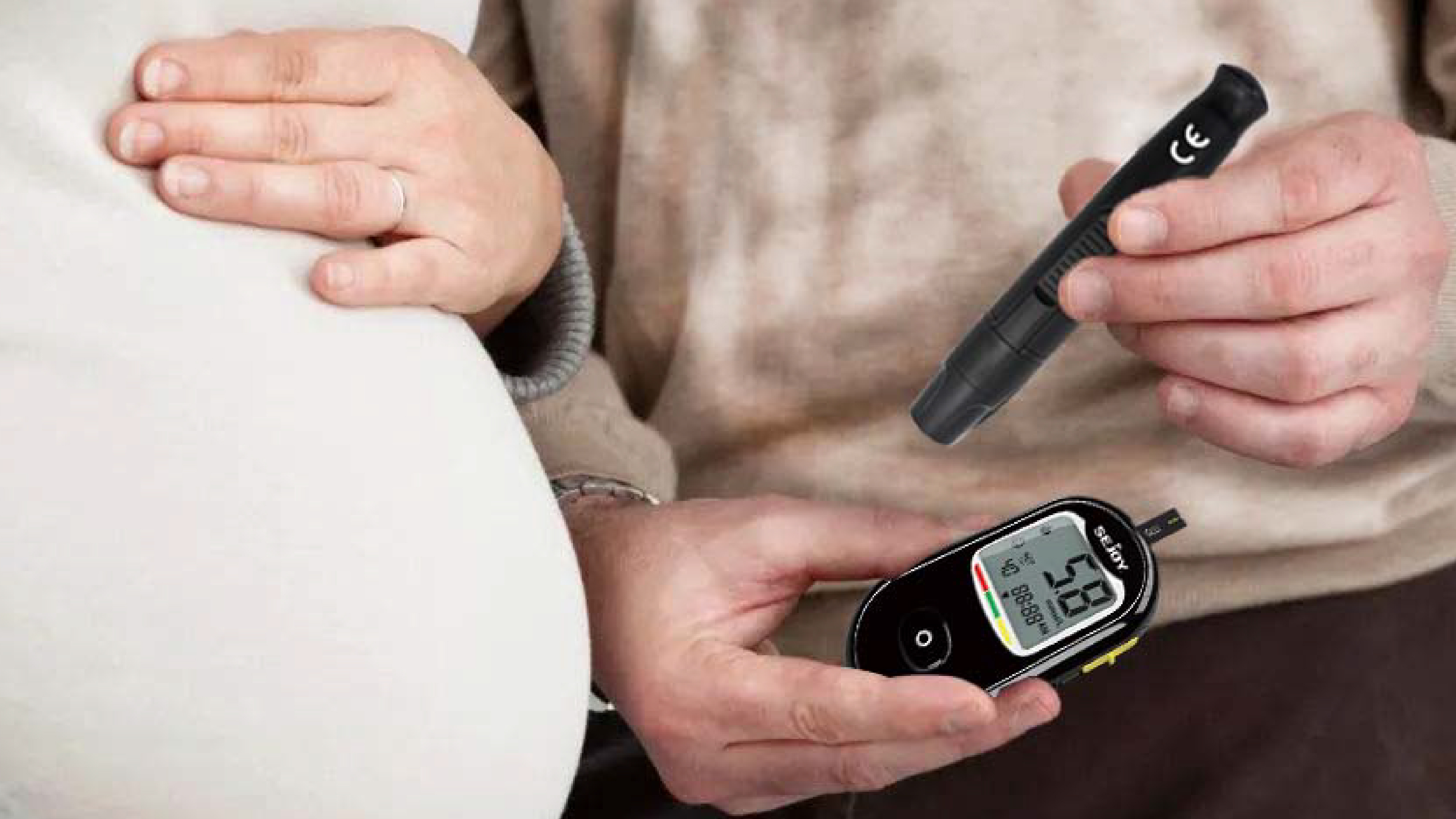
4. Blood glucose monitoring
(1) Blood glucose monitoring methods: intravenous blood glucose monitoring, peripheral (fingertip) blood glucose monitoring, self-monitoring with a micrometer, continuous ambulatory blood glucose monitoring, etc.
(2) Frequency of blood glucose monitoring: For pregnant women with type A1 GDM, blood glucose should be monitored once a week on an empty stomach and after three meals. For pregnant women with type A2 GDM, blood glucose should be monitored once every 2 to 3 days on an empty stomach and before and after three meals.
5. Drug treatment
(1) For pregnant women with PGDM, insulin should be used to control blood sugar before pregnancy or in the early pregnancy.
(2) For pregnant women with gestational diabetes mellitus (GDM) whose blood sugar levels do not reach the target after medical nutrition treatment and exercise guidance, or who develop starvation ketosis after adjusting their diet and whose blood sugar levels exceed the target again after increasing calorie intake, hypoglycemic drugs should be added in a timely manner for treatment.
(3) Commonly used hypoglycemic drugs include insulin and metformin, among which insulin is the first choice.
(4) The dosage of insulin should be adjusted based on the condition of the illness, the progress of pregnancy and blood sugar levels. Generally, it starts with a small dose and is gradually adjusted until the blood sugar level reaches the target.
(5) Currently, the most commonly used method is to inject ultra-short-acting or short-acting insulin before each meal to regulate postprandial blood glucose, and inject long-acting insulin before going to bed to regulate fasting blood glucose. Based on the weight of the pregnant woman, adjustments should be made according to the principle of reducing blood glucose by 1mmol/L for every 2 to 4 4U of insulin.
6. Maternal and infant monitoring during pregnancy
(1) In addition to monitoring blood sugar, pregnant women with gestational diabetes mellitus (GDM) also need to monitor blood pressure, edema, urine protein and the condition of the fetus during prenatal check-ups. If necessary, the frequency of prenatal check-ups can be appropriately increased.
(2) For those with comorbidities or whose blood sugar control is not up to standard, their renal function and HbA1c levels should be regularly measured. Those with severe conditions can be admitted to the hospital for treatment.
(3) Re-examine the ultrasound every four weeks or so to monitor the growth and development of the fetus and the changes in amniotic fluid volume.
(4) For pregnant women with type A1 gestational diabetes mellitus (GDM), fetal heart rate monitoring can start at 34 weeks of gestation. For those with type A2 GDM, fetal heart rate monitoring can be advanced to 32 weeks of gestation. If there are other high-risk factors, the gestational age for monitoring can be further advanced as the situation requires.
7. Timing of delivery
For pregnant women with type A1 GDM, if their blood sugar is well controlled after dietary and exercise management, it is recommended to terminate the pregnancy at 40 to 41 weeks of gestation.
(2) For patients with type A2 gestational diabetes mellitus (GDM) who require insulin treatment and have good blood sugar control, it is recommended to terminate the pregnancy at 39 to 39 weeks +6 of gestation.
(3) For patients with satisfactory blood glucose control through PGDM and no other maternal or fetal complications, it is recommended to terminate the pregnancy at 39 to 39 weeks +6 of gestation.
(4) For patients with PGDM accompanied by vascular lesions, poor blood sugar control or a history of adverse childbirth, they should be admitted to the hospital for observation in a timely manner. The timing of termination of pregnancy should be handled on an individual basis.
8. Mode of delivery
GDM is not an indication for cesarean section. For those suitable for vaginal delivery, a delivery plan should be made and the blood sugar, uterine contractions and fetal heart rate changes of the pregnant woman should be closely monitored during the labor process. If there is suspicion of macrosomia, fetal distress, abnormal fetal position, a history of stillbirth or other obstetric indications, the indications for cesarean section may be appropriately relaxed.
9. Management during childbirth
(1) General management: Provide appropriate diet, closely monitor vital signs, and enhance fetal monitoring.
(2) Intramarital management for vaginal delivery: During the labor process, blood glucose levels should be closely monitored and controlled within 5.0 to 8.0mmol/L. For those who have irregular eating habits during labor, subcutaneous insulin injections should be discontinued and replaced by intravenous infusion. The dosage of insulin should be adjusted according to the monitored blood sugar levels.
(3) Perioperative management of cesarean section: For those using insulin, subcutaneous insulin injection should be stopped on the operation day. Blood glucose should be monitored before and during the operation, and efforts should be made to control blood glucose within 5.0-8.0mmol/L. Blood sugar should be measured every 2 to 4 hours after the operation until diet resumes.
(4) Post-birth management of newborns: Regardless of the condition at birth, they should be regarded as high-risk infants. The breathing condition of the newborn should be monitored, early sucking and early milk supply should be initiated. The first blood glucose test should be conducted within 30 minutes after birth, and blood glucose should be monitored every 3 to 6 hours within 24 hours after birth. Once hypoglycemia is detected in a newborn, glucose solution should be administered promptly, blood sugar should be remeasured, and a consultation with a pediatrician or referral to the pediatric department for treatment should be sought.
10. Puerperium management
Blood sugar levels still need to be monitored after delivery. Most people who used insulin during pregnancy no longer need to use it after giving birth.
(2) Encouraging breastfeeding can reduce the risk of developing T2DM in the future.
(3) OGTT should be performed 4 to 12 weeks after delivery. For those with normal results, it is recommended to recheck OGTT every 1 to 3 years thereafter. If the results are abnormal, lifestyle intervention is recommended and the patient should be referred to an endocrinology specialist for follow-up.
(4) For women with prediabetes found during postpartum follow-up, lifestyle intervention and/or metformin should be used to prevent the occurrence of diabetes.
Iv. Pre-pregnancy consultation, condition assessment and health care for pre-pregnancy hyperglycemia
1. Women diagnosed with diabetes (T1DM or T2DM), prediabetes (IFG or IGT), or a history of gestational diabetes mellitus (GDM) are advised to undergo preconception counseling and condition assessment before preparing for pregnancy.
The assessment contents include: the level of blood glucose control before pregnancy, whether there are diabetic retinopathy, diabetic nephropathy, neuropathy and cardiovascular diseases, etc., and whether there are thyroid function abnormalities, etc.
3. Provide individualized dietary and exercise guidance, lifestyle management, and health knowledge education for women with high blood sugar who are preparing for pregnancy.
4. Women with diabetes should try to keep their HbA1c within 6.5% before pregnancy and adjust the application of relevant hypoglycemic and antihypertensive drugs in a timely manner.
5. It is recommended to take a small dose of folic acid orally or a multivitamin containing folic acid before pregnancy.
6. For patients with concurrent retinal, renal, cardiovascular and peripheral neuropathy, it is recommended to conduct MDT during the preconception period to assess pregnancy risks and adjust medication regimens.
Pregnancy is a special period, and the management of hyperglycemia during pregnancy should also be individualized. By following the doctor’s guidance and taking lifestyle intervention (medical nutrition therapy + exercise) as the core, and combining drug treatment (mainly insulin) and self-monitoring of blood glucose when necessary, the vast majority of pregnant women with gestational diabetes mellitus (GDM) can keep their blood glucose within the target range, significantly reducing the risk of complications for both mother and baby. Standardized OGTT screening after childbirth and long-term lifestyle intervention and follow-up are crucial for preventing type 2 diabetes in the future.
Post time: Dec-23-2025