

Around us, there is a long-standing but not far away health threat – syphilis. It has strong concealment. The symptoms are not obvious but may have long-term effects. Many people delay treatment due to insufficient awareness or misunderstanding. In fact, syphilis is a preventable and treatable disease. Correct understanding and timely action are the best protection. Let’s arm ourselves with scientific knowledge and jointly safeguard our health.
What exactly is syphilis
Poison is a chronic, systemic and sexually transmitted infection caused by Treponema pallidum. Although the emergence of penicillin once effectively controlled syphilis, the incidence of syphilis has rebounded globally in recent years, especially among men who have sex with men, those with multiple sexual partners, and women of childbearing age. Timely diagnosis and standardized treatment are of vital importance; otherwise, it may lead to severe damage to the cardiovascular, nervous and skeletal systems, even threatening life, and can cause congenital syphilis through mother-to-child transmission.
Be vigilant against these behaviors and stay away from the spread of syphilis
The transmission routes of toxins are diverse, mainly including sexual contact transmission, mother-to-child transmission and blood transmission.
01 Sexual contact transmission: The most common. It is transmitted through unprotected sexual contact with syphilis patients, such as vaginal intercourse, anal sex or oral sex, or sharing sexual toys with an infected person.
02 Mother-to-child transmission: It occurs in pregnant women with syphilis. If the pregnancy is not treated properly, Treponema pallidum can be transmitted to the fetus through the placenta.
03 Blood-borne transmission: Blood-borne transmission is dangerous but relatively rare. High-risk behaviors such as infusing blood containing Treponema pallidum and sharing syringes may lead to infection.
04In addition, syphilis can also be transmitted through indirect contact: for instance, touching items such as razors, underwear, and towels of syphilis patients. If there are living Treponema pallidum attached to these items and the patient’s own skin and mucous membranes are damaged, infection may occur, but the probability is relatively low.
05 Daily contact, no need to worry! Treponema pallidum has a short survival time outside the body and dies rapidly in dry environments. Daily contact (such as shaking hands and sharing tableware) hardly spreads syphilis.

From Invisible to Harmful: Understanding the Entire Course of Syphilis
Primary syphilis
1. The incubation period of chancroid is 2 to 4 weeks. Initially, it appears as nodules the size of millet grains that protrude above the skin surface. Later, it can develop into shallow ulcers with a diameter of 1 to 2cm, which are round or oval. If left untreated, it can gradually heal on its own within 3 to 6 weeks. It occurs at the site of direct sexual contact and is more common in the external genitalia.
Enlargement of the proximal lymph nodes in the groin or skin lesions can be unilateral or bilateral, painless, isolated from each other without adhesion.
2. Secondary syphilis: It often occurs 4 to 6 weeks after the onset of chancroid and lasts for less than 2 years.
Skin and mucous membrane lesions can present with various skin disease lesions, including macules, maculopapular rashes, papules, scaly skin lesions, etc. Dark erythema and desquamation maculopapular rashes on the palms and soles, wet papules on the vulva and perianal area, or flat condyloma are the characteristic lesions. The rash is generally not itchy.
Superficial lymph nodes throughout the body may become enlarged
May cause syphilitic damage to bones, joints, eyes, internal organs and the nervous system, etc
3. Tertiary syphilis (advanced syphilis) has a course of more than two years.
At this point, Treponema pallidum not only invades the skin and mucous membranes but also causes irreversible damage to all organ systems throughout the body. Gum swelling appears on the skin, in the mouth, and in the tongue and pharynx. Mucosal damage leads to perforation of the nasal septum and saddle-shaped nose, etc. When the cardiovascular and nervous systems are affected, symptoms such as palpitations, chest tightness, shortness of breath and headaches may occur.
Neurosyphilis
4. Neurosyphilis can occur in both the early and late stages of syphilis. It can also present with complex and diverse clinical manifestations due to the simultaneous invasion of Treponema pallidum on different parts of the nervous system, with symptoms and signs overlapping or compounding.
5. Latent syphilis (latent syphilis) has no obvious clinical symptoms or signs related to syphilis. Fetal syphilis can be transmitted to the fetus through the placenta, leading to spontaneous abortion, stillbirth or congenital syphilis, etc.
Early fetal syphilis usually occurs within the first two years of life, similar to acquired secondary syphilis.
Late-stage fetal syphilis usually occurs at the age of 2 or later, similar to acquired tertiary syphilis.
Latent fetal syphilis refers to untreated fetal syphilis without clinical symptoms, but with positive syphilis serological tests.
A Comprehensive View of syphilis Testing methods
Serological tests for syphilis are divided into two major categories: non-specific antibody tests for syphilis and specific antibody tests for syphilis. It is usually necessary to use them in combination to ensure accurate diagnosis.
The current syphilis serological tests that can be conducted include:
01 Non-specific antibody detection: Toluidine red unheated serum Test (TRUST), used for screening and monitoring the therapeutic effect.
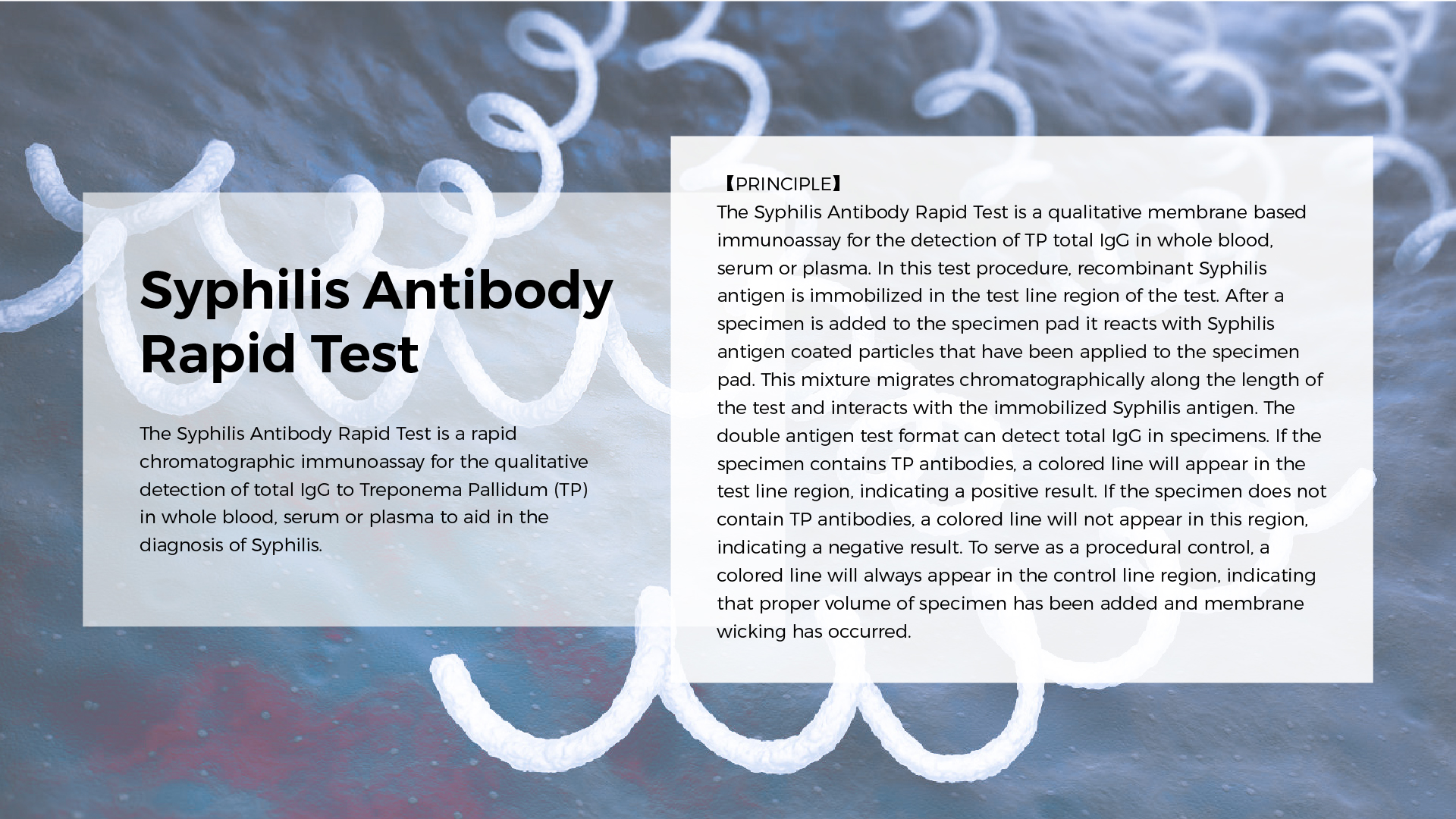
02 Specific antibody detection: Treponema pallidum antibody detection (RT), used for initial rapid screening. Treponema pallidum specific antibody detection (CLIA, chemiluminescence immunoassay) is used for screening and diagnosis.
Take active preventive measures during pregnancy to safeguard the health of both mother and baby
All pregnant women should undergo syphilis serological screening at their first prenatal checkup. Screening should be repeated in high-risk areas, during the third trimester of pregnancy (28-32 weeks), and during delivery. At any stage of pregnancy, if syphilis is found in pregnant women without proper treatment, it should be treated promptly.
With scientific treatment, a cure is within reach
Early detection and timely and proper treatment are crucial. The earlier the treatment, the better the outcome.
The dosage is sufficient and the treatment course is standardized. Non-standard treatment can increase the risk of recurrence and promote the early occurrence of late-stage syphilis damage.
After treatment, sufficient time of follow-up observation is required.
All syphilis patients should undergo HIV counseling and testing.
All sexual partners of the patient should be examined and treated simultaneously.
Syphilis can be cured! After being infected with syphilis, as long as it is detected early and treated in a standardized manner along with follow-up monitoring, it can be cured.
Treatment does not equal the end; follow-up is the key
After adequate and standardized treatment for syphilis, regular follow-up observations should be conducted, including general physical examinations and rechecks of non-Treponema pallidum serological test titers. Early syphilis is recommended to be followed up for 2 to 3 years. After the first treatment, a re-examination should be conducted every 3 months, and then every 3 months thereafter. After one year, a re-examination should be conducted every six months. Advanced syphilis requires follow-up for three years or longer. In the first year, follow-up should be conducted every three months, and then every six months thereafter. After the treatment of neurosyphilis, a check-up should be conducted every 3 to 6 months, including serological and cerebrospinal fluid tests.
Say no to syphilis and take preventive measures
The key to preventing syphilis lies in cutting off the transmission route from the source.
01 Safe Sex: Avoid unhygienic sexual behavior, maintain a stable and loyal sexual relationship, and use condoms correctly.
02 Advocate premarital and prenatal check-ups: Couples planning to conceive should undergo pre-pregnancy check-ups. If one of them has syphilis, they must be cured first before preparing for pregnancy. Pregnant women should have regular prenatal check-ups. Once syphilis infection is detected, timely mother-to-child transmission prevention treatment should be carried out to prevent the occurrence of congenital syphilis in the fetus.
03 Maintain good hygiene habits. In daily life, try not to share personal items such as towels and bath towels with others. For behaviors that may come into contact with blood, such as getting tattoos or piercings, choose a regular and strictly disinfected institution.
Syphilis is preventable and treatable. Ignorance and fear are its greatest Allies. Scientific understanding and timely action are the most powerful weapons to break through it. Protecting health starts with understanding and action!
Post time: Jan-06-2026