

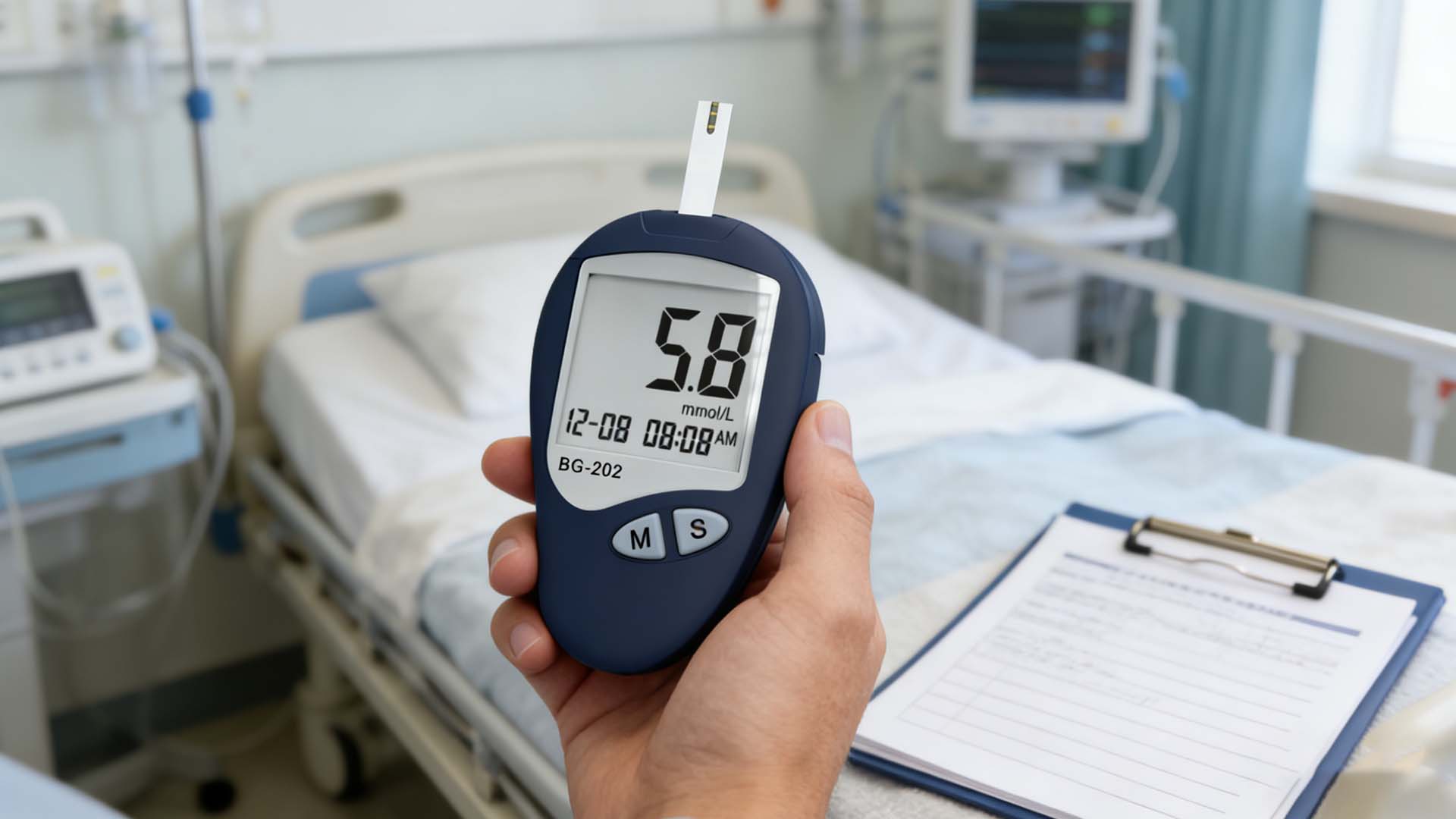
In the diagnosis and treatment system of diabetes, Point-of-Care Testing (POCT) glucose meter has become the core tool for clinical blood glucose monitoring with its advantages of fast and convenient. However, the dispersion of POCT testing scenarios, the diversity of operators, and the complexity of equipment and reagents make it face many potential risks. As a prospective risk management tool, Failure Mode and Effects Analysis (FMEA) provides a systematic solution for the quality control of POCT blood glucose monitoring, and realizes the transformation from “passive response to problems” to “active prevention of risks”. blood glucose measurement
1. FMEA: the core methodology of medical risk management
FMEA is a structured risk analysis tool that identifies all potential failure modes in the system, analyzes their causes, consequences severity and detectability, and then develops preventive measures to reduce the risk. This method originated from the United States military in the 1940s, and has been widely used in aerospace, automobile manufacturing and other fields. In recent years, it has gradually become an important means of medical quality management.
In healthcare, the core value of FMEA is “prevention in advance” :
Systemic risk identification: cross-functional team brainstorming was used to comprehensively identify potential risk points in the medical process
Quantitative risk assessment: the three dimensions of severity (S), frequency (O) and detection (D) were used to calculate the risk priority number (RPN=S×O×D) to realize the visualization and priority of risk
Closed-loop continuous improvement: develop improvement measures for high-risk failure modes, and track the verification effect to form a closed-loop quality management
2. Risk pain points of POCT blood glucose monitoring
POCT blood glucose monitoring involves the whole process before, during and after testing, and there are potential risks in each link:
Before testing: inadequate patient preparation (e.g., testing immediately after exercise without fasting), irregular sample collection (e.g., wrong selection of blood collection site, excessive extrusion leading to tissue fluid dilution), improper reagent storage (e.g., reagent failure due to excessive temperature)
In the test: insufficient operator skills (such as incorrect calibration of the instrument, missing operation steps), equipment failure (such as sensor error, insufficient battery power), environmental interference (such as unsuitable temperature and humidity)
Post-test: errors in data recording, deviation in result interpretation, and delayed report delivery
These risks will not only lead to inaccurate test results, but also lead to clinical misdiagnosis and mistreatment, and even endanger the safety of patients. Traditional quality control methods mainly focus on internal quality control and external quality assessment, which are difficult to cover the potential risks of the whole process.
3. Practice path of FMEA in POCT blood glucose monitoring
The Department of Endocrinology of a Classⅲ Grade A hospital introduced FMEA method in 2025 to carry out comprehensive risk management of POCT blood glucose monitoring process. The specific implementation steps are as follows:
3.1 Build cross-functional teams
The FMEA analysis team was composed of endocrinologists, nurses, laboratory technicians, equipment managers and quality management personnel, and the responsibilities and analysis scope of each member were clarified. blood glucose testing
3.2 Draw the process map
The blood glucose monitoring process of POCT was divided into 12 key steps: patient preparation, blood sampling site selection, skin disinfection, blood sampling, test paper preparation, instrument calibration, sample detection, result reading, data recording, result report, instrument maintenance, reagent storage.
3.3 Identify potential failure modes
Through brainstorming and historical data analysis, 27 potential failure modes were identified, such as:
The patient did not fasting as required, resulting in higher results
Excessive squeezing during blood collection resulted in the incorporation of tissue fluid into the sample
Test strips expired or improperly stored lead to detection errors
Failure of the operator to calibrate the instrument resulted in systematic errors
3.4 Risk assessment and sequencing
The severity, frequency and detection of each failure mode were scored on a 1-10 scale to calculate the RPN value. Among them, “testing without calibration instrument” had the highest RPN value (S=9, O=7, D=3, RPN=189) and was listed as the highest priority improvement item.
3.5 Formulate improvement measures
For high-risk failure modes, the team developed targeted improvement measures:
A double check system for instrument calibration was established, and the calibration must be completed by two operators together and signed for confirmation before each test
To develop an intelligent management system for POCT blood glucose monitoring to realize automatic reminder of reagent validity and electronic traceability of calibration records
The operator training system was optimized, and a three-level training model of theoretical learning, simulation operation, and assessment and certification was adopted
Standardized operation videos were made and posted at each POCT test point for easy access by operators
3.6 Effectiveness verification and continuous improvement
Six months after the implementation of the improvement measures, the consistency between the blood glucose monitoring results of POCT and the biochemical analyzer of the laboratory department increased from 82% to 96%, and the error rate decreased by 75%. At the same time, the team reviewed and updated the FMEA analysis results every quarter to ensure the continuity and effectiveness of risk management. cheap glucose meter
4. Key success factors of FMEA implementation
Leadership support and full participation: the attention and support of the hospital management is the prerequisite for the successful implementation of FMEA. At the same time, full participation is needed to form a cultural atmosphere of risk management
Data-driven decision making: FMEA analysis should be based on objective data rather than subjective experience, and risk assessment should be provided through historical adverse event records, quality control data, etc
Cross-sectoral collaboration: POCT blood glucose monitoring involves multiple departments, so it is necessary to establish an effective communication and collaboration mechanism to break down departmental barriers
Culture of continuous improvement: FMEA is not a one-time project, but a continuous improvement process that needs to be reviewed and updated regularly to adapt to changes in clinical practice
The application of FMEA method in POCT blood glucose monitoring not only improves the accuracy and reliability of test results, but also constructs a risk management system for the whole process, realizing the transformation from “single test quality control” to “comprehensive risk management”. With the increasing attention paid to medical quality and safety, FMEA will become the core tool of quality management in the field of POCT and even the whole medical industry to escort patient safety.
Post time: Feb-24-2026