

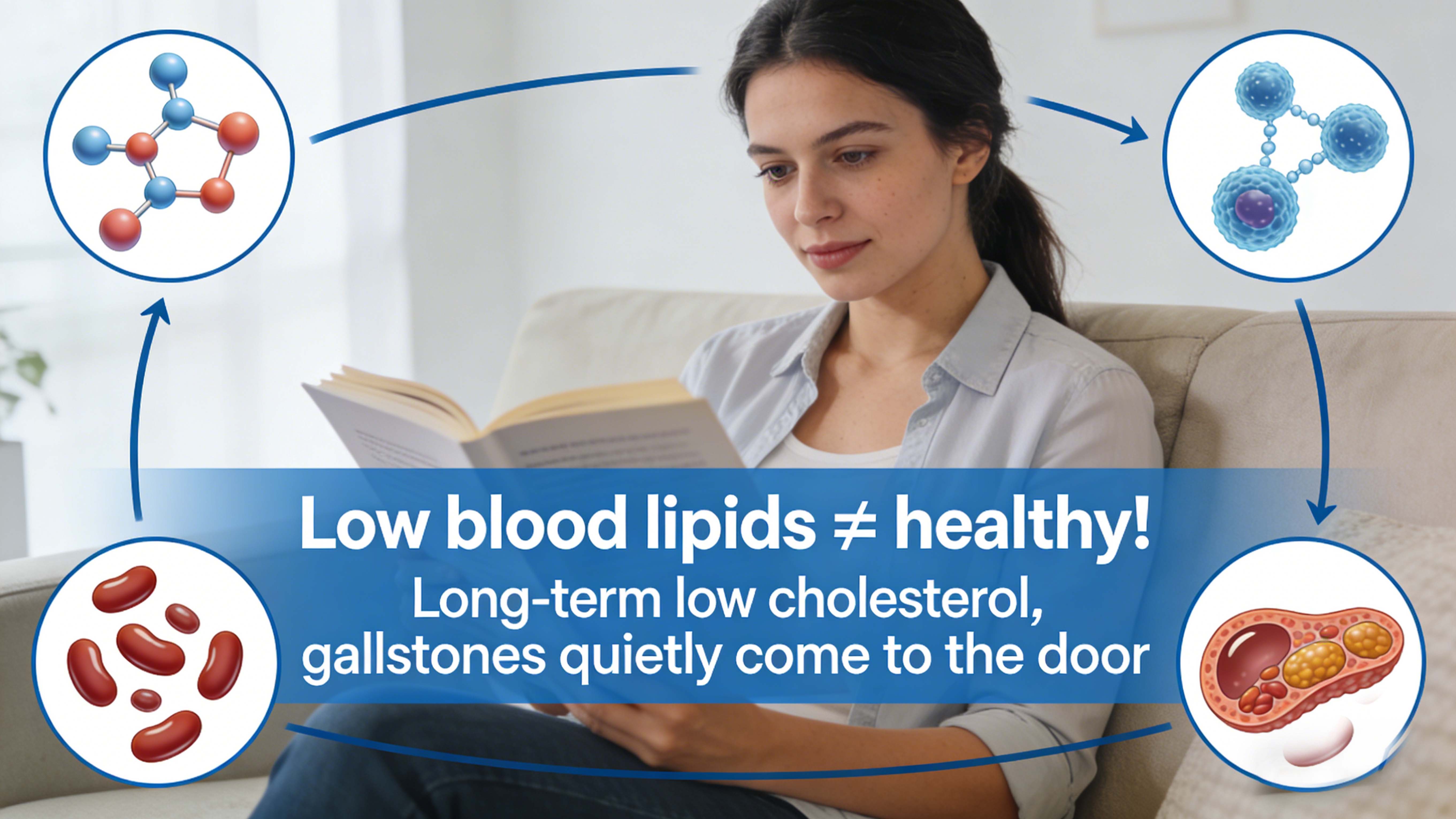
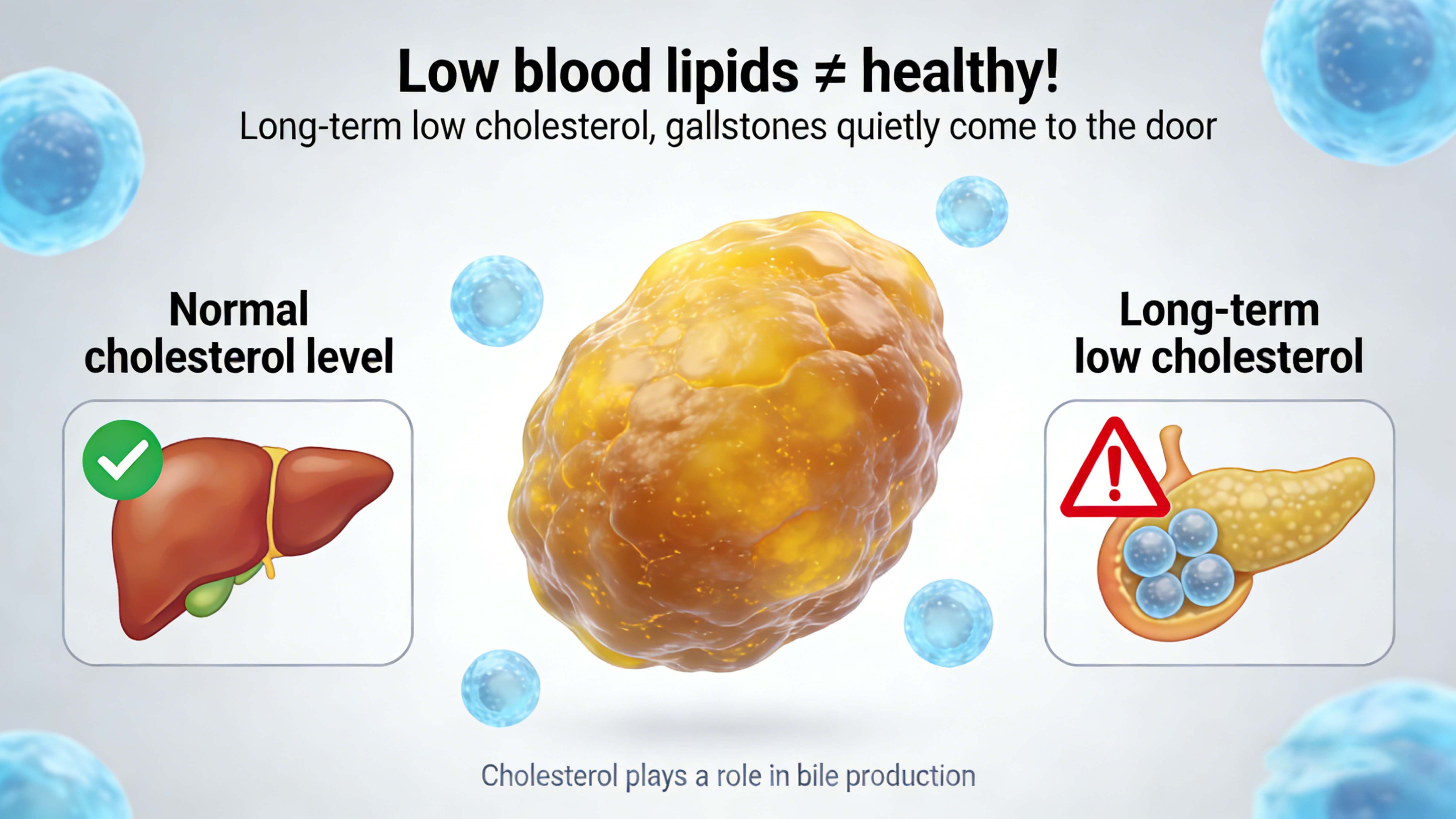
Get the physical examination report, when the word “low total cholesterol” appears, many people will secretly rejoice: “Finally don’t worry about high blood lipids!” However, the latest medical research has broken this perception – cholesterol level is not lower is better, long-term serum total cholesterol is too low, but may significantly increase the risk of gallstones, especially in women and the elderly, the risk can be doubled. This finding subverts the traditional concept of “low cholesterol = healthy”, and also provides a new perspective for the prevention of gallstones.
1. Anti-common sense study: People with low cholesterol have a soaring risk of gallstones
A prospective study of 120,000 people published in the American Journal of Gastroenterology in 2024 showed a “U-shaped” relationship between serum total cholesterol level and gallstone risk: When total cholesterol was below 3.1mmol/L, the risk of gallstones began to increase significantly, and the risk of gallstones in people with total cholesterol <2.8mmol/L was 72% higher than that in the normal level (3.1-5.2mmol/L). Among women, the risk jumps to 113%.
Similarly, a 15-year follow-up study in Taiwan, China, also reached a similar conclusion: after excluding obesity, diabetes and other factors, the prevalence of gallstones in people with low total cholesterol was 46% higher than that in the normal population, and the cholecystectomy rate increased by 38%. Of greater concern, this association was particularly prominent among long-term vegetarians, people with excessive weight loss, and older women.
Traditionally, gallstones are considered to be “high cholesterol disease” — excessive intake of cholesterol leads to excessive saturation of cholesterol in the bile, which precipitates crystals to form stones. But new research has revealed the other side of the problem: too low cholesterol levels can also break the balance of bile metabolism and become the “invisible driver” of gallstones. lipid panel monitoring system
2. Mechanism analysis: How does low cholesterol induce gallstones?
The normal metabolism of bile depends on the dynamic balance of cholesterol, bile acid and lecithin, and the imbalance of any one may lead to stone formation. The core mechanism of low cholesterol inducing gallstones lies in a series of chain reactions after this balance is broken:
2.1 Insufficient synthesis of bile acids and relative supersaturation of cholesterol
The raw material of bile acid synthesis by the liver is cholesterol. When the serum cholesterol level is low for a long time, the liver will reduce the synthesis of bile acid in response. Bile acid is the key substance to dissolve cholesterol. Once bile acid is insufficient, even if the absolute content of cholesterol in bile is not high, it will cause relative supersaturation of cholesterol due to “solvent reduction”, and then precipitate crystallization to form stones. The study showed that the bile acid concentration was 29% lower and the cholesterol saturation was 41% higher in people with total cholesterol <2.8mmol/L than in normal people.
2.2 Gallbladder motility decreased and cholestasis aggravated
Cholesterol is not only the raw material of bile acids, but also participates in the regulation of cholecystokinin (CCK) secretion. CCK is a key hormone that promotes gallbladder contraction and bile emptying. Low cholesterol can lead to decreased secretion of CCK by intestinal mucosa, decreased gallbladder contraction function, and prolonged residence time of bile in the gallbladder. Long-term cholestasis can cause excessive absorption of water in the bile, increase the concentration of bile, and cholesterol crystals are more likely to aggregate to form stones. Clinical data show that the gallbladder emptying rate is 32% lower and the incidence of cholestasis is 57% higher in people with low cholesterol than in those with normal cholesterol.
2.3 Intestinal flora disorder, bile acid metabolism imbalance
Long-term low-cholesterol diet (such as ultra-vegetarian diet) will change the structure of intestinal flora, resulting in the reduction of beneficial bacteria such as Bifidobacterium and Lactobacillus, and the increase of harmful bacteria that can decompose bile acids. These harmful bacteria will convert bound bile acids into free bile acids, which are more easily reabsorbed by the intestine, reducing the enterohepatic circulation of bile acids, and further exacerbating the problem of insufficient bile acid synthesis. At the same time, the disturbance of intestinal flora can also affect the intestinal absorption of cholesterol, forming a vicious circle of “low cholesterol – dysbiosis – insufficient bile acid”.
2.4 Hormone levels fluctuate, and women are more at risk
In women, estrogen promotes cholesterol synthesis in the liver, but it also inhibits gallbladder contraction. When female serum cholesterol is low, the “promoting cholesterol synthesis” effect of estrogen will be weakened, while the “inhibiting gallbladder contraction” effect still exists. Under the dual influence, the balance of bile metabolism is more likely to be broken. Studies have shown that the risk of gallstones in postmenopausal women with total cholesterol <3.1mmol/L is 2.3 times that of men of the same age, which is closely related to cholesterol metabolism disorders caused by the decrease of estrogen levels. lipid profile test meter
3. high-risk groups: who needs to be alert to “low cholesterol gallstones”?
Not all people with low cholesterol will develop gallstones. The following groups of people are particularly at risk due to metabolic characteristics or lifestyle habits:
3.1 Long-term strict vegetarians
Vegetarians who completely reject animal fat and cholesterol tend to have low serum cholesterol levels and worse problems with insufficient bile acid synthesis. A survey of vegetarians showed a 63% higher prevalence of gallstones than omnivores, of which more than 80% were cholesterol stones.
3.2 Rapid weight loss or dieting population
Sudden weight loss in a short period of time (e.g., more than 5kg per month) leads to a large breakdown of body fat, resulting in free fatty acids that inhibit the synthesis of bile acids by the liver, and gallbladder contraction is reduced. The study found that people who lost too much weight had a 3.7 times higher incidence of gallstones than those who lost normal weight, and about 40% of them were associated with low cholesterol.
3.3 People taking lipid-lowering drugs for a long time
Statins reduce serum cholesterol levels by inhibiting cholesterol synthesis, but excessive lipid lowering may occur in some patients. Clinical data showed that the incidence of gallstones in patients with total cholesterol <3.1mmol/L after taking statins was 42% higher than that in patients with blood lipid control in the normal range.
3.4 Older women and postmenopausal women
The liver’s ability to synthesize cholesterol decreases with age, coupled with the fluctuation of estrogen levels after menopause, and elderly women are more likely to have the dual problem of low cholesterol and insufficient gallbladder motility. The prevalence of gallstones in women over 65 years old with total cholesterol <3.1mmol/L was as high as 27%, which was 2.1 times as high as that in men of the same age. lipid test meter monitor
4. Scientific response: How can people with low cholesterol prevent gallstones?
The core of cholelithiasis induced by low cholesterol is “metabolic imbalance”, so the key to prevention is not to deliberately raise cholesterol, but to restore the dynamic balance of bile metabolism by adjusting life style:
4.1 Eat a balanced diet and avoid extreme vegetarians
Deliberate cholesterol supplementation is not necessary, but complete rejection of animal-derived foods should be avoided. It is recommended to take a moderate amount of high-quality fat every day, such as deep sea fish, nuts, olive oil, etc., and ensure that eggs, milk and other foods rich in lecithin intake, lecithin can promote the dissolution of cholesterol in the bile. The study showed that vegetarians who consumed 1 egg per day had an 18% increase in bile acid concentration and a 22% decrease in cholesterol saturation.
4.2 Eat regularly to promote gallbladder emptying
Three meals are timed and quantitative, especially breakfast must be eaten to avoid long fasting. In the fasting state, the gallbladder is continuously in a full state, and cholestasis is easy to occur. While eating can stimulate gallbladder contraction, promote bile emptying. It is recommended that the interval between three meals per day should be no more than 6 hours, and dinner time should be no later than 20:00.
4.3 Moderate exercise to improve gallbladder motility
Aerobic exercise can promote intestinal peristalsis and gallbladder contraction, and improve cholestasis. Moderate intensity exercise such as brisk walking, jogging, swimming, etc. is recommended for 150 minutes or more per week, each time for more than 30 minutes. Studies have shown that people with low cholesterol who adhere to exercise can increase the gallbladder emptying rate by 27% and reduce the risk of gallstones by 35%.
4.4 Regular monitoring to avoid excessive lipid lowering
People taking lipid-lowering drugs should regularly review their blood lipids to maintain total cholesterol within a reasonable range of 3.1-5.2mmol/L to avoid excessive lipid-lowering. Abdominal ultrasound should be performed in time if there are suspected gallstone symptoms such as abdominal pain and nausea.
4.5 Supplement probiotics to regulate intestinal flora
For people who are vegetarian or have intestinal flora disorder for a long time, probiotics or prebiotics, such as bifidobacterium and lactic acid bacteria, can be appropriately supplemented to help restore the balance of intestinal flora and promote the enterohepatic circulation of bile acids. Clinical studies have shown that probiotic supplementation can increase bile acid concentration by 21% and decrease cholesterol saturation by 28% in people with low cholesterol after 6 months. quick blood lipid analyzer
Health is about balance, not extremes
The association between low cholesterol and gallstones reminds us once again that the essence of health is metabolic balance, and any extreme measure may hide risk. Cholesterol is not a “beast of prey”. It is an essential nutrient for the human body and participates in important physiological functions such as cell membrane formation and hormone synthesis.
Instead of pursuing “lower is better” cholesterol levels, focus on overall metabolic status: maintaining a balanced diet, regular exercise, and moderate weight to keep your cholesterol in a reasonable range. People with low cholesterol, especially those at high risk, should be alert to the risk of gallstones. Through scientific lifestyle adjustment and maintaining the dynamic balance of bile metabolism, they can really stay away from the disease.
In the future, with the development of research, low cholesterol may be found to be associated with more diseases, but in any case, “balance” is always the core principle of health.
Post time: Mar-26-2026