

Obesity is a well-established independent risk factor for hyperuricemia and gout, with a prevalence of hyperuricemia reaching 69.8% among obese populations in China. Over the past decades, the rising prevalence of obesity has contributed significantly to the growing global burden of hyperuricemia and gout, which are closely associated with increased risks of cardiovascular disease, chronic kidney disease, type 2 diabetes, and all-cause mortality. Multiple pathophysiological mechanisms, including insulin resistance, adipokine dysregulation, gut microbiota imbalance, and chronic low-grade inflammation, disrupt the balance of uric acid production and excretion, driving the development of these metabolic disorders. Notably, insulin resistance in obese individuals upregulates renal urate transporter 1 (URAT1) expression, enhancing uric acid reabsorption and reducing urinary excretion, while adipocyte-secreted factors such as ANGPTL2 further inhibit uric acid elimination via the AKT/ABCG2 signaling pathway, creating a vicious cycle that exacerbates metabolic dysfunction.
Early identification of high-risk populations is the cornerstone of primary prevention for obesity-related hyperuricemia and gout. Routine uric acid testing is recommended annually for high-priority groups, including individuals with a body mass index (BMI) ≥24 kg/m², central obesity (waist circumference ≥90 cm in men and ≥85 cm in women), those with hypertension, diabetes, metabolic syndrome, or a family history of gout, and patients receiving diuretics or insulin therapy. Special attention should be paid to obese children and adolescents, as excess body weight in this population significantly increases the risk of early-onset gout and long-term cardiovascular and renal complications. For areas with limited medical resources, simplified risk prediction models incorporating dietary habits, visceral fat index, and metabolic parameters can improve screening efficiency, with reported area under the receiver operating characteristic curve (AUC) values of up to 0.82 for identifying high-risk individuals.
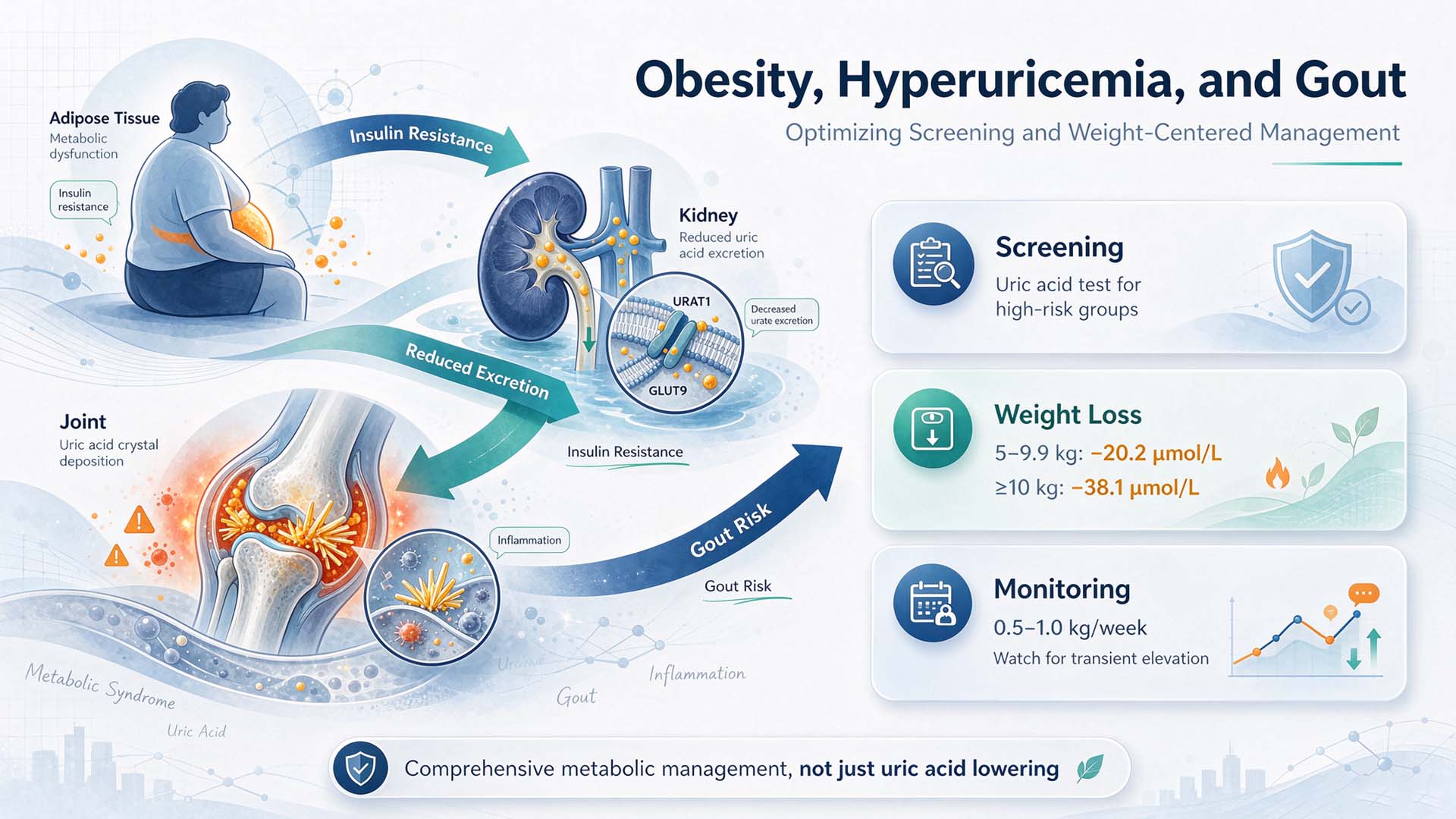
Weight reduction has been proven to be an effective strategy for lowering serum uric acid levels and preventing gout attacks. Real-world evidence shows that a weight loss of 5–9.9 kg and ≥10 kg reduces serum uric acid by an average of 20.2 μmol/L and 38.1 μmol/L, respectively. Lifestyle modification, including a low-purine, low-fructose diet such as the DASH or Mediterranean diet combined with regular moderate-intensity aerobic exercise, forms the foundation of weight management. For individuals who fail to achieve weight goals through lifestyle changes alone, pharmacologic interventions such as glucagon-like peptide-1 (GLP-1) receptor agonists or orlistat can provide additional benefits, with clinical trials demonstrating that tirzepatide can reduce serum uric acid by up to 56.5 μmol/L alongside significant weight loss. For severely obese patients, metabolic surgery offers long-term metabolic benefits, reducing the risk of gout by 40% and hyperuricemia by 53% over 19 years of follow-up, although the risks of perioperative complications and nutritional deficiencies require careful consideration.
During weight management interventions, regular uric acid analyzer is essential to monitor treatment response and detect transient uric acid elevations that may occur during rapid weight loss, which can trigger acute gout attacks due to increased ketone production and enhanced renal uric acid reabsorption. Clinical guidelines recommend gradual weight loss of 0.5–1.0 kg per week to minimize this risk, with more frequent uric acid detector for high-risk patients. If significant uric acid elevation or premonitory symptoms of gout occur, appropriate adjustment of urate-lowering therapy may be necessary to maintain uric acid within the target range.
In conclusion, the clinical management of obesity-related hyperuricemia and gout should shift from a sole focus on uric acid reduction to a comprehensive strategy centered on weight loss and metabolic improvement. Timely screening, standardized uric acid monitoring, and personalized weight management interventions can effectively reduce the disease burden and improve long-term outcomes for affected populations.
Post time: Nov-18-2026