

Get a blood lipid report, most people’s eyes will immediately lock on to “low-density lipoprotein cholesterol (LDL-C)” – this is known as the “bad cholesterol” index, has long been popular. Many people believe that as long as LDL-C is controlled in the normal range, cardiovascular health is guaranteed. However, clinical data have revealed a harsh reality: even if blood pressure, blood glucose, body weight and other routine indicators reach the standard, there are still some people at risk of cardiovascular events such as myocardial infarction and cerebral infarction, which is the medical “cardiovascular residual risk”. In recent years, with the publication of the Expert Consensus on Hypertriglyceridemia and its Cardiovascular Risk Management, a long-ignored “invisible killer” has gradually come into the public eye – hypertriglyceridemia (HTG). blood lipid test
1. What is hypertriglyceridemia? Underestimated dyslipidemia
Triglycerides are the “fuel depot” of energy storage in the human body, which normally maintains metabolic balance. According to the “Guidelines for the prevention and treatment of Dyslipidemia in Chinese Adults”, triglyceride < 1.7mmol/L after 12 hours of fasting was defined as an appropriate level, and triglyceride ≥2.3mmol/L was defined as elevated. Clinically, the severity was divided into four levels: marginal elevation (1.7-2.29 mmol/L), elevation (2.3-5.59 mmol/L), and severe elevation (≥5.6mmol/L). The seemingly ordinary value changes hide the health crisis: when triglyceride is > 2.3mmol/L, the risk of atherosclerotic cardiovascular disease (ASCVD) is significantly increased; However, when the value is higher than 5.6mmol/L, the risk of acute pancreatitis rises several-fold. What is more alarming is that hypertriglyceridemia is the most common type of dyslipidemia in China, and it is an independent risk factor for cardiovascular disease – even if LDL-C has reached the target, hypertriglyceridemia will still become the “trigger” of cardiovascular events.
2. Where does triglyceride come from? Dual effects of diet and metabolism
The rise in triglycerides is not “invisible”, it comes from two main pathways:
Exogenous intake: dietary oil (such as fat meat, fried food, cream products) after absorption through the intestine, will form “chylomicron” into the blood, directly push up the triglyceride level. Triglycerides in the blood may spike within hours of a high-fat meal.
Endogenous synthesis: The liver is a “processing plant” for triglycerides, and its synthesis is regulated by three major factors: the supply of free fatty acids (obesity increases lipololysis), liver glycogen storage (high-sugar diet will promote the liver to convert excess sugar into triglycerides), and insulin and glucagon balance (insulin resistance, liver synthesis of triglycerides is increased). Therefore, patients with obesity, excessive intake of refined sugar, sedentary behavior, long-term alcohol consumption and diabetes are at high risk of hypertriglyceridemia.
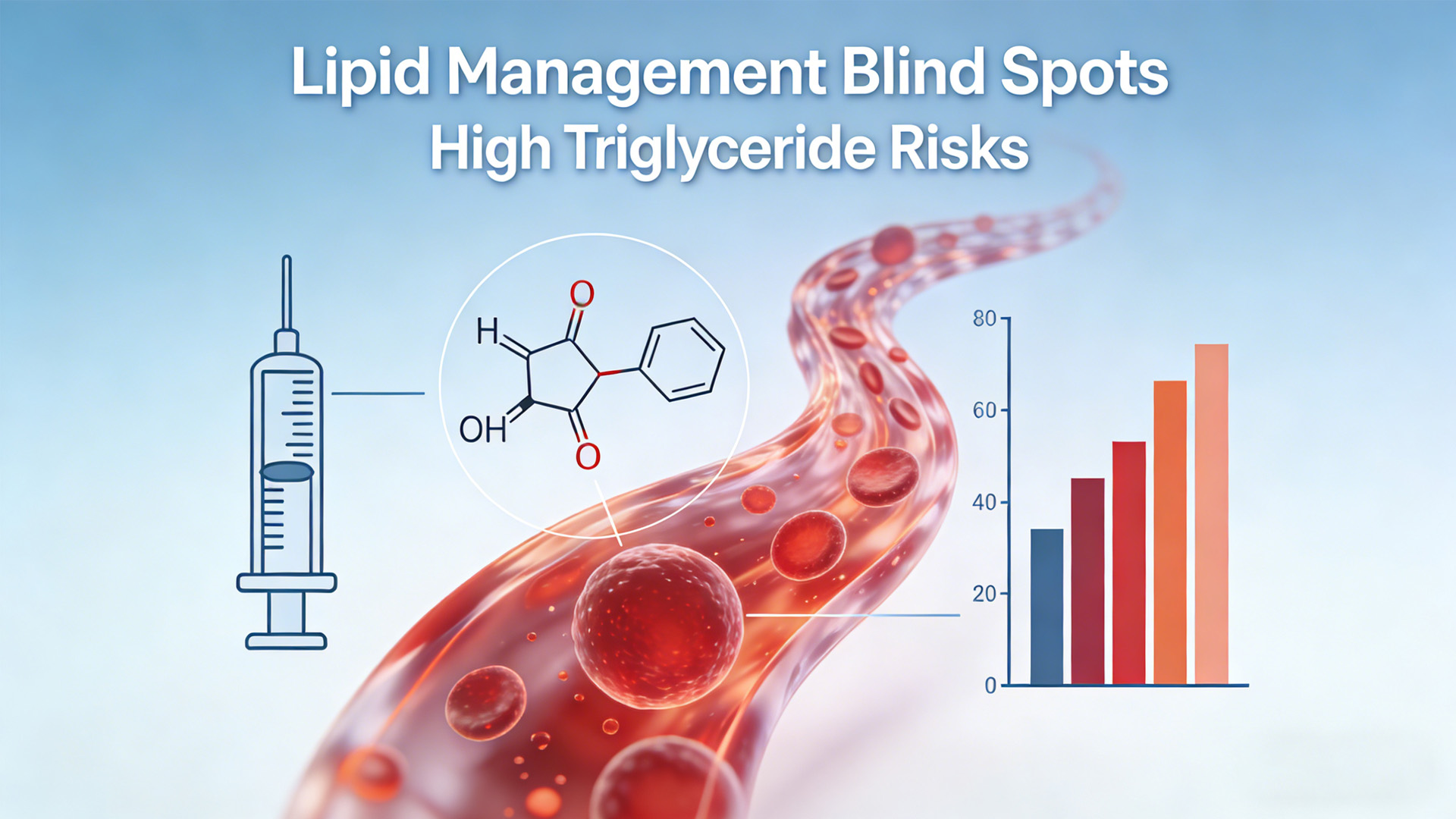
3. The dangers of the silent killer: It’s not just cardiovascular
The scary thing about hypertriglyceridemia is that it is “asymptomatic” — most people have no obvious discomfort, but they are quietly damaging their overall health:
The “accelerator” of cardiovascular disease: Asian population studies showed that for every 1mmol/L increase in triglyceride, the risk of coronary heart disease increased by 63%, which was equivalent to the harm of LDL-C. Even if LDL-C is controlled to the target level by statins, the risk of cardiovascular events will still increase by 27%-71% if TG is still ≥2.3mmol/L. Genetic studies have directly confirmed that people with natural low triglycerides have a significantly reduced risk of coronary heart disease.
The “driving hand” of diabetic microangiopathy: high triglyceride can aggravate insulin resistance, damage microvessels, and increase the risk of diabetic retinopathy, nephropathy, and neuropathy. Data show that patients with type 2 diabetes combined with high triglycerides have a 40% increased risk of retinopathy and a 35% increased risk of proteinuria. blood lipid analyzer
4. A new dimension of risk assessment: the clinical value of non-HDL-C
Traditional lipid management focuses on LDL-C, but for patients with hypertriglyceridemia, non-high-density lipoprotein cholesterol (non-HDL-C) is a more comprehensive evaluation index. It refers to the total cholesterol of all atherogenic lipoproteins except HDL-C (including LDL-C, very low density lipoprotein cholesterol VLDL-C, etc.) and is calculated by the formula: non-HDL-C = total cholesterol (TC) -HDL-C.
Why is non-HDL-C more important? Because VLDL-C is the main carrier of triglycerides, the residual lipoproteins produced by its metabolism are also strongly atherogenic, and non-HDL-C just covers these “hidden risks.” Non-hdl-c is superior to LDL-C in the evaluation of cardiovascular risk, especially in patients with diabetes and metabolic syndrome. It is recommended that the non-HDL-C level should be controlled within “LDL-C target +0.8mmol/L” in HTG patients with good LDL-C level but high cardiovascular risk.
5. Scientific management: based on lifestyle, supplemented by drug intervention
The management of hypertriglyceridemia needs to start from the “source” :
Lifestyle interventions are the foundation: weight control (5 to 10% weight loss leads to a 20 to 30% reduction in triglycerides), reduction in the intake of refined sugars and saturated fats, limitation of alcohol use (abstinence if severely elevated), 150 minutes per week of moderate-intensity aerobic exercise (e.g., brisk walking, swimming), and smoking cessation.
Drug treatment needs to be precise: if triglyceride is still not up to the standard after 3 to 6 months of lifestyle intervention, medication can be taken under the guidance of a doctor. It should be noted that niacin is not recommended for routine use because it may increase blood glucose and has not been proven to reduce cardiovascular risk. Fibrates (such as fenofibrate) and Omega-3 fatty acid preparations are commonly used in clinical practice.
Triglyceride is not “no symptoms are all right”, it is a “metabolic bomb” lurking in the body. The core of lipid management is never the achievement of a single index, but the comprehensive metabolic control. We should not only focus on LDL-C, but also pay attention to the management of triglyceride, so as to truly stay away from the residual risk of cardiovascular disease and protect the health of the whole body. lipid panel test
Post time: Mar-11-2026