

1. What is fecal occult blood?
Fecal occult blood refers to the presence of minute amounts of blood in the stool that cannot be detected by the naked eye. When the amount of bleeding in the digestive tract is small (usually less than 5 milliliters), red blood cells are digested and decomposed, and the stool appears colorless of blood. It is difficult to detect with the naked eye or under a microscope, but it can be identified through professional testing methods for hemoglobin or its metabolites.
2. The Significance of Fecal Occult Blood Testing
01 Early Screening for Gastrointestinal Diseases: Many gastrointestinal diseases (such as gastric ulcers, duodenal ulcers, intestinal polyps, tumors, etc.) may only cause trace amounts of bleeding in the early stage. Fecal occult blood testing is an important method for detecting these potential problems, which helps with early diagnosis and treatment, and improves the cure rate.
02 Assisting in Diagnosing the Causes of Anemia: Chronic gastrointestinal bleeding is one of the common causes of iron deficiency anemia. Fecal occult blood testing can help doctors determine whether anemia is related to gastrointestinal bleeding.
3. Who needs to take the fecal occult blood test?
01 Age factor: People over 40 years old, especially those aged 50 and above, have an increased risk of digestive tract diseases as they age.
02 Family history: Those with a family history of colorectal cancer, gastric cancer and other digestive tract tumors have a higher risk than the general population.
03 People with digestive tract symptoms: Those with long-term constipation, diarrhea, abdominal pain, hematochezia, indigestion and other symptoms.
04 People with chronic diseases: Those with digestive tract diseases such as gastric ulcers, colitis and intestinal polyps.
05 People with bad living habits: Those with a long-term high-fat and low-fiber diet, smoking, heavy drinking and lack of exercise.
4. Precautions Before the Test
01 Dietary Adjustment: Avoid consuming foods rich in iron or hemoglobin such as animal blood, liver, lean meat, and large amounts of green leafy vegetables for 3 days before the test to prevent false positive results.
02 Medication Adjustment: Discontinue the use of iron supplements, vitamin C, bismuth preparations, non-steroidal anti-inflammatory drugs, and other medications that may affect the test results (as directed by a doctor).
03 Special Periods: Women should avoid the menstrual period, and patients with hemorrhoids should avoid the period of hemorrhoid bleeding when collecting stool samples.
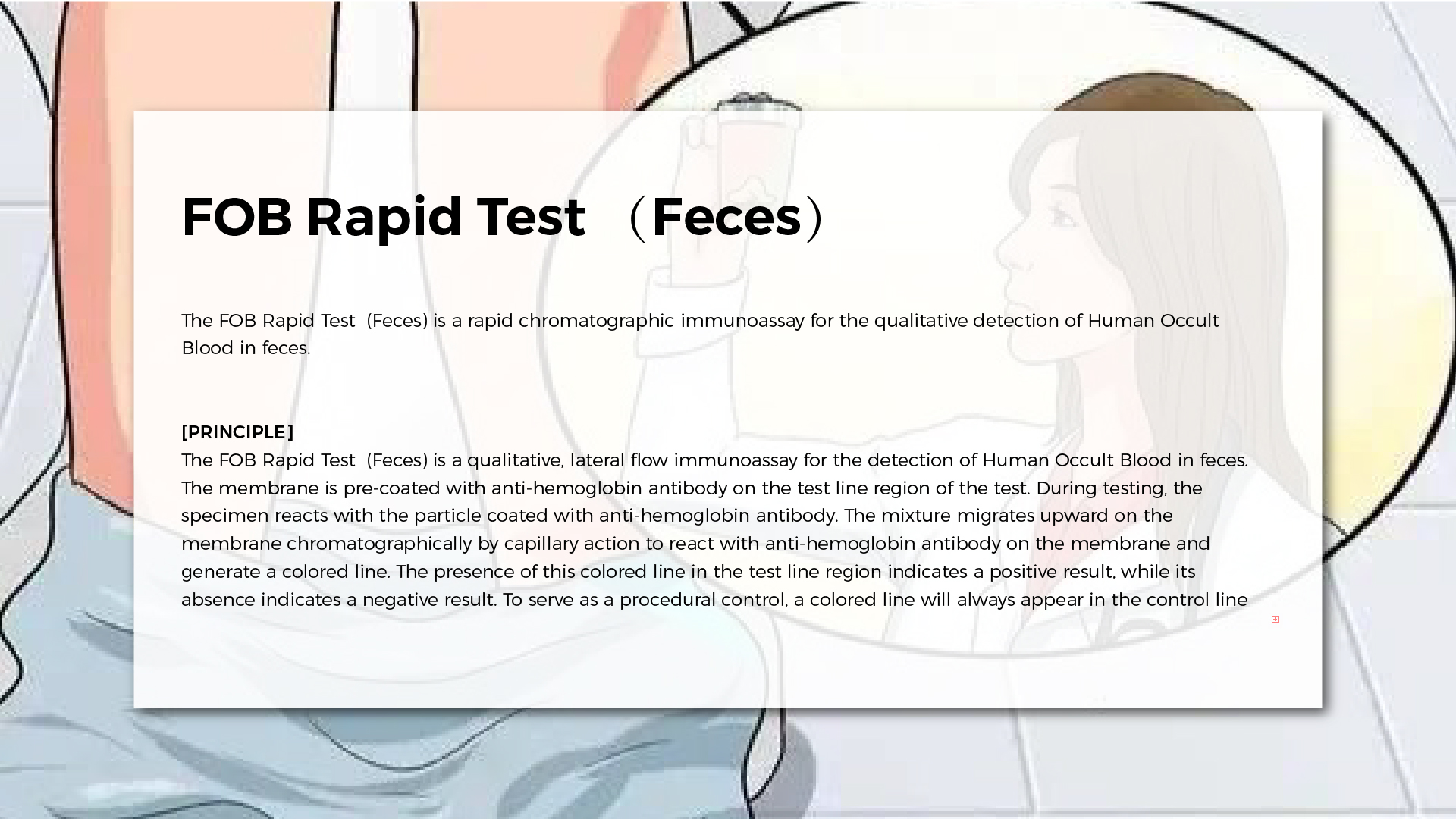
5. Interpretation of Test Results
01 Positive Result: It indicates the possible presence of gastrointestinal bleeding, but it does not necessarily mean a serious illness. It could be caused by benign conditions (such as gastric ulcers, hemorrhoids) or physiological factors (such as food and medication effects). Immediate medical attention is required, and further examinations like gastroscopy and colonoscopy should be conducted to determine the cause.
02 Negative Result: Generally, it means that no hemoglobin was found in the test sample, but it cannot completely rule out the possibility of gastrointestinal bleeding, especially when there are suspicious symptoms. A comprehensive judgment should be made in combination with other tests.
03 Warm Reminder: Fecal occult blood test is a simple, non-invasive, and economical method for screening gastrointestinal diseases. High-risk groups should undergo regular testing. If abnormal results are found, do not panic or self-diagnose. Seek medical attention promptly and follow the doctor’s advice for further examination and treatment.
6. Common Misconceptions about Fecal Occult Blood Testing
01 Misconception One: No need for fecal occult blood testing if the stool color is normal. Many people believe that only when the stool is black or bloody is it necessary to have a check-up. In fact, this is not the case. When there is a small amount of bleeding in the digestive tract, the color of the stool will not change at all and cannot be detected by the naked eye. However, the fecal occult blood test may already be positive at this time. Therefore, even if the stool appears normal, high-risk groups still need to have regular tests.
02 Misconception Two: A positive result means a cancer diagnosis. A positive fecal occult blood test is just a “signal”, not a “definitive diagnosis”. Only by seeking medical attention promptly and following the doctor’s advice for further tests can the cause be determined.
03 Misconception Three: A negative test result means there is no problem. The test results can also be affected by sample collection, methodological limitations, etc. Therefore, if the clinical symptoms strongly suggest gastrointestinal bleeding, even if the test is negative once, further tests or other confirmatory tests are still needed.
04 Misconception Four: Self-testing and self-diagnosis at home. Home fecal occult blood test strips can be used as a preliminary screening tool, but it is important to strictly follow the instructions and not to replace regular physical examinations. If a positive result is found or there are symptoms, one should seek medical attention at a hospital promptly and not make a self-diagnosis.
Post time: Jan-12-2026