

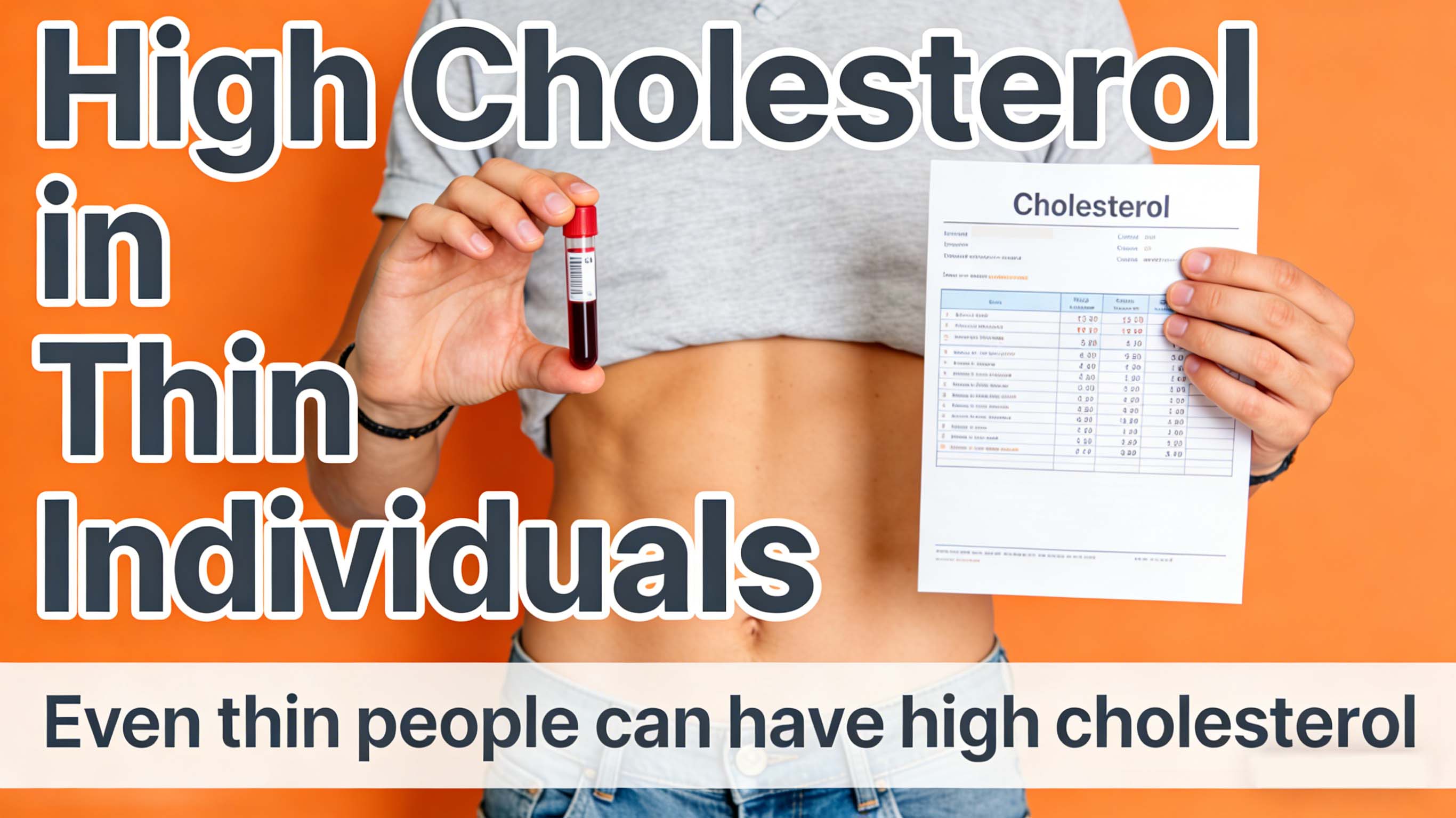
In the popular perception, high blood lipids seem to be “the patent of fat people” : big belly, double chin, greasy eating habits, these labels are always bound together with high blood lipids. Many thin people are sure: “My weight is normal, blood lipids must be fine.” However, clinical data have broken this myth – according to the “Guidelines for the Prevention and Treatment of Dyslipidemia in Chinese Adults”, about 20% of patients with dyslipidemia have a normal body mass index (BMI), and some even belong to the thin group. Lean hyperlipemia is becoming a neglected health hazard.
1. thin hyperlipidemia: hidden in the “slim” under the metabolic cris
1.1 Genetic: Natural “susceptibility” to blood lipids
Some high blood lipids have nothing to do with fat and thin, but are engraved in the gene “fate”. A typical example is familial hypercholesterolemia (FH), in which patients are born with a lack of LDL receptors, resulting in a failure to properly metabolize low-density lipoprotein cholesterol (LDL-C) and persistently high levels of “bad cholesterol” in the blood. They tend to be thin, but they start to have dyslipidemia in adolescence. Without intervention, the risk of coronary heart disease and myocardial infarction in adulthood is more than 20 times that of the general population. blood lipid analysis meter
There is no shortage of such cases in the clinic: a 28-year-old woman with a BMI of only 18.2 (normal range 18.5-23.9), but she visited the doctor for recurrent chest distress, and her LDL-C was found to be as high as 7.2mmol/L (normal range < 3.4mmol/L), and she was finally diagnosed with familial hypercholesterolemia. Her father and grandfather both died of heart attack before the age of 40, and the family inherited “blood lipid defects” made the slim body “a health illusion”.
1.2 Invisible obesity: Visceral fat is “behind the curtain”
Many thin people belong to the abdominal obesity of “thin outside and fat inside” : slender limbs, but excessive visceral fat. Visceral fat around the liver, pancreas and other organs can cause insulin resistance and interfere with the liver’s metabolism of blood lipids. On the one hand, it prompts the liver to synthesize more triglyceride, on the other hand, it reduces the clearance efficiency of LDL-C, and eventually leads to blood lipid disorders.
To determine whether visceral fat is excessive, we should not only look at weight, but also pay attention to waist circumference: male waist circumference ≥90cm, female ≥85cm, even if BMI is normal, it also belongs to abdominal obesity. Such people are often accompanied by “triple high” risk, and the probability of dyslipidemia is more than 3 times that of the average thin person.
1.3 Bad habits: Thin people also have “blood fat minefield”
Many thin people have “weight anxiety”, but they go to the other extreme in their diet:
High oil and high sugar “compensation diet” : feel that they do not need to eat thin, long-term fried food, milk tea dessert, resulting in a sharp increase in triglyceride;
Long-term diet + sedentary: in order to maintain slim excessive diet, but will allow the liver to compensate for the synthesis of more cholesterol; Sedentary will reduce the body’s consumption of blood lipids, and under the dual effect, blood lipids are naturally “out of control”;
Stress and staying up late: long-term mental stress and lack of sleep can affect the endocrine system, lead to increased cortisol, and then promote fat synthesis and dyslipidemia.
1.4 Diseases and Drugs: the “invisible driver” of metabolic disorders
Some chronic diseases and medications can also cause thin people to develop high blood lipids:
Hypothyroidism: Insufficient secretion of thyroid hormone can slow down the rate of metabolism, resulting in the accumulation of cholesterol and triglycerides in the blood;
Nephrotic syndrome: Kidney lesions affect lipoprotein metabolism, leading to severe hypercholesterolemia;
Drug effects: long-term use of glucocorticoids, contraceptives, etc., may interfere with lipid metabolism, resulting in increased blood lipids.

2. thin hyperlipemia: more hidden, more dangerous
Compared with fat people, thin people’s high blood lipids are more “confusing” :
Hidden symptoms: fat people may find problems early because of fatty liver, dizziness and other symptoms, while thin people often have no obvious discomfort, until the occurrence of angina pectoris, cerebral infarction and other serious cardiovascular events before medical treatment, at this time the blood vessels have occurred irreversible damage;
Cognitive misunderstanding: doctors and patients are easy to ignore the lipid problems of thin people. In routine physical examination, the lipid examination of thin people is often “simplified”, resulting in the omission of abnormal indicators.
Superimposed risk: The cardiovascular risk of dyslipidemia increases exponentially in lean people with both hypertension and diabetes — data show that lean people with diabetes and high blood lipids have a 4-fold increased risk of myocardial infarction. lipid test meter
3. thin body fat protection guide: don’t let slim cheat yourself
3.1 Regular physical examination: include blood lipids in the “must check list”
Regardless of fat or thin, adults should check their blood lipids at least once a year, including total cholesterol, LDL-C, triglyceride, and HDL-C. Thin people with family history of heredity, chronic disease and long-term medication history are recommended to check once every six months.
In particular, do not just look at the “reference value”, but combine it with your own risk stratification. For example, in lean people with a family history of coronary heart disease, LDL-C should be controlled below 2.6mmol/L, rather than the usual 3.4mmol/L.
3.2 Dietary fat control: Lean ≠ can “eat sea plug”
Limit oil and sugar: daily cooking oil does not exceed 25g, avoid fried food, animal offal; Drink less sweet drinks, milk tea, refined sugar intake should not exceed 50g per day;
Increase dietary fiber: eat more whole grains, vegetables, fruits, dietary fiber can absorb cholesterol in the intestine, promote its discharge;
High-quality protein replacement: replace some red meat with fish and soy products, Omega-3 fatty acids help reduce triglycerides.
3.3 Exercise to reduce fat: focus on eliminating visceral fat
Commit to 150 minutes of moderate-intensity aerobic activity (e.g., brisk walking, swimming, jogging) weekly, paired with two to three strength training sessions. Aerobic exercise can directly deplete blood lipids, while strength training can increase muscle mass, increase basal metabolic rate, and help burn visceral fat.
For lean people with abdominal obesity, core training such as plank support and abdominal curling can be done more to reduce abdominal fat accumulation.
3.4 Beware of “metabolic signals” : Don’t just look at weight
In addition to weight, look at these indicators:
Waist circumference: < 90cm for men and < 85cm for women;
Body fat rate: male < 20%, female < 25%;
Fasting blood glucose: < 6.1mmol/L, 2 hours after meal < 7.8mmol/L.
If these indicators are abnormal, even if the weight is normal, we should also be alert to the possibility of dyslipidemia.
Blood lipid is healthy, and has nothing to do with fat and thin
The fact that thin people have high blood lipids breaks the stereotype of “weight = health”. Dyslipidemia is essentially a metabolic problem, not a simple “fat or thin problem”. Whether fat or thin, we should pay attention to blood lipids regularly, and protect metabolic balance with healthy diet and exercise habits. After all, real health is never “looking slim”, but “internal metabolic stability” — don’t let the slim body, cover up the “health alarm” of blood lipids. medical blood lipid analyzer
Post time: Mar-13-2026