

When pets unfortunately suffer from diabetes, scientific management and daily monitoring become the key to controlling the condition and ensuring their quality of life. Among them, blood glucose monitoring is the core link to grasp the fluctuations in a pet’s blood glucose and adjust the treatment plan. Compared with frequent visits to the hospital, conducting blood sugar tests for pets at home is not only convenient and efficient, but also can reduce their stress responses and reflect their true blood sugar levels more promptly. This article will provide a detailed introduction to the key points for dealing with pet diabetes and, taking the sejoy pet blood glucose meter as an example, share practical methods for measuring blood glucose at home.
I. Core Principles for Dealing with Pet Diabetes
Seek medical attention promptly and receive standardized treatment
Once a pet is diagnosed with diabetes, it is necessary to immediately follow the veterinarian’s guidance and formulate a comprehensive treatment plan that includes insulin injections, dietary adjustments (such as changing to diabetes prescription food), weight management, and exercise planning. Never stop taking the medicine or adjust the dosage by yourself.
Strictly control the diet
Avoid high-sugar and high-carbohydrate foods, feed at regular intervals and in fixed amounts to ensure a balanced diet. Some pets need to consume diabetes-specific food for life to stabilize blood sugar fluctuations.
Regular exercise and weight management
Moderate exercise (such as taking a walk every day) can help control weight and improve insulin sensitivity, but it is necessary to avoid intense exercise or exercise on an empty stomach to prevent the risk of hypoglycemia.
Daily blood glucose monitoring
Regular monitoring of blood sugar is an important basis for evaluating the therapeutic effect, especially when adjusting insulin dosage, diet or when abnormal symptoms (such as polydipsia, polyuria, listlessness) occur, the monitoring frequency should be increased.
Ii. Advantages and Applicable Scenarios of Measuring Blood Sugar at Home
Convenient and efficient: No need to frequently travel to the hospital, saving time and energy, especially suitable for pets that require long-term monitoring.
Reduce stress: The hospital environment may cause pets to be nervous, leading to a temporary increase in blood sugar. Home testing is more in line with the real daily situation.
Timely intervention: It can quickly detect hypoglycemia or hyperglycemia, buying time for emergency treatment and reducing the risk of complications (such as ketoacidosis, cataracts, etc.).
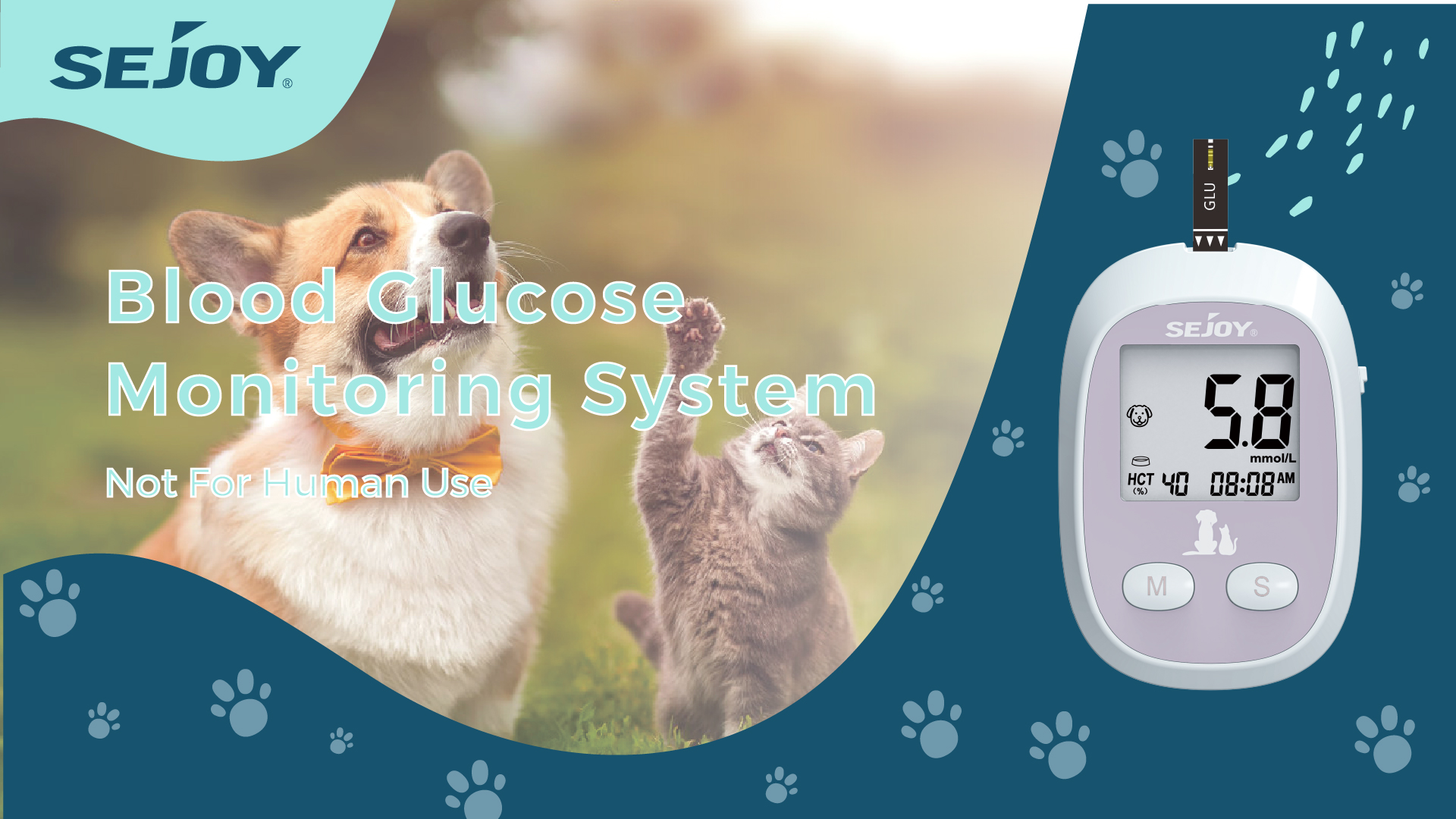
Iii. sejoy Pet Blood Glucose Meter: Professional Tools Facilitate Precise monitoring
Choosing a blood glucose meter specially designed for pets is a prerequisite for ensuring the accuracy of the test. The sejoy pet blood glucose meter, with its functions adapted to the physiological characteristics of pets, has become an ideal choice for home monitoring. Its core advantages are as follows:
5-second Fast testing: Shorten the waiting time for testing and reduce the difficulty for pets to cooperate.
Wide operating temperature adaptability (5-45℃ Wide operating temperature) : It is not affected by the temperature difference between indoors and outdoors and is suitable for use in various climatic conditions.
Micro blood collection volume (0.6 Microliter) : only a very small amount of blood (about one drop) is needed, which reduces the pet’s pain and improves its cooperation.
High-precision Enzyme technology (GDH-FAD Enzyme) : Utilizing glucose dehydrogenase (GDH-FAD) detection technology, it has strong anti-interference ability, avoiding result deviations caused by other substances in the blood (such as maltose), ensuring reliable data.
360 memories Storage: Automatically records the test time and results, facilitating the tracking of blood sugar change trends and providing data support for veterinarians to adjust their plans.
Iv. Detailed Steps for Measuring Blood Sugar at Home using the sejoy Blood Glucose Meter
1. Preparations before testing
Tool list: sejoy pet blood glucose meter, matching test strips, blood collection needle, alcohol wipes, cotton balls or hemostatic powder (if the pet doesn’t stop bleeding), treats (reward snacks).
Pet preparation: Choose to test the pet when it is quiet (such as 2 hours after eating), soothe its emotions in advance. You can gently stroke it or guide it with snacks to avoid forcing it to stay still and causing stress.
Cleaning and disinfection: Wipe the blood collection site with an alcohol swab (it is recommended to use the tips of the ears, paw pads or the inner side of the elbow where the skin is thinner). Wait until the alcohol has completely evaporated before collecting the blood (to avoid alcohol residue affecting the results).
2. Blood collection and testing procedures
Install the test strip: Insert the test strip into the blood glucose meter. The instrument will automatically turn on and display the “blood drop” symbol. Confirm that the test strip matches the instrument code (if manual code adjustment is required, check it in advance).
Blood collection operation: Use a disposable blood collection needle to gently puncture the pet’s skin (the depth should be just enough to bleed), and touch the blood drop with the blood-sucking area of the test strip to ensure that the blood completely covers the blood-sucking hole (no need to squeeze to avoid the mixture of tissue fluid).
Reading result: The blood glucose meter starts a countdown (5 seconds), and after it ends, it displays the blood glucose value (the unit is usually mmol/L or mg/dL, and the reference range needs to be confirmed with the veterinarian).
Subsequent treatment: Gently press the blood collection point with a cotton ball until the bleeding stops. Reward the pet with snacks and provide comfort. Record the detection time, values and the pet’s condition (such as whether it has eaten, exercised, etc.).
3. Precautions
Storage of test strips: Store in a sealed container in a dry and dark place to avoid expiration or moisture. Before use, bring them back to room temperature (especially in winter).
Blood collection technique: If the pet’s blood vessels are not obvious, gently rub the blood collection area for 10 to 20 seconds to promote blood circulation. When collecting blood with a claw pad, avoid areas with a thick stratum corneum.
Result interpretation: The normal blood glucose range of pets varies by species, age, and testing time (for example, the normal fasting blood glucose of dogs is approximately 3.9-6.1mmol/L, and that of cats is about 3.3-5.6mmol/L). It is necessary to determine whether the value is abnormal in combination with the guidance of a veterinarian. If persistent hyperglycemia (such as > 11.1mmol/L in dogs) or hypoglycemia (such as < 3.3mmol/L in dogs) occurs, contact a veterinarian immediately.
V. Summary
Although pet diabetes requires long-term management, through scientific treatment, regular monitoring and meticulous care, most pets can maintain a normal life. The sejoy pet blood glucose meter, with its advantages of rapidity, accuracy and low pain, provides a reliable tool for home blood glucose monitor. Remember, regularly feeding back the test data to the veterinarian and jointly adjusting the treatment plan is the key to helping pets overcome diabetes. May every “furry little one” live a healthy and happy life with the care of their owner and the assistance of professional tools!
Post time: Jan-02-2026