

In the sophisticated system of diabetes management, blood glucose monitoring (BGM) serves as the core basis for guiding clinical decisions. However, when the number of red blood cells in the blood fluctuates, this seemingly simple detection process may fall into a “distortion predicament”. From pseudo-hypoglycemia in anemic patients to latent hyperglycemia in polycythemia vera, the changes in red blood cell counts are challenging the “true value” bottom line of blood glucose testing.
1. Red blood cells: An overlooked interfering variable in blood glucose testing
Red blood cells, as the most numerous cells in the blood, have long been overlooked in clinical practice for their impact on blood glucose testing. The traditional view holds that blood glucose meters reflect the state of sugar metabolism in the body by detecting the concentration of glucose in the blood. However, in reality, changes in the number of red blood cells can interfere with the test results from both physical and biochemical perspectives:
1.1 The “Numerical Trap” of Physical Dilution Effects
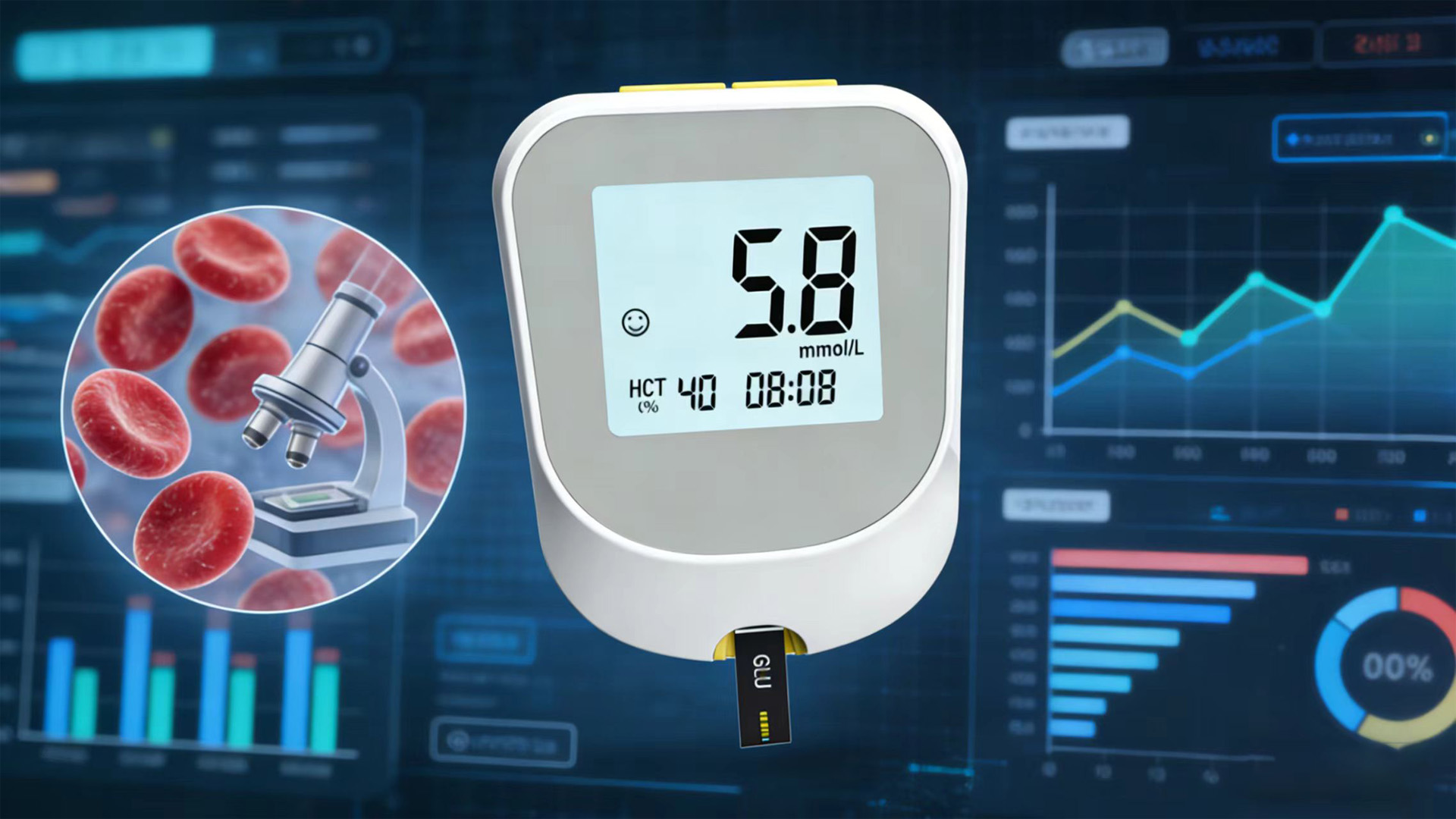
When the number of red blood cells decreases (such as in iron deficiency anemia and hemolytic anemia), the proportion of plasma in the blood relatively increases, and glucose mainly exists in plasma. At this point, the blood glucose meter that uses whole blood as the test sample will have its calculated value of glucose concentration per unit volume of blood “diluted” due to the reduced proportion of red blood cells. Studies show that when the hematocrit (HCT) is below 25%, the blood glucose meter detection value may be 15% to 20% lower than the actual plasma blood glucose value. This pseudo-hypoglycemia is highly likely to mislead clinical decisions. blood glucose test meter
On the contrary, in patients with polycythemia vera, the hematocrit can be as high as over 60%, and the plasma ratio is compressed. At this time, the blood glucose meter detection value may be 10%-15% higher than the actual value. This latent hyperglycemia may lead to the excessive use of hypoglycemic drugs and increase the risk of hypoglycemia.
1.2 “Dynamic Interference” in Biochemical Metabolism
Red blood cells are not only physical space-occupying “diluents”, but also active metabolic units. Each red blood cell contains hexokinase, which can continuously consume glucose for anaerobic glycolysis. During the process of specimen placement, the more red blood cells there are, the faster the rate of glucose consumption. Studies show that for every 10% increase in hematocrit, the glucose in whole blood samples is consumed by an additional 0.3 to 0.5mmol/L per hour. For venous blood samples that need to be sent for testing, this metabolic consumption will further accelerate in a high-temperature environment, leading to a deviation between the test results and the actual blood sugar level in the body.
2. The crisis of red blood cell interference in clinical scenarios
The impact of changes in red blood cell count on blood glucose detection is not a theoretical deduction in the laboratory, but an urgent problem to be solved in real clinical scenarios:
2.1 The “Hypoglycemic Illusion” in Anemic Patients
In patients with chronic kidney disease, malignant tumors and other diseases, anemia and hyperglycemia often coexist. When the hemoglobin level is below 90g/L, approximately 30% of patients will experience a blood glucose meter reading that is lower than the venous plasma blood glucose level. This pseudo-hypoglycemia may lead doctors to mistakenly reduce the dosage of hypoglycemic drugs, thereby triggering a hyperglycemic crisis. In a study involving 120 patients with diabetes complicated with anemia, blood glucose detection errors caused by red blood cell interference led 21% of the patients to receive inappropriate treatment adjustments.
2.2 The “Fog of Blood Glucose Fluctuations” during the Perioperative Period
Massive blood loss, fluid resuscitation and blood dilution during surgery can cause sharp changes in hematocrit. In patients undergoing heart surgery, after cardiopulmonary bypass, the hematocrit can drop below 20%, and at this time, the blood glucose meter detection value may be more than 25% lower than the actual blood glucose value. In this case, relying on fingertip blood glucose to guide insulin treatment may lead to severe hyperglycemia, increasing the risk of postoperative infection and poor wound healing.
2.3 “Special Challenges” for Newborns and Elderly Patients
The hematocrit of newborns is usually as high as 55% to 65%, while elderly patients often have a reduced number of red blood cells due to malnutrition and chronic diseases. The blood glucose test results of these two groups are more susceptible to interference from red blood cells, but are often overlooked in clinical practice. In the neonatal intensive care unit, approximately 15% of hyperglycemia diagnoses may be pseudo-results caused by polycythemia, and the incidence of pseudo-hypoglycemia due to anemia in elderly patients is as high as 40%.
3. Technological Breakthrough: From “Passive Adaptation” to “Active Correction”
Facing the detection challenges brought about by changes in red blood cell count, blood glucose monitoring technology is shifting from “passive adaptation” to “active correction” :
3.1 Application of Hematocrit Correction Technology
The new generation of blood glucose meters is equipped with a hematocrit correction algorithm, which can automatically adjust the test results based on the hematocrit of the sample. When the hematocrit is within the range of 20% to 60%, this correction technique can control the detection error within 5%. For instance, some high-end blood glucose meters estimate the hematocrit by measuring the conductivity of blood and then correct the glucose detection value in real time, effectively eliminating the influence of changes in the number of red blood cells. blood glucose meter at home
3.2 Regression of Plasma glucose detection
In cases of abnormal hematocrit, using plasma blood glucose testing instead of whole blood testing is a reliable method to obtain the true value. The laboratory biochemical analyzer conducts detection by centrifugation of plasma, completely avoiding the interference of red blood cells. However, this method takes a long time and cannot meet the demand for bedside immediate detection. Therefore, in clinical practice, a “hematocrit integral layer detection strategy” should be established: when the hematocrit is less than 25% or greater than 55%, the results of plasma blood glucose detection or corrected blood glucose meters should be given priority.
3.3 Supplementation of interstitial fluid glucose monitoring
Continuous glucose monitoring (CGM) technology indirectly reflects the blood glucose level in the body by detecting the glucose concentration in the interstitial fluid of subcutaneous tissue. Since the interstitial fluid is not affected by changes in the number of red blood cells, the CGM results can more stably reflect the status of glucose metabolism. For patients with significant fluctuations in hematocrit, the combined use of CGM and blood glucose meters can mutually verify each other, improving the accuracy of blood glucose assessment.
4. Optimization paths for clinical practice
Technological progress has made it possible to solve the problem of red blood cell interference, but more importantly, it is necessary to establish clinical-level response strategies:
4.1 Establish a screening mechanism for hematocrit
At the first visit and regular follow-up of diabetic patients, hematocrit should be routinely tested. For patients with abnormal hematocrit, it should be noted in the blood glucose test report that “the result may be affected by the number of red blood cells”, and it is recommended to use correction methods or plasma blood glucose tests for confirmation.
4.2 Develop individualized testing plans
Formulate a blood glucose monitoring plan based on the patient’s hematocrit level:
Hematocrit <25% : Use plasma blood glucose detection or a blood glucose meter corrected by hematocrit Hematocrit 25%-55% : Conventional blood glucose meters can be used, but they need to be compared with plasma blood glucose results regularly Hematocrit >55% : Plasma blood glucose testing should be preferred, or a blood glucose meter with a high hematocrit mode should be used
4.3 Strengthen the training of medical staff
Clinical medical staff should fully understand the impact of changes in red blood cell count on blood glucose detection, and master the applicable scope and correction techniques of different detection methods. When interpreting blood glucose results, a comprehensive judgment should be made by combining the patient’s hematocrit level, clinical symptoms and other metabolic indicators, and relying solely on the blood glucose meter detection value should be avoided.
5. Future Outlook: Moving towards a New Era of Precise blood Glucose Monitoring
With the development of artificial intelligence and sensor technology, future blood glucose monitoring systems will achieve more intelligent correction of red blood cell interference. By integrating multi-dimensional data such as hematocrit, hemoglobin, and blood oxygen saturation, AI algorithms can determine the reliability of the test results in real time and provide correction suggestions. Meanwhile, the breakthrough in non-invasive blood glucose monitoring technology is expected to completely break free from the limitations of blood samples and fundamentally eliminate the influence of changes in red blood cell count on the test results.
The pursuit of “true value” in blood glucose testing is the cornerstone of precise diabetes management. The challenges brought about by changes in red blood cell count not only test the limits of detection technology but also call for a transformation in clinical thinking. Through the deep integration of technological innovation and clinical practice, we will eventually break through the fog of red blood cell interference, enabling each blood glucose reading to truly reflect the patient’s metabolic status and providing the most reliable decision-making basis for diabetes management. blood glucose test
Post time: Jan-28-2026