

Dyslipidemia, characterized by elevated total cholesterol (TC), triglycerides (TG), low-density lipoprotein cholesterol (LDL-C), and reduced high-density lipoprotein cholesterol (HDL-C), remains a leading modifiable risk factor for atherosclerotic cardiovascular disease (ASCVD), which accounts for over 18 million annual deaths globally. As the foundational step of lipid management, the accuracy and reliability of lipid testing directly determine the appropriateness of clinical risk stratification, the effectiveness of lipid-lowering treatment, and the final prognosis of patients. In recent years, with the continuous improvement of testing technology and deepening understanding of lipid metabolism, clinical laboratories are constantly optimizing the whole process management of lipid testing to support more precise cardiovascular disease prevention and control.
Full-Cycle Quality Control: Ensuring Test Accuracy and Stability
The reliability of lipid test results is affected by multiple factors throughout the pre-analytical, analytical, and post-analytical phases, and standardization of the entire workflow is the core guarantee for result consistency. In the pre-analytical phase, biological factors (age, gender, race), behavioral factors (diet, exercise, alcohol consumption, smoking), clinical factors (chronic diseases, medication use), and sample handling procedures can all lead to deviations in results. Standardized pre-test preparation, including 12-hour fasting, maintenance of stable lifestyle habits for at least 2 weeks before testing, and timely processing of venous blood samples after collection, can reduce pre-analytical errors by more than 30%.
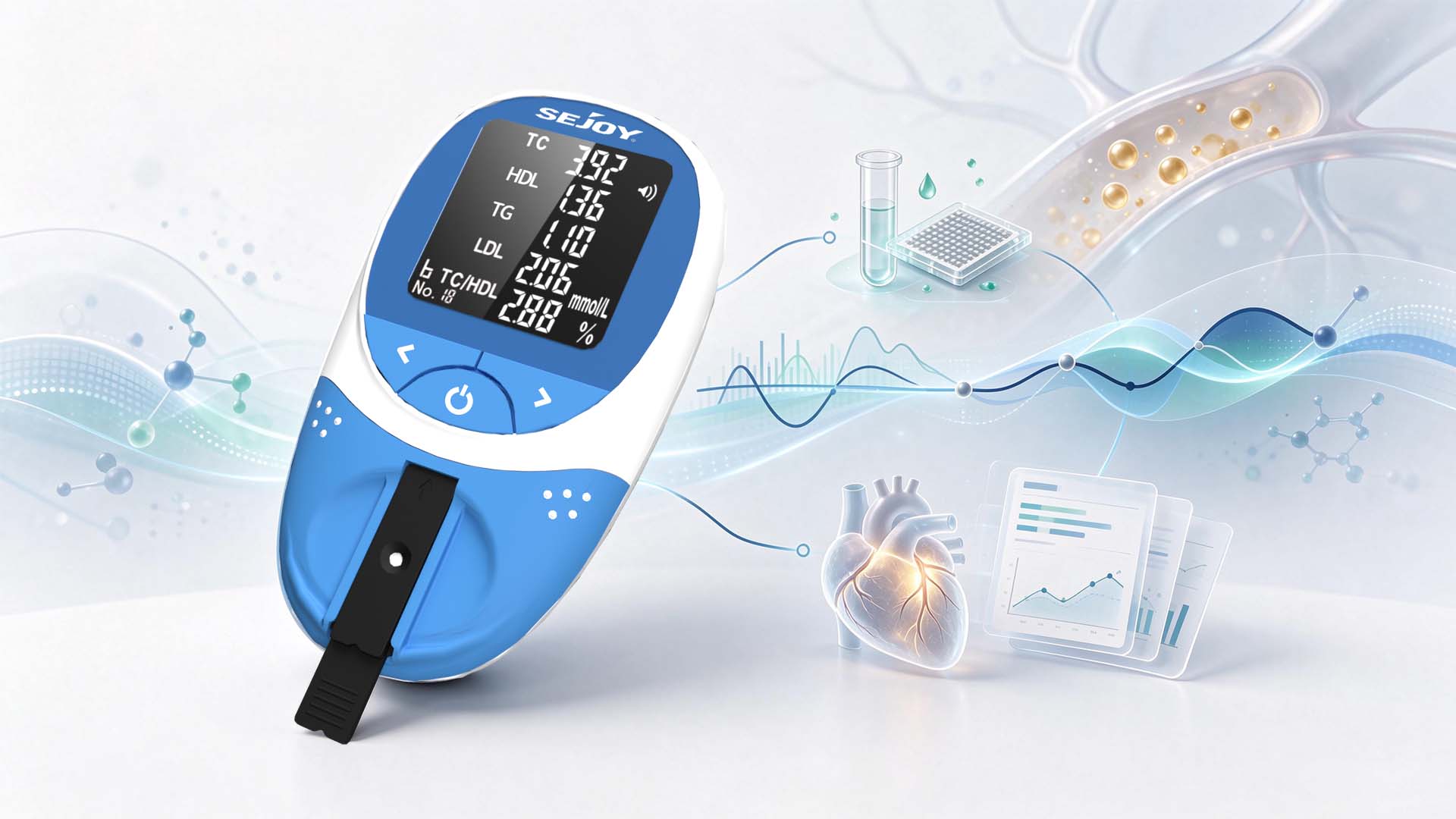
In the analytical phase, the performance of the quick blood lipid test system directly determines the accuracy of test results. Currently, enzymatic methods are widely used for TC and TG detection, homogeneous assays for HDL-C and LDL-C measurement, and immunoturbidimetry for apolipoprotein A1 (ApoA1), apolipoprotein B (ApoB), and lipoprotein(a) [Lp(a)] testing. However, different brands and models of detection systems have differences in methodology, calibration standards, and reagent performance, which may lead to inconsistent results for the same sample. For example, studies have shown that when testing the same batch of serum samples using three different systems from Hitachi, Roche, and Mindray, the coefficient of variation for TG, TC, LDL-C, and HDL-C varies significantly between systems. To address this issue, clinical laboratories should select blood lipid profile analyzer systems with stable performance and high accuracy, conduct regular verification and daily monitoring of precision and accuracy, and establish a comprehensive quality management system. This includes using quality control materials with at least two concentration levels near medical decision levels, implementing strict internal quality control for each test batch, and regularly participating in external quality assessment programs based on reference method calibration to ensure the comparability of test results across different medical institutions.
In the post-analytical phase, the interpretation of lipid test results should no longer rely solely on uniform reference ranges, but should be combined with the individual’s ASCVD risk level to determine personalized target values. According to current guidelines, the LDL-C target for low-to-moderate risk populations is set at
Innovations in Test Reporting: Bridging Guidelines and Clinical Practice
Traditional lipid test reports have significant limitations, including single indicator composition, lack of personalized target values, and complex interpretation that hinders patient engagement. To address these gaps, innovative report models are being developed to align with modern lipid management concepts. First, new reports should include not only conventional lipid indicators but also important predictive markers such as ApoB, Lp(a), and non-HDL-C, providing more comprehensive information for risk assessment. Advanced testing technologies, such as vertical gradient density centrifugation full-spectrum lipid profiling, can detect 15 lipid parameters including LDL particle number and lipoprotein remnants, significantly improving the accuracy of risk stratification.
Second, innovative reports should generate personalized lipid target values based on the patient’s age, gender, disease status, family history, and other risk factors, avoiding the misjudgment of high-risk patients as “normal” due to one-size-fits-all reference ranges. Third, visual presentation tools such as bar charts and line graphs can be used to compare individual indicators with target ranges and display dynamic changes over time, making the results easier for patients to understand. Interactive design further allows patients to obtain health management suggestions and treatment effect predictions, significantly improving their participation in lipid management and treatment adherence.
Future Perspectives: Precision and Personalization in Lipid Testing
The future development of lipid testing will focus on three directions: precision, personalization, and multidisciplinary collaboration. Next-generation lipid analyzer platforms integrating mass spectrometry technology will provide higher sensitivity and specificity for detecting low-abundance lipid markers and subfractions, supporting earlier identification of high-risk populations. The combination of genetic testing and conventional lipid indicators will enable more precise stratification of cardiovascular risk and formulation of individualized lipid-lowering strategies. In addition, closer collaboration between laboratory medicine specialists, cardiologists, and primary care providers will promote the standardization of testing processes and the implementation of guideline recommendations, ultimately reducing the global burden of cardiovascular disease.
With continuous innovation in testing technology, optimization of quality management systems, and improvement of report models, lipid testing will play an increasingly important role in cardiovascular disease prevention, providing more solid support for precise lipid management and better patient outcomes.
Post time: Nov-10-2026