

“After getting pregnant, I always feel extremely exhausted and even lack the strength to speak.” “My complexion is getting paler and paler, and my lips have lost their former rosy color…” Many pregnant women attribute these discomforts to “normal pregnancy reactions”, not realizing that it might be caused by anemia during pregnancy. As one of the most common complications during pregnancy, anemia in pregnancy affects approximately 20% of pregnant women worldwide. If not intervened in time, it can cause multiple harms to the health of both the mother and the baby. Nowadays, with the development of medical technology, the emergence of portable hemoglobin analyzers enables pregnant women to easily monitor anemia at home, taking the initiative in maintaining their health.
I. Anemia during Pregnancy: A Hidden “Health Bomb” during Pregnancy
Anemia during pregnancy, simply put, refers to the condition where the content of red blood cells or hemoglobin in a pregnant woman’s blood is lower than the normal level. During pregnancy, blood volume increases by 40% to 50%, but the number of red blood cells only increases by 20% to 30%. The blood is relatively diluted. Coupled with the sharp increase in the demand for hematopoietic raw materials such as iron and folic acid during the growth and development of the fetus, if the intake is insufficient, it is easy to cause anemia.
Anemia during pregnancy can be classified into four grades based on the concentration of hemoglobin (Hb) : mild anemia (Hb 100-109g/L), moderate anemia (Hb 70-99g/L), severe anemia (Hb 40-69g/L), and very severe anemia (Hb < 40g/L). Mild anemia may have no obvious symptoms and is only detected during prenatal check-ups. Moderate to severe anemia can cause symptoms such as fatigue, dizziness, palpitations, and shortness of breath. In severe cases, it may lead to adverse consequences such as anemic heart disease, intrauterine growth retardation of the fetus, and premature birth.
Ii. Portable Hemoglobin Meter: The “Magic Tool” for Home Monitoring of Anemia
In the past, if pregnant women wanted to know their hemoglobin levels, they could only go to the hospital for blood tests, which was not only time-consuming and laborious but also might cause anxiety due to waiting in line. Now, the emergence of portable hemoglobin analyzers has made home monitoring possible. This compact instrument is easy to operate. Just a drop of blood from the fingertip is needed, and accurate results can be obtained within tens of seconds, providing great convenience for pregnant women.
1. Simple operation and easy to get started with
It is very convenient to use a portable hemoglobin meter. Just a few steps are needed:
Preparations: Wash your hands thoroughly, disinfect your fingertips with alcohol wipes, and prepare for blood collection after the alcohol has evaporated.
Blood collection: Use the accompanying blood collection needle to gently puncture the fingertip and squeeze out a drop of blood.
Test: Drop the blood on the test strip, insert it into the portable device, and wait for tens of seconds to read the hemoglobin value;
Record: Record the test results for subsequent observation and comparison.
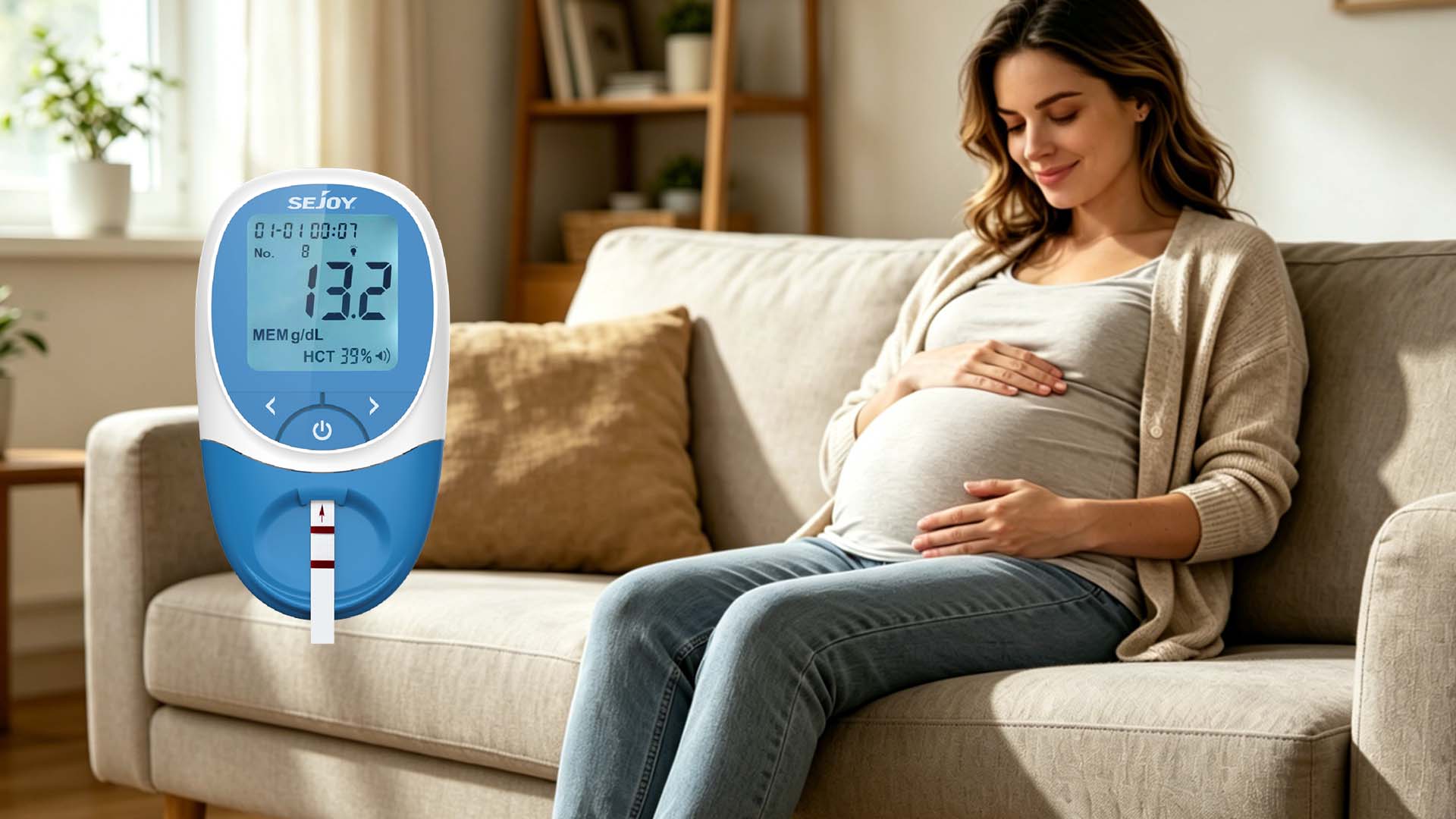
2. Precise and reliable, highly consistent with the hospital’s test results
Many pregnant women may be concerned about the accuracy of portable devices. In fact, the portable hemoglobin analyzers of regular brands adopt the same detection principle as those in hospitals. After strict calibration and verification, the consistency of the test results with the venous blood tests in hospitals is over 95%. As long as the operation is carried out correctly in accordance with the instructions, reliable detection data can be obtained.
3. Real-time monitoring to detect early signs of anemia in a timely manner
Pregnant women can regularly monitor their hemoglobin levels through a portable hemoglobin meter, especially during the middle and late stages of pregnancy (a period with a high incidence of anemia). It is recommended to test 1 to 2 times a week. Once the hemoglobin level is found to be below the normal range, one should promptly adjust their diet or seek medical attention to prevent further aggravation of anemia.
Three.
Iii. Home monitoring + scientific intervention to stay away from anemia during pregnancy
The portable hemoglobin measurement is merely a tool for detecting anemia. To stay away from anemia during pregnancy, it is also necessary to combine scientific intervention measures:
1. Dietary iron supplementation is the foundation
Iron is an important raw material for the synthesis of hemoglobin. Pregnant women should eat more foods rich in iron
Animal foods: red meat (pork, beef, mutton), animal liver, animal blood, etc. The absorption rate of heme iron in these foods is high, reaching 15% to 35%.
Plant-based foods: black fungus, nori, kelp, beans, etc. Although the absorption rate of non-heme iron is relatively low (only 1% to 3%), when combined with foods rich in vitamin C (such as oranges, kiwis, green peppers, etc.), it can promote iron absorption.
2. Iron supplementation is the key
If dietary iron supplementation is ineffective or anemia symptoms have already occurred, iron supplements should be taken under the guidance of a doctor. Commonly used iron supplements include ferrous sulfate, ferrous fumarate, and polysaccharide iron complex, etc. It is recommended to supplement 100 to 200mg of elemental iron daily. After continuous use for 2 to 4 weeks, recheck hemoglobin to observe the therapeutic effect.
3. Regular prenatal check-ups to fully understand the health of both mother and baby
Although portable hemoglobin analyzers can be used for home monitoring, they cannot replace prenatal check-ups. Pregnant women still need to follow the doctor’s advice and go to the hospital regularly for comprehensive check-ups, including blood routine, serum ferritin, folic acid, vitamin B₁₂ and other indicators, so that the doctor can promptly detect potential health problems and formulate personalized treatment plans.
Iv. Warm Reminder: Precautions for Using the portable hemoglobin meter
Choose regular products: When purchasing, select regular brands with medical device registration certificates to ensure product quality and testing accuracy.
Proper storage of test strips: Test strips should be stored in a dry and cool place, avoiding direct sunlight and moisture. Check the validity period of the test strips before use.
Standard operation: Operate strictly in accordance with the instructions. Avoid excessive squeezing of fingers during blood collection to prevent tissue fluid from mixing into the blood and affecting the test results;
In combination with clinical symptoms: The hemoglobin level is only a reference indicator. If obvious anemia symptoms occur, even if the test results are normal, medical attention should be sought promptly.
In conclusion, anemia during pregnancy is a health issue that cannot be ignored during pregnancy. Pregnant women should be vigilant and regularly monitor their health conditions through tools such as portable hemoglobin analyzers. At the same time, they should combine scientific diet and treatment measures to stay away from the trouble of anemia and safeguard the health of themselves and their babies. May every expectant mother have a smooth pregnancy and welcome a healthy and lovely baby!
Post time: Jun-23-2026