

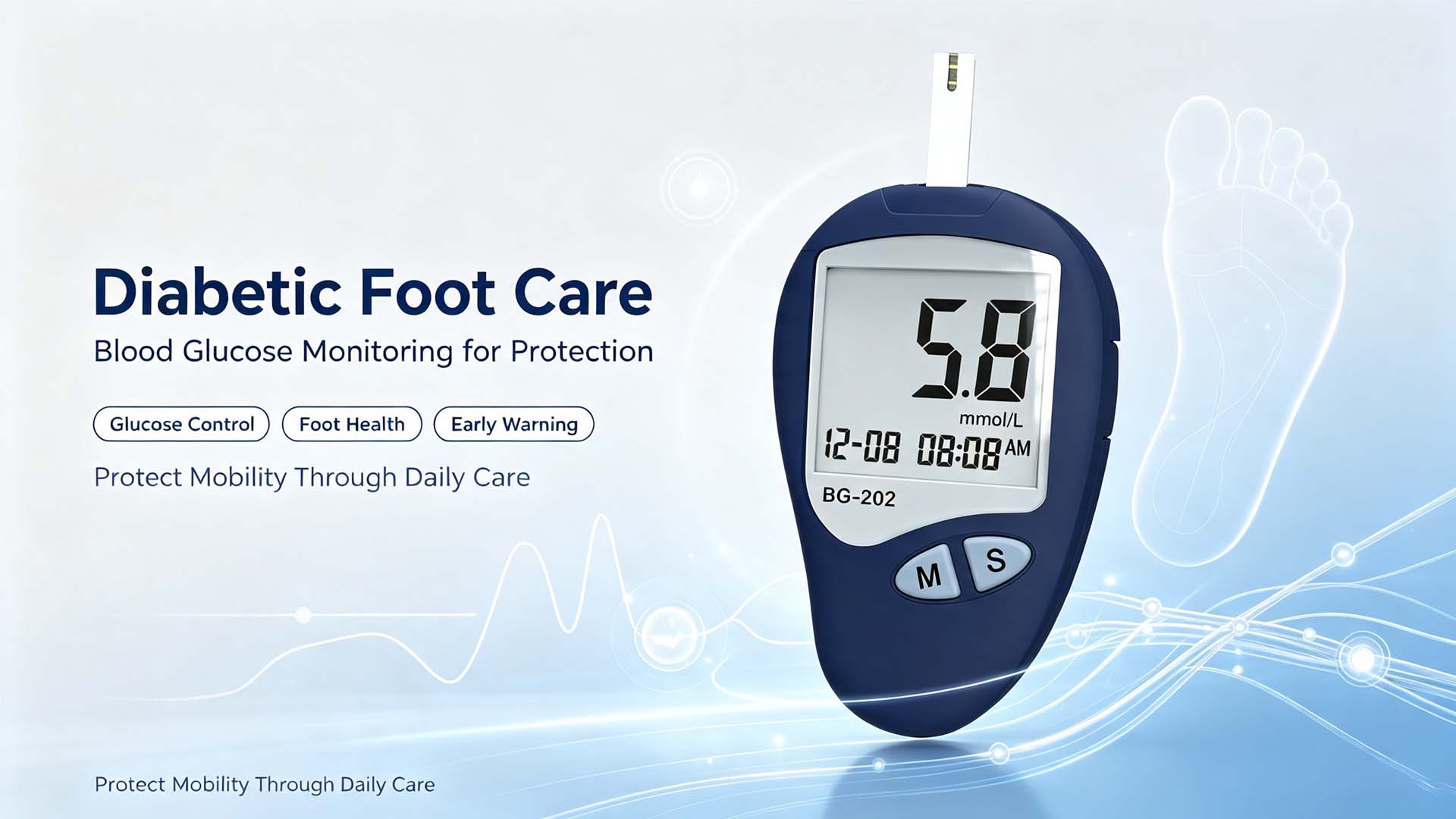
For the 422 million people living with diabetes worldwide, foot complications are among the most feared consequences. Diabetic foot, caused by nerve damage and poor circulation, affects 15% of patients and leads to 85% of lower limb amputations. The good news? Early detection and consistent blood glucose control can prevent up to 80% of these cases. The Sejoy glucose monitor provides a reliable tool to monitor your levels and protect your feet from silent damage.
How High Blood glucose Harms Your Feet
Prolonged high blood glucose damages two critical systems in the feet:
Nerve Damage (Neuropathy): Elevated glucose levels slowly destroy nerve fibers, causing numbness, tingling, or loss of sensation. This means you might not feel a blister, cut, or burn until it becomes infected. A 2025 study found that 52% of diabetic patients experience some form of foot neuropathy, often misdiagnosed as “arthritis” or “old age.”
Vascular Damage: High blood glucose hardens arteries, reducing blood flow to the feet. Without adequate circulation, even small wounds struggle to heal, increasing infection risk. Chinese medical data shows that diabetics are 26% more likely to develop foot ulcers that take weeks or months to heal. These dual damages create a dangerous cycle: nerve loss prevents you from feeling injuries, while poor circulation stops them from healing. Left untreated, even a small blister can lead to amputation.
The Role of Sejoy Blood Glucose Meters in Prevention
Consistent blood glucose monitoring is the first line of defense against diabetic foot. Sejoy blood glucose meters offer several advantages for daily management:
Accuracy: Clinical trials show Sejoy devices deliver results within ±5% of laboratory tests, ensuring you get reliable data to adjust your treatment.
Convenience: With a 5-second test time and 1μL blood sample requirement, monitoring fits easily into busy schedules. The large display and 300-result memory help track patterns over time.
Early Warning: By catching blood glucose spikes before they cause permanent damage, you can adjust diet, exercise, or medication to keep levels in check. The American Diabetes Association recommends keeping HbA1c below 7% to reduce complication risk.
A 2024 study found that diabetics who monitored their blood glucose at least twice daily with devices like blood glucose meters reduced their foot ulcer risk by 58% compared to those who tested less frequently.
Building a Comprehensive Foot Protection Plan
Protecting your feet requires more than just monitoring blood glucose. Combine regular testing with these essential practices:
Daily Foot Checks: Look for cuts, blisters, redness, or swelling. Use a mirror to see the bottom of your feet, and feel for changes in temperature or sensation.
Proper Foot Care: Wash feet daily with warm (not hot) water, dry thoroughly between toes, and apply moisturizer to prevent cracking. Avoid going barefoot, and wear well-fitting shoes with soft socks.
Regular Medical Visits: Your doctor can perform specialized tests like nerve conduction studies and ankle-brachial index measurements to detect early signs of damage.
Lifestyle Adjustments:
Diet: Focus on low-GI foods like whole grains, vegetables, and lean proteins. Limit glucosey snacks and refined carbohydrates.
Exercise: Aim for 150 minutes of moderate activity weekly, such as walking or swimming, to improve circulation.
Quit Smoking: Smoking doubles the risk of foot complications by further restricting blood flow.
Taking Action: Your Feet Deserve the Best Care
Living with diabetes means staying vigilant, but it doesn’t mean losing control. By integrating Sejoy high accuracy blood glucose meter into your daily routine, you’re not just monitoring numbers—you’re protecting your mobility, independence, and quality of life.
Start today by scheduling a foot exam with your doctor, picking up a Sejoy blood glucose meter, and committing to daily foot checks. Small, consistent steps now can prevent devastating consequences later. Your feet carry you through life—give them the care they deserve.
Post time: Aug-29-2026