

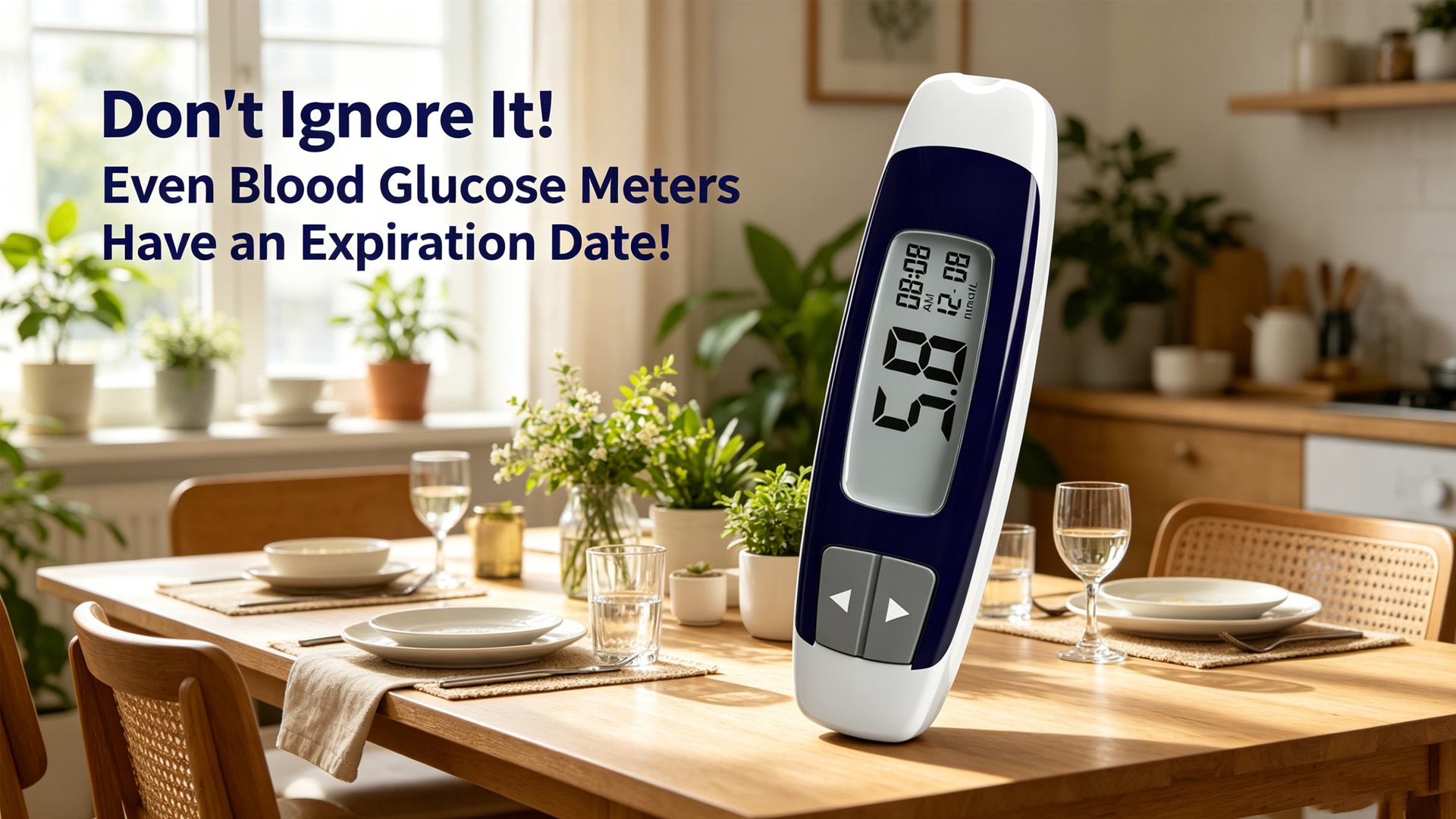
For millions of people living with diabetes, a blood glucose meter is an indispensable daily companion, quietly guarding their health behind the scenes. However, many users overlook a crucial detail—just like food and medicine, blood glucose meters also have a “shelf life.” Ignoring this fact may lead to inaccurate test results, which in turn affects disease management.
First, let’s clarify the difference between the expiration date of the blood glucose analyzer itself and that of the test strips. Most people know to check the validity period of test strips, but few pay attention to the service life of the blood glucose meter. In general, the service life of a regular blood glucose meter is about 3-5 years. This is because the core components inside, such as the sensor and circuit board, will gradually age with use. For example, the photoelectric sensor of a photoelectric blood glucose meter is easily affected by dust and temperature changes. After long-term use, its sensitivity will decrease, resulting in larger errors in test results. The electrode of an electrode-type blood glucose meter may also be contaminated by blood residues over time, affecting the accuracy of electrochemical reactions.
So, how can we determine if our blood glucose meter has reached its expiration date? In addition to checking the production date and service life indicated in the manual, we can also judge from daily use. If you find that the test results of the blood glucose meter often differ greatly from those of the hospital, and after eliminating factors such as expired test strips and incorrect operation, it is likely that the blood glucose meter has “expired.” In addition, if the blood glucose meter frequently malfunctions, such as screen blackouts, button insensitivity, or inability to store data normally, it is also a signal that it needs to be replaced.
In addition to the service life of the blood glucose kit itself, the maintenance and use habits during daily use will also affect its “effective life.” For example, some users do not pay attention to cleaning the blood glucose meter after use, resulting in blood residue accumulating in the test strip slot, which not only affects the test results but also accelerates the aging of internal components. Some users often place the blood glucose meter in a high-temperature, high-humidity or direct sunlight environment, which will also damage the circuit board and sensor. Therefore, to extend the service life of the blood glucose meter, we should store it in a dry, cool place, clean the surface of the instrument regularly with a soft cloth, and avoid dropping or colliding with it.
Finally, it is reminded that when replacing a blood glucose meter, we should choose products from regular manufacturers and pay attention to checking the production date and qualification certificate. At the same time, after purchasing a new blood glucose meter, it is best to compare it with the hospital’s venous blood test results to ensure its accuracy. Don’t let an “expired” blood glucose meter become a hidden danger to your health.
Post time: Jul-06-2026