

The necessity of regular blood lipid testing
In people’s impression, dyslipidemia is often equated with obesity, as if hyperlipidemia is the exclusive domain of obese people. Therefore, those who are slender tend to neglect blood lipid tests.
In fact, there is no necessary connection between blood lipid levels and body type. Dyslipidemia is classified into primary and secondary types.
Primary dyslipidemia is related to environmental factors such as diet and lifestyle, as well as genetic factors. Secondary dyslipidemia is secondary to other diseases, such as diabetes, hypertension, nephrotic syndrome, hypothyroidism, chronic obstructive liver disease, pancreatitis, etc.
People who are thin can also suffer from the above-mentioned diseases and have hyperlipidemia as well. The process of elevated blood lipids is not like that of a cold or fever. It has no clinical symptoms and is hard to feel. However, the sudden outbreak of cardiovascular and cerebrovascular diseases caused by abnormal blood lipids has an extremely high fatality rate and has become the number one killer threatening the health and lives of modern Chinese people.
Therefore, regular blood lipid checks are an important measure for preventing and treating dyslipidemia and cardiovascular diseases.
The frequency cycle of lipid testing
The “Guidelines for the Prevention and Treatment of Dyslipidemia in Chinese Adults” clearly states that the key subjects for lipid tests include those with a history of atherosclerotic cardiovascular disease. There are multiple risk factors for cardiovascular diseases such as hypertension, diabetes, obesity and smoking. There is a family history of early-onset cardiovascular disease; If a male relative has ischemic cardiovascular disease before the age of 55 or a female direct relative has ischemic cardiovascular disease before the age of 65; There is familial hyperlipidemia; People with xanthoma of the skin or tendons and thickened Achilles tendons.
The frequency of lipid testing for different groups of people
People with normal blood lipid levels: Those aged 20 to 40 should have their blood lipid levels tested at least twice a year. Men over 40 and postmenopausal women should have their blood lipid levels tested every quarter
Patients with atherosclerotic cardiovascular disease and their high-risk groups: Undergo lipid tests at least once a month.
Have you encountered the following problems when going to the hospital for a lipid test?
Queue up for registration, queue up for examination, the blood collection site is bruised, and the volume of venous blood collection is large
Health checks start from home to safeguard the health of the whole family
Whether it is patients or people in a sub-healthy state in daily life, health checks should not be ignored. With the continuous improvement of people’s living standards, health checks can be completely completed at home. Continuous and stable health check-ups can help you have a clear understanding of your own health status, and also enable doctors to keep abreast of your condition at any time, effectively monitor chronic disease indicators, and scientifically prevent chronic diseases.
To avoid cardiovascular and cerebrovascular diseases and to enable everyone to understand their lipid status anytime and anywhere, I would like to introduce a sejoy real-time lipid detection instrument to you.
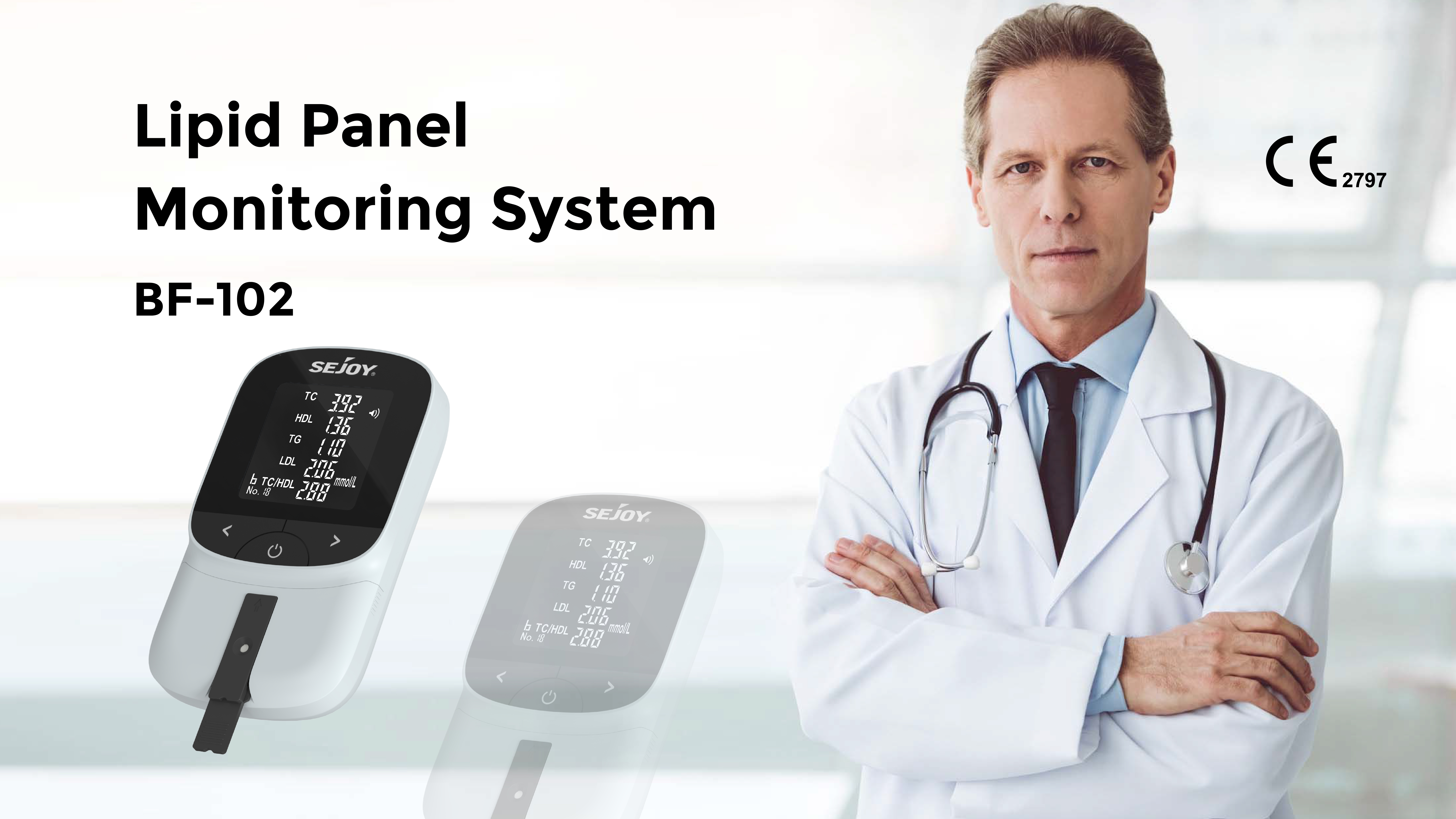
Sejoy Lipid Monitoring System, a lipid doctor anytime and anywhere
The dry chemical lipid meter is a portable instrument used for rapid detection of lipid levels. The following is a popular science introduction about it:
1. Working principle
The dry chemical lipid analyzer is based on dry chemical analysis technology. The liquid test sample is directly added to the test paper pre-filled with dry reagents. The reagents in the test strip undergo a chemical reaction with the lipid components in the sample, resulting in color changes or other detectable signals. The instrument measures the color intensity or signal changes through optical sensors (such as reflectometers), and then calculates the concentrations of various lipid indicators.
2. Inspection items
Five items of blood lipid can be detected, including:
Total cholesterol (TC) : It reflects the total content of cholesterol in the blood and is an important indicator for assessing the risk of cardiovascular diseases.
Triglycerides (TG) : Mainly related to diet and metabolism, elevated levels may increase the risk of coronary heart disease.
High-density lipoprotein cholesterol (HDL-C) : Known as “good cholesterol”, it helps remove cholesterol from the walls of blood vessels. The higher the level, the more beneficial it is for the cardiovascular system.
Low-density lipoprotein cholesterol (LDL-C) : Often referred to as “bad cholesterol”, its elevation is a major risk factor for atherosclerosis.
Total cholesterol/high-density lipoprotein cholesterol ratio (TC/HDL-C) : The higher this ratio is, the greater the risk of cardiovascular disease.
3. Advantages and features
Simple operation: No complex procedures are required. Just collect a small amount of blood (fingertip blood) and drop it onto the test strip to complete the test. The result will be available within 3 minutes.
It is highly portable: compact in size, it can be carried around easily and is suitable for use in home, clinic or emergency scenarios.
It requires a small amount of blood: only 35 microliters of blood are needed, reducing the patient’s pain and the difficulty of blood collection.
The results are relatively accurate: they have a good correlation with the laboratory test results of the hospital, and the error is usually within the clinically acceptable range.
No reagent preparation required: The test strips are for single use and have built-in drying reagents, avoiding the trouble of reagent preparation and storage in traditional methods.
4. Applicable scenarios
Home self-test: Suitable for people with cardiovascular disease risk factors (such as hypertension, diabetes, obesity, family history, etc.) to regularly monitor blood lipids and keep abreast of their physical condition in a timely manner.
Primary care: Clinics, community health service centers, etc. can quickly provide lipid testing services for patients, assisting in diagnosis and treatment.
Emergency and first aid: In emergency situations (such as chest pain, suspected myocardial infarction, etc.), rapid lipid testing helps doctors quickly determine the condition.
Post time: Dec-18-2025