

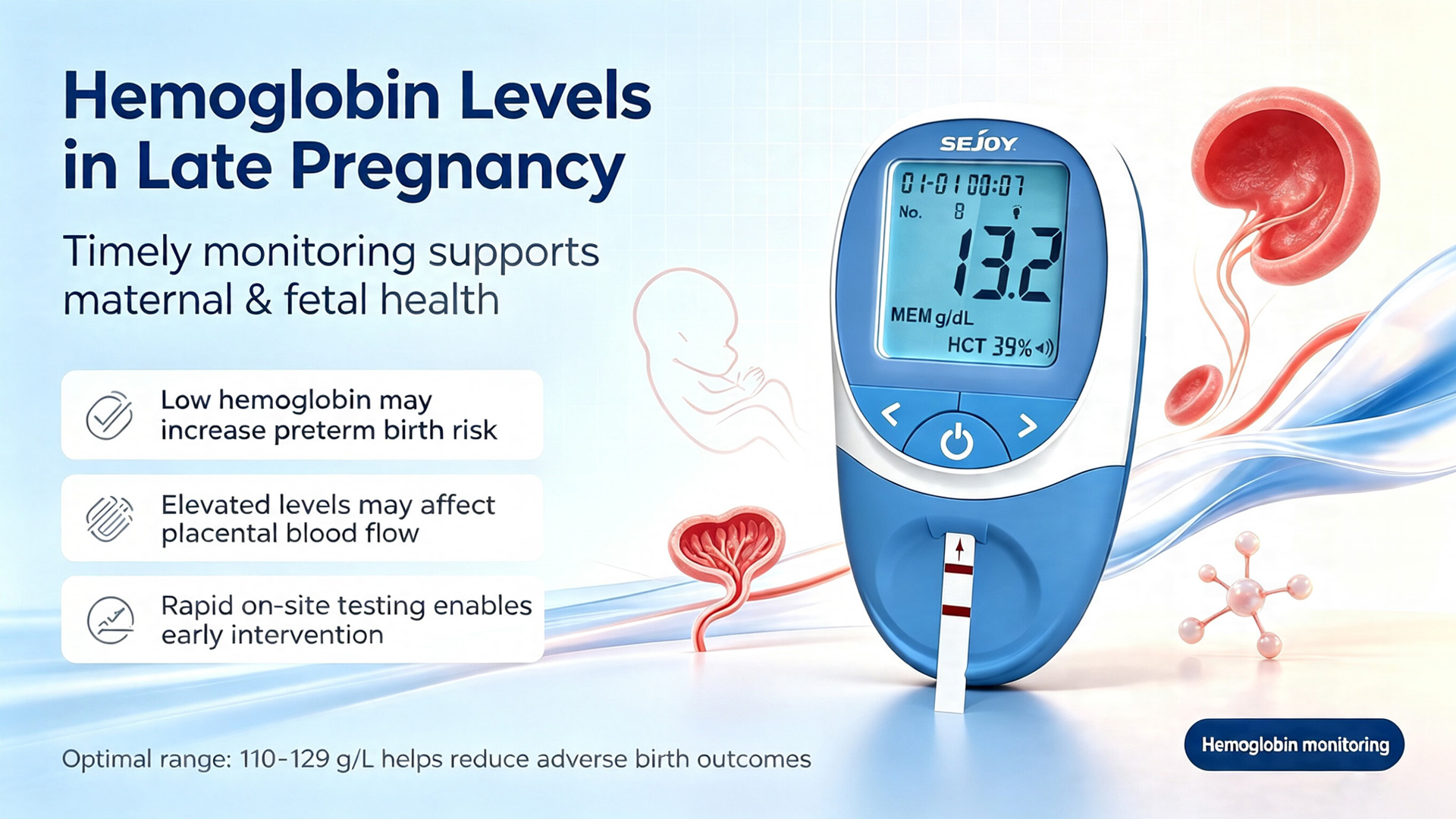
As pregnancy progresses into the third trimester, monitoring maternal hemoglobin levels becomes far more than a routine check—it is a window into fetal health and maternal well-being. A 2026 study analyzing 38,624 singleton pregnancies across China revealed that both low and elevated hemoglobin levels correlate with adverse outcomes, underscoring the need for precise monitoring using tools like hemoglobinometers. These portable devices enable rapid, on-site testing, which is particularly vital in rural or resource-limited settings where laboratory access is scarce.
The Risks of Anemia in Late Pregnancy
Anemia, defined as hemoglobin <110 g/L, affects approximately 16% of pregnant women globally and poses significant risks to both mother and child. Research from the Chinese study found that anemic women had a 6.9% preterm birth rate—40% higher than the 4.9% rate among women with normal hemoglobin levels (110-129 g/L). Additionally, 4.3% of infants born to anemic mothers had low birth weight, compared to 3.1% in the normal group. The mechanisms behind these outcomes are multifaceted: insufficient hemoglobin reduces oxygen delivery to the placenta, impairing fetal growth and increasing the likelihood of premature labor. For mothers, anemia weakens immunity, raising susceptibility to postpartum infections and complicating recovery from even minor blood loss during delivery.
For women with elevated hemoglobin, addressing underlying causes is paramount. Dehydration can be resolved with increased fluid intake, while preeclampsia requires close monitoring and potentially early delivery. Regular exercise and a balanced diet rich in fruits and vegetables can also help regulate blood viscosity. Importantly, interventions should be personalized: a 2026 study in India found that tailored nutrition plans reduced the prevalence of both anemia and elevated hemoglobin by 25% among high-risk women, compared to generic advice.
The Future of Hemoglobin Monitoring
Advancements in technology are further enhancing the role of hemoglobin testing in prenatal care. AI-powered hemoglobinometers now analyze trends over time, flagging subtle changes that may indicate developing complications. In pilot programs across Europe, these devices have reduced unnecessary hospital referrals by 30% while improving detection rates of preeclampsia by 22%. Telemedicine platforms also allow remote monitoring, enabling women in underserved areas to share hemoglobinometer readings with healthcare providers via smartphone apps, ensuring continuous care without travel.
In conclusion, hemoglobin levels in late pregnancy are a critical indicator of maternal and fetal health, with both low and high values posing significant risks. Hemoglobinometers are indispensable tools in addressing these challenges, providing accessible, rapid testing that enables early intervention. By prioritizing regular monitoring, personalized care, and equitable access to diagnostic tools, healthcare systems can reduce adverse pregnancy outcomes and improve the lives of millions of women and infants worldwide. As we move forward, integrating technology and evidence-based practices will be key to unlocking the full potential of hemoglobin monitoring in prenatal care.
Post time: Aug-10-2026