

Diabetes is a chronic disease that affects millions of people worldwide. While most people are aware of the impact of diabetes on blood glucose levels, many are unaware of the damage it can cause to blood vessels over time. In fact, diabetes is a leading cause of cardiovascular disease, which is the number one killer of people with diabetes. Understanding how diabetes damages blood vessels is crucial for preventing complications and maintaining good health.
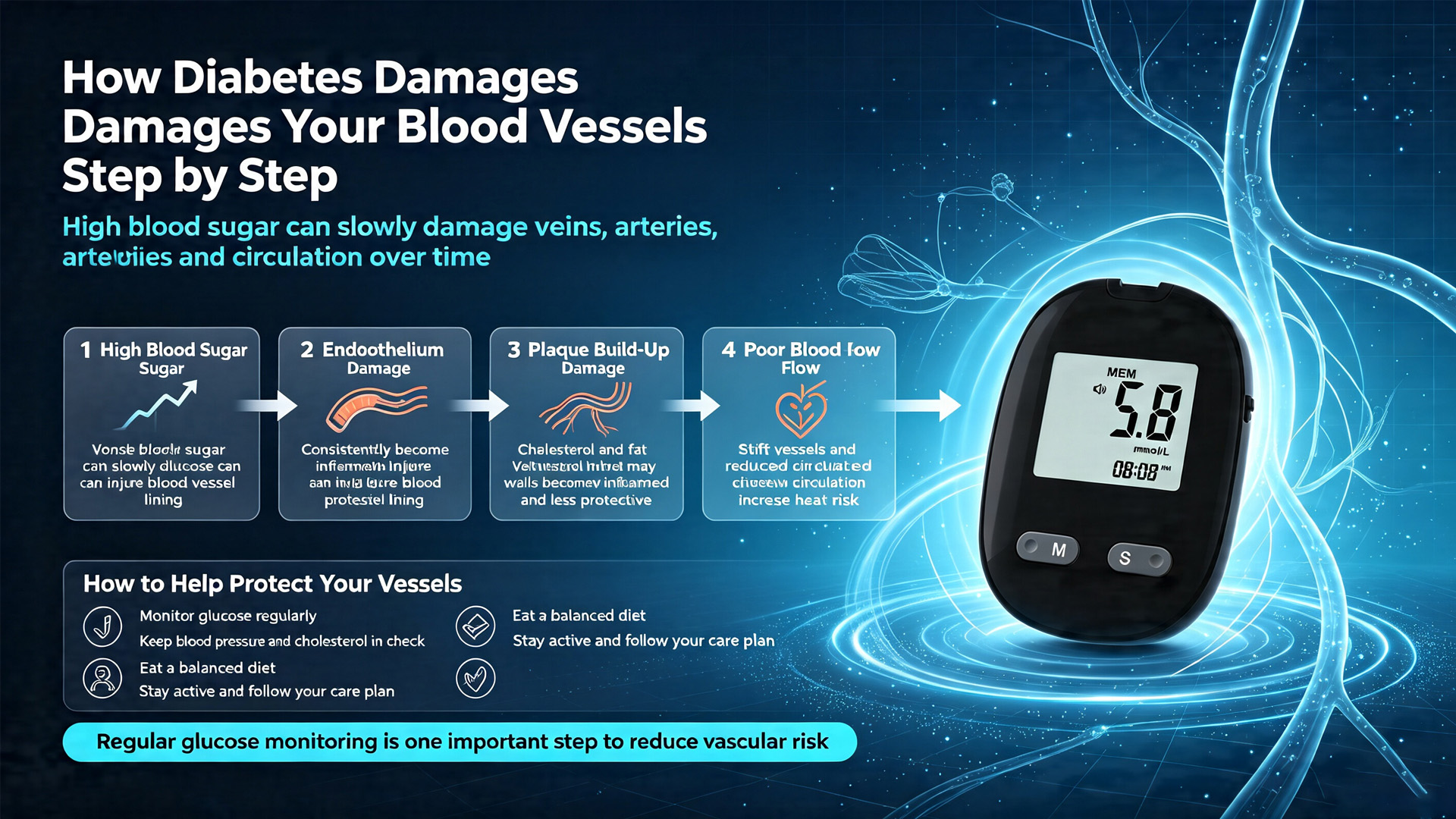
The first step in the process of vascular damage caused by diabetes is high blood glucose . When blood glucose levels are consistently high, it can damage the inner lining of blood vessels, known as the endothelium. This damage can cause the endothelium to become inflamed and dysfunctional, which can lead to a number of problems. One of the most important tools in managing diabetes and preventing vascular damage is a reliable blood glucose kit. Regular monitoring with a blood glucose meter allows you to track your blood glucose levels and make adjustments to your diet, exercise, and medication as needed. By keeping your blood glucose within a healthy range, you can reduce the risk of damage to the endothelium and other blood vessel structures.
Over time, the damage to the endothelium can lead to the formation of plaque in the blood vessels. Plaque is a buildup of cholesterol, fat, and other substances that can narrow the blood vessels and restrict blood flow. This can increase the risk of heart attack, stroke, and other cardiovascular events. In addition, high blood glucose can also cause the blood vessels to become stiff and less flexible, which can further increase the risk of cardiovascular disease.
Another way that diabetes can damage blood vessels is by causing damage to the nerves that control blood vessel function. This can lead to a condition known as autonomic neuropathy, which can cause problems with blood pressure regulation, heart rate, and blood flow. Autonomic neuropathy can also increase the risk of foot ulcers and other complications, as it can reduce sensation in the feet and make it difficult to detect injuries.
In addition to these direct effects, diabetes can also contribute to vascular damage by increasing the risk of other conditions, such as high blood pressure and high cholesterol. These conditions can further damage blood vessels and increase the risk of cardiovascular disease. Managing these conditions is an important part of preventing vascular damage in people with diabetes. This may include taking medication, making lifestyle changes, and regularly monitoring your blood pressure and cholesterol levels with the help of a blood glucose machine and other tools.
Preventing vascular damage in people with diabetes requires a comprehensive approach that includes managing blood glucose levels, controlling blood pressure and cholesterol, and making healthy lifestyle choices. This may include eating a healthy diet, getting regular exercise, quitting smoking, and limiting alcohol consumption. In addition, it is important to work closely with your healthcare team to monitor your condition and make adjustments to your treatment plan as needed. By taking these steps, you can reduce the risk of vascular damage and other complications associated with diabetes.
In conclusion, diabetes can cause significant damage to blood vessels over time, which can lead to a number of serious complications. Understanding how diabetes damages blood vessels is crucial for preventing these complications and maintaining good health. By using a reliable blood glucose measurement to monitor your blood glucose levels, making healthy lifestyle choices, and working closely with your healthcare team, you can reduce the risk of vascular damage and live a long, healthy life with diabetes.
Post time: Jul-26-2026