

Malaria is a life-threatening parasitic infectious disease transmitted by female Anopheles mosquitoes, remaining a major public health challenge in tropical, subtropical and some temperate regions worldwide. Caused by Plasmodium parasites, malaria spreads rapidly during warm and humid seasons and affects hundreds of millions of people every year. Without timely diagnosis and treatment, mild malaria can quickly progress to severe symptoms such as high fever, organ failure, anemia and cerebral malaria, posing fatal risks to children, pregnant women and people with low immunity. What makes malaria difficult to eliminate is its similar symptoms to common colds and fevers, which often lead to misjudgment and delayed treatment. In the global fight against malaria, early and accurate screening is the most effective way to cut transmission and reduce mortality, and the malaria detection kit has become an essential tool for grassroots prevention, travel health screening and daily personal risk detection.
Many people underestimate the danger of malaria due to its common early-stage manifestations. Initial symptoms include intermittent fever, chills, headache, fatigue and muscle soreness, which are easily confused with viral colds or influenza. Unlike ordinary minor illnesses, malaria parasites continuously multiply in the human blood, destroying red blood cells and damaging vital organs. If left untreated, the condition can deteriorate sharply within days, causing acute hemolysis, respiratory distress, kidney failure and even death. Moreover, malaria has a recurrent feature; dormant parasites in the liver may trigger repeated attacks months after initial infection. For people living in endemic areas, travelers to high-risk regions, and outdoor workers, regular screening is indispensable. The portable and easy-to-operate malaria detection kit enables rapid on-site testing without complicated laboratory equipment, greatly improving the timeliness of malaria diagnosis.
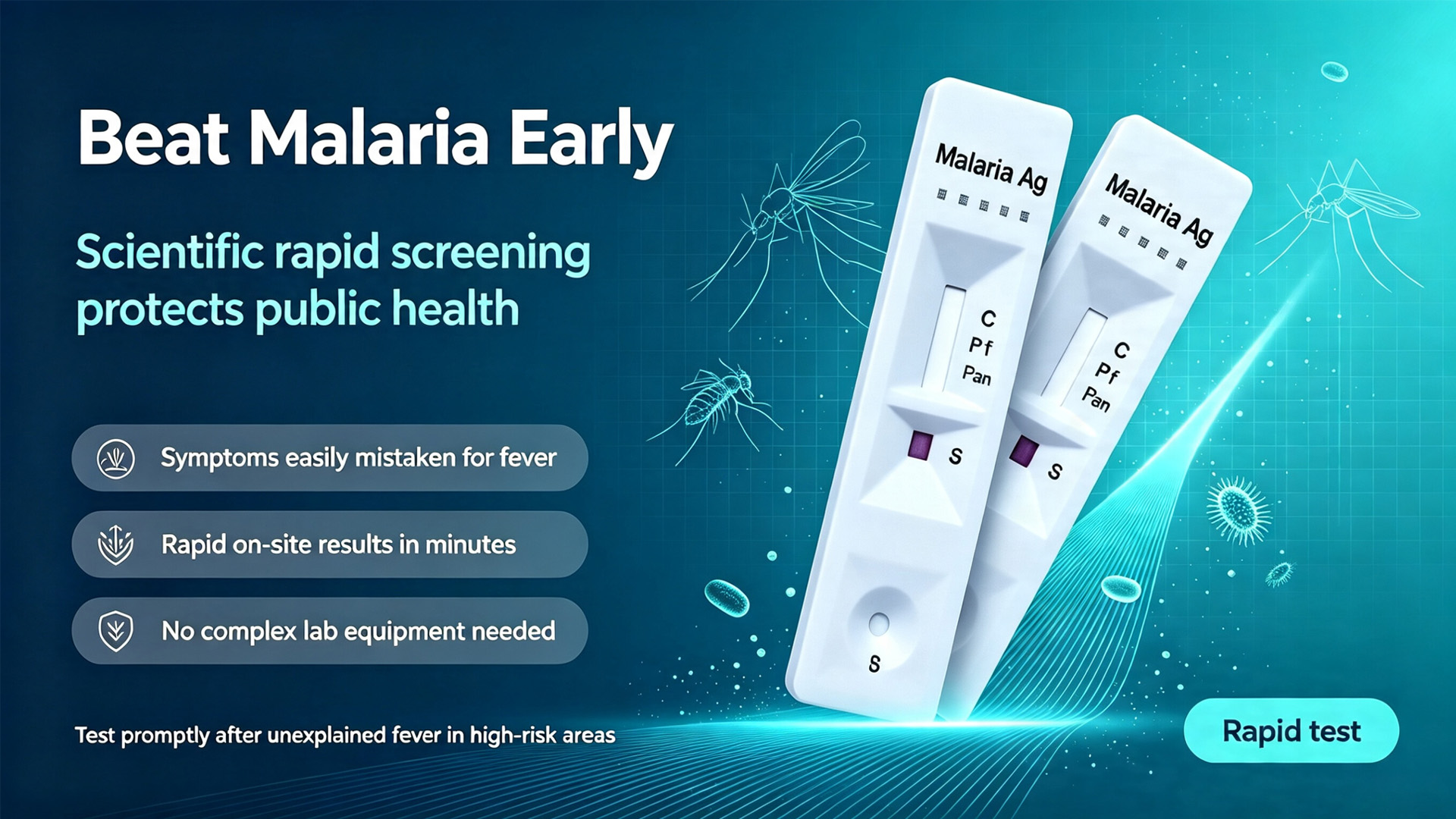
Traditional malaria test relies on professional hospital laboratories, which requires blood sample delivery, microscopic examination and long waiting periods for results. This cumbersome process not only delays the best treatment window but also increases the risk of cross-infection and community transmission during the waiting period. In contrast, modern rapid detection technology has made civilian and grassroots screening more accessible. A standard malaria detection kit is designed for fast, accurate and convenient testing, delivering reliable and intuitive results in a short time. It is suitable for family self-screening, community health surveys, remote rural epidemic prevention and travel pre-departure testing. With simple operation steps, non-professional users can complete the whole testing process independently, which effectively solves the problems of insufficient medical resources and delayed detection in remote areas.
Scientific prevention and standardized detection are the core of malaria control. In addition to active screening, daily protective measures should never be ignored. Using mosquito repellent products, installing mosquito nets, wearing long-sleeve clothes, and avoiding outdoor activities at dawn and dusk can effectively reduce mosquito bites and block the main transmission route of malaria. For individuals who have been to high-risk areas or experienced unexplained intermittent fever, active testing is the most critical step to rule out infection. Once the test result is positive, timely medical intervention and standardized anti-malarial treatment can achieve a high cure rate and avoid severe complications.
Global malaria elimination relies on universal public health awareness and convenient detection capabilities. Many malaria recurrence and transmission cases stem from missed early detection and insufficient health attention. The popularization of rapid detection kits bridges the gap of grassroots screening, allowing high-risk groups to complete health checks efficiently and privately. Early detection, early diagnosis and early treatment significantly reduce malaria mortality and curb the spread of the epidemic at the source.
In summary, malaria is a preventable and treatable infectious disease, and most severe cases are caused by delayed screening and misdiagnosis. With the help of professional and efficient detection tools, individuals and communities can build a solid line of defense against malaria. Adhering to scientific prevention habits and taking the initiative to conduct regular screening with reliable malaria rapid test kits are key to protecting personal health and promoting global malaria prevention and control.
Post time: Aug-05-2026