

As 2026 unfolds, mpox (formerly monkeypox) remains a stubborn public health challenge, evolving from a regional African outbreak to a global concern with shifting transmission patterns and persistent disparities in access to care. Since the World Health Organization (WHO) first declared it a Public Health Emergency of International Concern (PHEIC) in 2022, the virus has infected over 100,000 people across 110 countries, with the 2026 landscape marked by localized outbreaks, viral recombination, and ongoing inequities in vaccine distribution. infectious disease detection
The year began with alarming signals: Thailand reported its 1,000th cumulative case, concentrated in tourist hubs like Bangkok and Phuket, where 97% of patients were men engaging in high-risk sexual behavior. In Madagascar, a 2025 outbreak escalated to 457 cases by March 2026, including the nation’s first pediatric death—a 3-year-old child who developed severe complications. Meanwhile, the WHO confirmed two cases of a recombinant mpox strain, formed by genetic exchange between Ib and IIb clades, in the UK and India. While the variant didn’t cause severe illness, its detection underscored the virus’s evolutionary potential, with experts warning that unmonitored spread could lead to more transmissible or virulent strains.
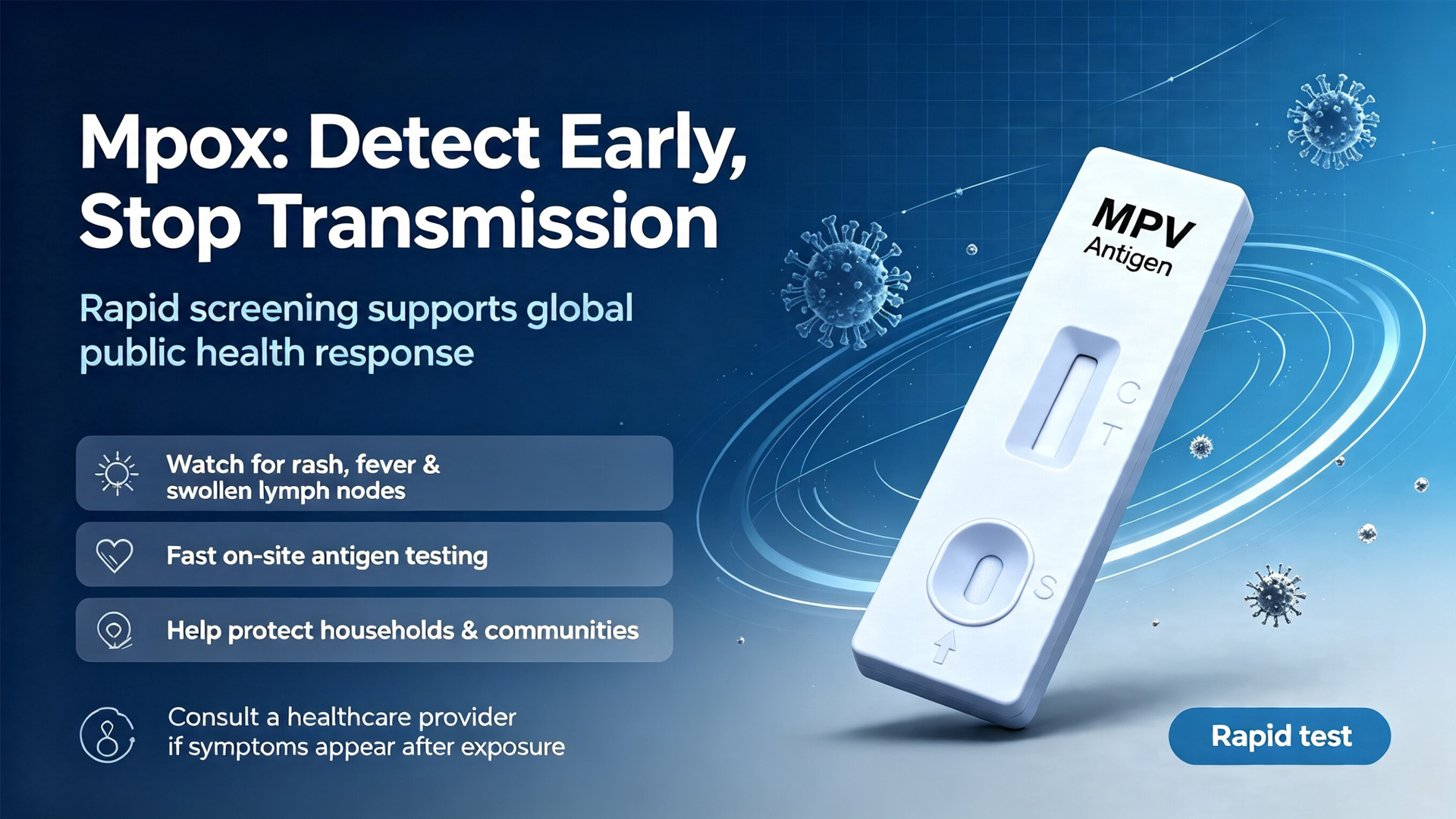
Central to 2026’s mpox crisis is the persistent gap between high-income and low-income nations in accessing life-saving tools. Africa, the virus’s historic epicenter, has received just 3% of global vaccine supplies, leaving countries like the Democratic Republic of the Congo (DRC)—which declared an end to its outbreak in April—vulnerable to resurgence. In contrast, European nations and the U.S. have administered over 2 million doses, yet demand still outpaces supply in cities like New York and Barcelona, where men who have sex with men (MSM) face waitlists for shots. This disparity isn’t just moral: the WHO estimates that 70% of global mpox transmission occurs in low-resource settings, where underfunded health systems lack diagnostic capacity and public health infrastructure. infectious disease test kit
Compounding these challenges is the virus’s changing epidemiology. While the 2022 outbreak was driven primarily by sexual transmission among MSM, 2026 data shows 30-40% of cases now stem from household contact, including children and elderly caregivers. In Brazil, where 1.48 million cases have been recorded, health officials report clusters in low-income neighborhoods where families share cramped living spaces, highlighting the need for targeted outreach beyond high-risk groups. “Mpox isn’t just an LGBTQ+ issue anymore,” says Dr. Maria Silva, a WHO epidemiologist in São Paulo. “We’re seeing transmission in schools, hospitals, and homes—proof that the virus can adapt to any community if we let our guard down.”
Public health campaigns are also evolving to meet the moment. In Spain, Barcelona’s health department launched multilingual social media campaigns targeting both MSM and general populations, increasing awareness of mpox symptoms and prevention measures by 85%. In India, community health workers are using mobile apps to track cases in rural areas, reducing diagnostic delays from 7 days to 48 hours. These efforts reflect a growing recognition that mpox control requires not just vaccines, but trust-building and culturally sensitive communication.
As 2026 progresses, the mpox pandemic remains a test of global solidarity. While the WHO lifted its PHEIC designation in 2025, the virus continues to circulate, with new outbreaks emerging in Guinea-Bissau and other previously unaffected nations. The lesson is clear: mpox won’t disappear until the world addresses the root causes of health inequity—from vaccine hoarding to underinvested health systems. For now, the fight against mpox is far from over, but with targeted action and global cooperation, it’s a fight the world can win. infectious disease rapid test
Post time: Aug-09-2026