

For women preparing for pregnancy, the timing of ovulation, the status of early pregnancy and the ovarian environment are the three core elements that determine the success rate of fertility. The three influence each other and are interlinked, jointly forming a dynamic balance system of female reproductive health. The Sejoy electronic pregnancy monitoring system breaks through the barriers of traditional detection scenarios with innovative technology, integrating three key functions into one, providing women with convenient and accurate reproductive health management solutions.
From a physiological mechanism perspective, the ovarian environment serves as the “soil” for reproductive health, and its functional state directly determines the quality of ovulation and pregnancy outcomes. The ovaries regulate follicular development by secreting estrogen, progesterone, follicle-stimulating hormone (FSH), etc. A healthy ovarian environment is characterized by stable hormone secretion, synchronous follicular maturation, and sound luteal function. It not only ensures regular ovulation but also provides a suitable endocrine environment for the implantation of the fertilized egg. Once ovarian function is impaired, such as polycystic ovary syndrome or premature ovarian failure, it can cause ovulation disorders and hormonal imbalances, which not only reduce the probability of conception but also increase the risk of miscarriage during early pregnancy. Ovulation, as a “bridge” connecting the ovarian environment with early pregnancy, is a necessary prerequisite for conception – only when the egg is successfully released and combines with the sperm to form a fertilized egg can the pregnancy process be initiated. The accuracy of ovulation time directly affects the success rate of conception. The 24 hours before and after ovulation is the golden window for conception. At the same time, the corpus luteum formed after ovulation secretes progesterone, which can maintain the secretory phase state of the endometrium and provide key support for the implantation of the fertilized egg. After successful conception, the early pregnancy state will have a counter-effect on the ovarian environment: the human chorionic gonadotropin (hCG) secreted by the embryo will stimulate the corpus luteum of the ovary to continuously secrete progesterone, maintaining the endocrine environment required for pregnancy until the placental function is fully established.
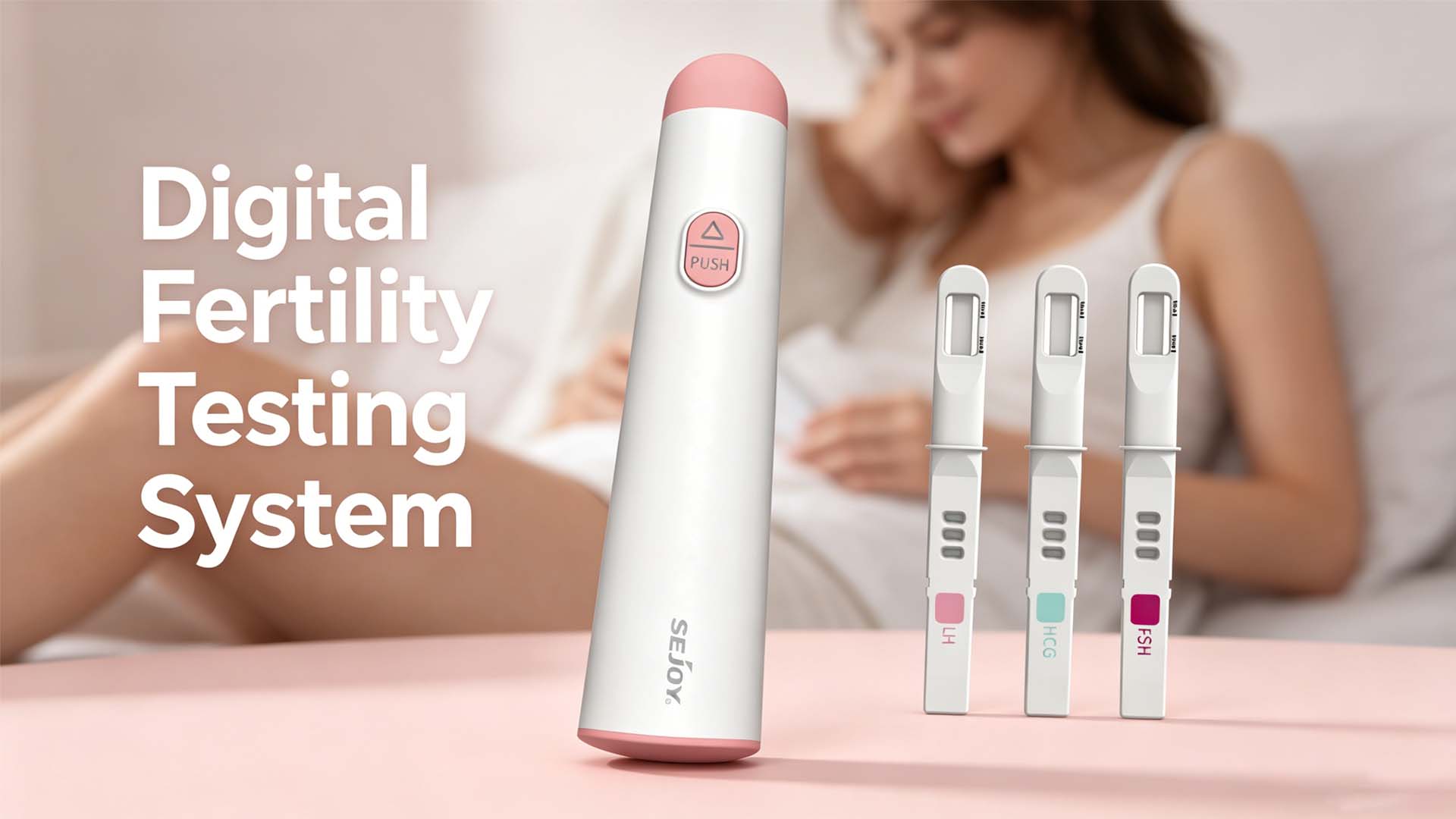
Traditional reproductive health tests often require the use of multiple tools: ovulation test strips to monitor LH peaks, early pregnancy test strips to detect hCG, and blood tests in hospitals to assess ovarian function. This not only involves cumbersome operations but also has problems such as large interpretation errors and incoherent data. The emergence of the Sejoy electronic pregnancy monitoring system has broken this fragmented situation of scenarios. This system, through high-precision biosensors, can simultaneously achieve three core functions: First, precise ovulation monitoring. By quantitatively detecting the LH level in urine, it captures the LH peak 24 to 48 hours before ovulation and intelligently predicts the ovulation time in combination with menstrual cycle data, with an error controlled within 4 hours. Secondly, early pregnancy diagnosis can detect low concentrations of hCG 7 to 10 days after conception (before menstruation is delayed), with a sensitivity of 25mIU/mL. The electronic display directly shows “pregnant”, “not pregnant” or the specific concentration value, avoiding the trouble of weak positive interpretation of traditional test strips. Thirdly, the assessment of ovarian environmental trends involves continuously monitoring the changes in hormone levels during the menstrual cycle to generate ovarian function reports, which indicate risks such as luteal phase deficiency and decreased ovarian reserve, providing data support for preconception adjustments.
In clinical applications, the integrated design of the Sejoy electronic pregnancy monitoring system has demonstrated significant advantages. For women preparing for pregnancy, there is no need to use multiple test strips simultaneously. One operation can complete multiple tests, saving time and costs. For patients with reproductive diseases, continuous monitoring data can assist doctors in making more accurate judgments about their conditions, such as abnormal LH/FSH ratios in patients with polycystic ovary syndrome and insufficient progesterone secretion in patients with luteal phase deficiency. In addition, the mobile APP that comes with the system can automatically record the detection data, generate personal reproductive health records, and analyze the ovulation patterns and hormone fluctuation trends through AI algorithms to provide users with personalized preconception suggestions.
The core of reproductive health management lies in precision and continuity. The Sejoy electronic pregnancy monitoring system, with its innovative “one test, three uses” model, integrates the originally scattered testing scenarios into a unified management platform. From ovarian environment assessment to ovulation timing capture and early pregnancy status confirmation, this system has achieved full coverage of the reproductive health cycle, providing women with a convenient, accurate and efficient self-management tool, and transforming reproductive health monitoring from “passive response” to “active management”.
Post time: Jun-27-2026