

Summer’s sweltering heat increases sweating, making proper hydration extra critical for people with diabetes. Alongside regular blood glucose monitoring with a reliable glucose meter, choosing the right drinks helps maintain stable blood glucose and prevent dehydration. Below is a simplified guide to healthy summer hydration for diabetics.
Why Hydration Matters for Diabetics
Dehydration poses severe risks for diabetics: it raises blood glucose concentration, reduces blood flow to vital organs, and can even trigger diabetic ketoacidosis in extreme cases. High heat and sweating speed up fluid loss, so consistent daily fluid intake is non-negotiable. But not all drinks are safe—some cause sharp blood glucose spikes, while others support stable levels. Regular monitoring with a glucose meter helps you understand how different drinks affect your body personally.
Top Recommended Summer Beverages
Plain Water: The Gold Standard
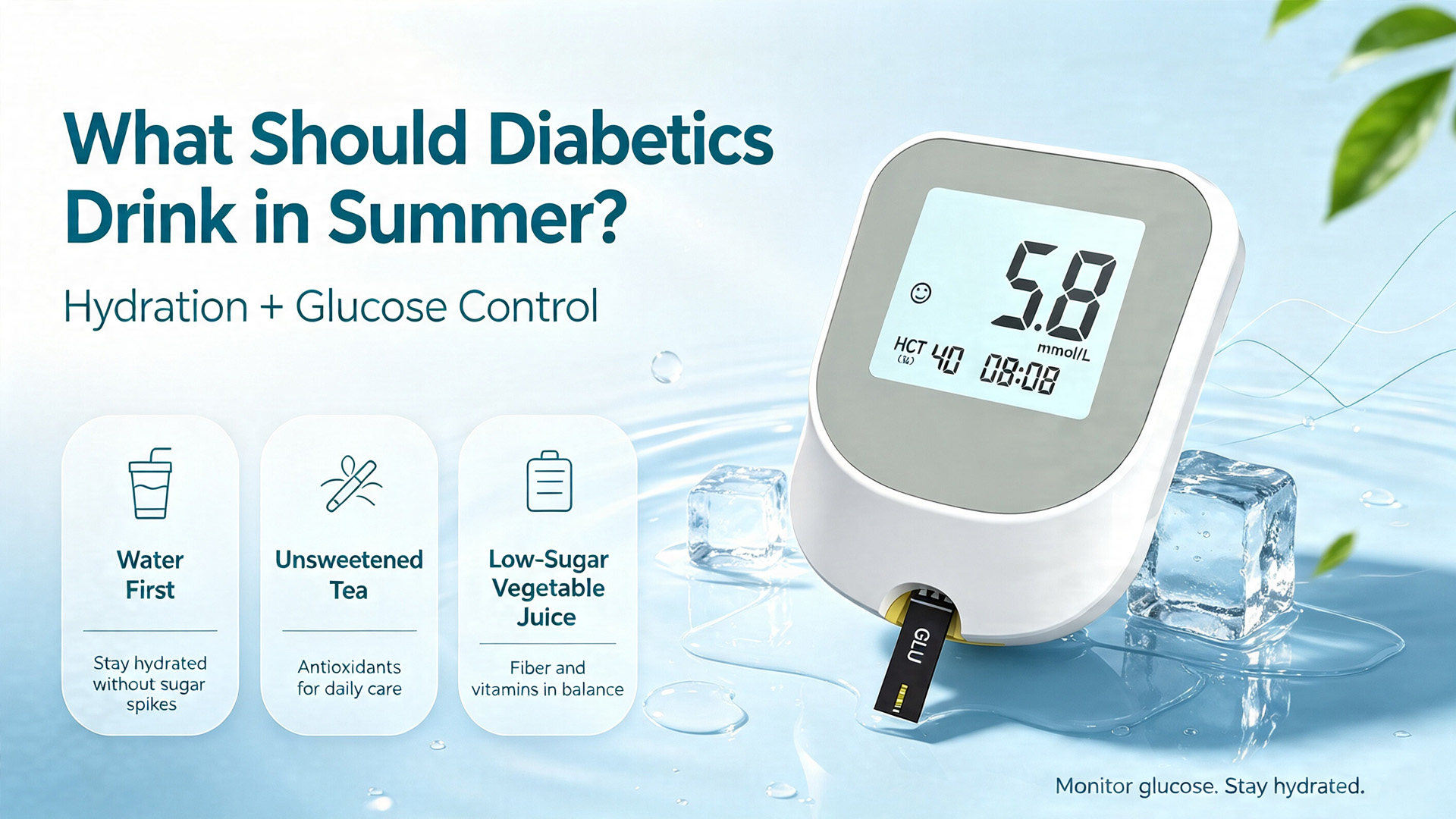
Water is the best choice for diabetics—it has zero calories, sugar, or carbs, so it hydrates without impacting blood glucose. Aim for 1500-2000ml daily, sipping regularly instead of waiting until you feel thirsty. Add a slice of lemon or cucumber for a low-sugar flavor boost if desired.
Unsweetened Tea: Antioxidant-Packed Hydration
Unsweetened green, black, and oolong tea are great options. They are rich in polyphenol antioxidants that improve insulin sensitivity and lower cardiovascular complication risk. Avoid overly strong tea (excess caffeine can disrupt sleep and raise heart rate); caffeine-free herbal teas like chamomile or peppermint are good alternatives.
Unsweetened Soy Milk: Plant-Based Nutrition
Unsweetened soy milk provides high-quality plant protein and fiber, which slow carb absorption and keep you full. Its isoflavones may also support better blood glucose control. Always check the ingredient label to confirm no hidden sugars are added.
Fresh Low-Sugar Vegetable Juice
Freshly squeezed juice from low-sugar vegetables like cucumber, celery, and spinach is hydrating and full of vitamins, with a low glycemic index. Keep the pulp to retain blood-sugar-stabilizing fiber, avoid adding high-sugar vegetables like carrots or beets, and drink immediately to preserve nutrients.
Light Salt Water: Electrolyte Replenishment
Heavy sweating depletes electrolytes like sodium and potassium. A light salt solution (0.5g salt per 500ml water) replenishes electrolytes and prevents muscle cramps. Diabetics with high blood pressure or kidney disease should consult a doctor before drinking this.
Beverages to Avoid
Sugary drinks: Soda, sweetened commercial fruit juice, and sweetened tea are packed with sugar that causes rapid blood glucose spikes—one 500ml cola can contain up to 52g of glucose, exceeding the daily recommended limit for most diabetics.
Alcohol: Alcohol disrupts blood glucose metabolism, raises hypoglycemia risk, and adds empty calories that contribute to weight gain. If you do drink, do so in moderation and always with food.
Sugar-free drinks with artificial sweeteners: Though sugar-free, some research links artificial sweeteners to gut bacteria disruption and increased glucose cravings. These should be consumed rarely, with natural unsweetened drinks prioritized instead.
Quick Hydration Tips
Carry a reusable water bottle to remind yourself to sip regularly
Check urine color: pale yellow means good hydration, dark yellow means you need more fluids
Adjust medication/meals as needed: hot weather and increased activity change blood glucose—use your meter to track changes and talk to your doctor about adjustments if needed
Stay indoors during peak heat, and wear lightweight breathable clothing when outside
In conclusion, proper hydration is foundational for diabetic health in summer. Prioritizing natural unsweetened drinks, avoiding sugary and alcoholic options, and monitoring your blood glucose regularly will help you stay healthy, hydrated, and stable all season long. Always reach out to your healthcare provider if you have any concerns.
Post time: Jul-22-2026