

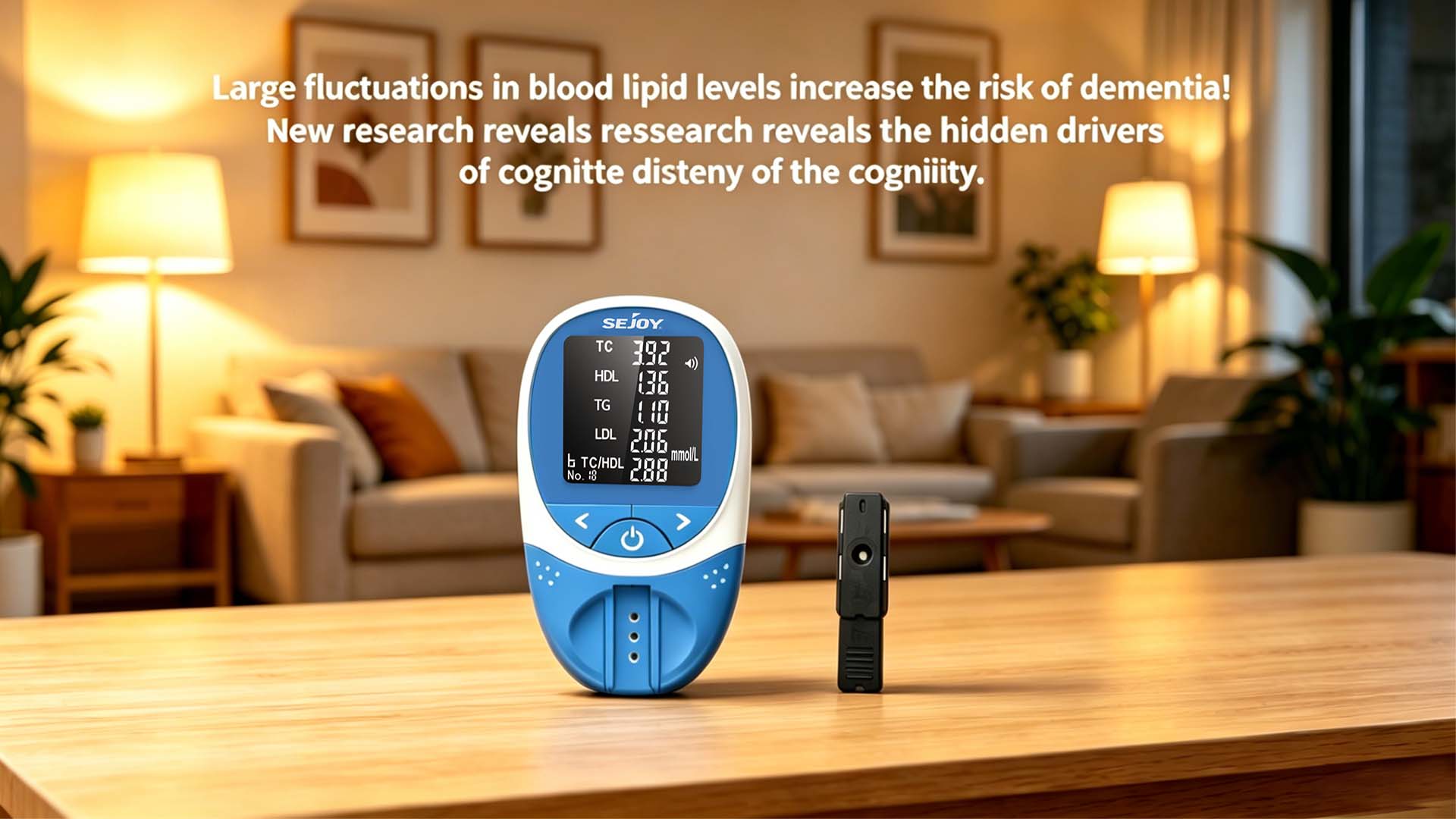
Many people attribute the decline in cognitive function in old age to aging or genetic factors, but they overlook an “invisible variable” hidden in the blood – fluctuations in blood lipids. Recently, a study jointly published in Neurology by Monash University in Australia and the Ninth People’s Hospital Affiliated to Shanghai Jiao Tong University School of Medicine found that significant fluctuations in total cholesterol and low-density lipoprotein (LDL) in the elderly can significantly increase the risk of dementia and mild cognitive impairment, becoming a “new killer” threatening the brain health of the elderly. lipid profile meter
From “Static values” to “dynamic fluctuations” : Research Fills Cognitive Gaps
Previous studies have confirmed that high blood lipid levels in middle age increase the risk of dementia in old age. However, there has always been controversy in the academic community regarding the relationship between blood lipid levels and cognitive impairment in old age. This is because the physical condition of the elderly is unstable, and their blood lipids are easily affected by various factors such as diet, medication, and underlying diseases, showing dynamic changes. Most previous studies only focused on the single detection value of blood lipids, but ignored the cumulative damage caused by long-term fluctuations.
To solve this problem, the research team analyzed 9,846 healthy elderly people with a median age of 73.9 years using the 11-year follow-up data from the “Aspirin Reduces Clinical Events in the Elderly” (ASPREE) study. These participants underwent lipid tests at baseline and for three consecutive years. The researchers tracked their subsequent cognitive health status by quantifying the annual fluctuations in total cholesterol (TC), LDL, high-density lipoprotein (HDL), and triglycerides.
Core finding: The fluctuation range of blood lipid is more crucial than a single value
After nearly six years of follow-up observation, the research has reached a startling conclusion:
Fluctuations in total cholesterol increase the risk of dementia by 60% : Compared with the group with the smallest fluctuations in total cholesterol, the group with the largest fluctuations has a 60% higher risk of dementia, and the risk of mild cognitive impairment (CIND, the stage of cognitive decline that has not yet developed dementia) increases by 23%.
LDL fluctuations increase the risk of dementia by 48% : People with significant fluctuations in low-density lipoprotein (commonly known as “bad cholesterol”) have a 48% higher risk of dementia and a 27% higher risk of mild cognitive impairment.
The direction of the fluctuation is not important: whether the blood lipid level is continuously elevated or fluctuates, and regardless of whether the baseline blood lipid level is normal or high, as long as the fluctuation range is large, it will significantly increase the risk of cognitive impairment.
Overall decline in cognitive function: Elderly people with large fluctuations in blood lipids experience a significantly faster decline in overall cognitive ability, psychomotor speed, and episodic memory, all of which are early warning signs of dementia.
It is worth noting that fluctuations in high-density lipoprotein (” good cholesterol “) and triglycerides are not associated with the risk of dementia, suggesting that the stability of total cholesterol and LDL is particularly crucial for brain health.
Why do fluctuations in blood lipid levels harm the brain? Triple damage mechanism
The damage to the brain caused by lipid fluctuations is the result of long-term accumulation, mainly affecting cognitive function through three pathways:
Disrupting the stability of cerebral blood vessels: Significant fluctuations in blood lipids can damage vascular endothelial cells, leading to unstable atherosclerotic plaques that are prone to rupture and detachment, causing cerebral micro-infarctions and long-term affecting the oxygen and nutrient supply to the brain. lipid panel analyzer
Inducing neuroinflammation: Fluctuations in blood lipids can activate inflammatory responses within the body. The inflammatory factors produced can pass through the blood-brain barrier, damage neurons and synapses, and accelerate brain degenerative changes.
Interfering with cholesterol metabolism in the brain: The brain itself requires a stable supply of cholesterol to maintain the integrity of nerve cell membranes and signal transmission. Excessive fluctuations in blood lipids may disrupt the cholesterol balance in the brain and affect the normal function of neurons.
Practical Guide: 4 Key Points for Stabilizing Blood Lipids and Safeguarding Brain Health
This research brings new insights to the health management of the elderly: paying attention to the stability of blood lipids is more important than simply pursuing “normal values”. Here are several practical suggestions:
Regular monitoring and tracking of fluctuation trends: Conduct lipid tests at least twice a year, and compare the changes in multiple results (be vigilant if total cholesterol fluctuates by more than 1mmol/L), rather than just looking at whether a single test is “up to standard”.
Maintain a balanced diet to reduce lipid fluctuations: Avoid overeating or long-term high-fat diets. Consume more whole grains, vegetables, and deep-sea fish (to supplement omega-3 fatty acids), reduce saturated fat intake, and maintain lipid homeostasis.
Take medication regularly and avoid self-adjustment: Elderly people who need to take lipid-lowering drugs should strictly follow the doctor’s advice and adhere to the medication. Do not stop or change the medication on your own just because your blood lipid level is normal after a single dose, as this may cause significant fluctuations in blood lipid levels.
Moderate exercise to improve metabolic capacity: Engaging in 150 minutes of moderate-intensity aerobic exercise (such as brisk walking or Tai Chi) per week can help regulate lipid metabolism and reduce the fluctuation range.
Conclusion: Lipid fluctuations – A new target for the prevention and control of Alzheimer’s disease
This study has for the first time clarified the association between lipid fluctuations and cognitive impairment in the elderly, providing a new biomarker for the early screening and prevention and control of dementia. For the elderly, maintaining stable blood lipid levels is not only necessary for protecting the cardiovascular system, but also the key to safeguarding brain health and staying away from dementia. In the future, clinical practice may identify high-risk groups earlier by monitoring blood lipid fluctuations and formulate personalized intervention plans, enabling more elderly people to enjoy a healthy life in their later years.lipid test meter
Post time: Jun-16-2026